Skip to content
1, 2, 3
Exhibition 30 May–5 September 2026
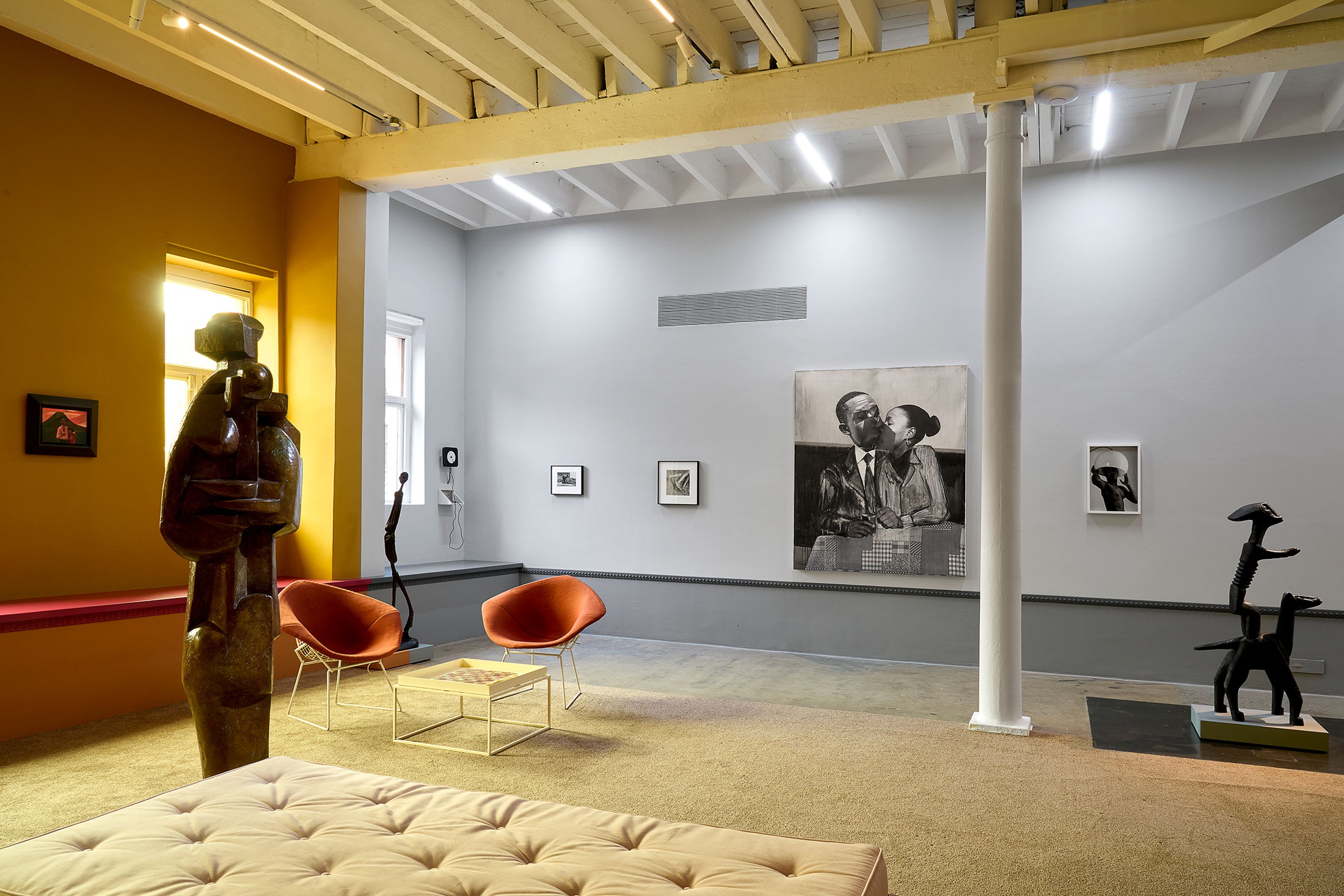
Installation view: Me, We curated by Daniel Malan and Dada Khanyisa for 1, 2, 3, May 30–September 5, 2026. Image © A4 Arts Foundation.
Title 1, 2, 3 Dates 30 May–5 September 2026 Location Gallery Credits

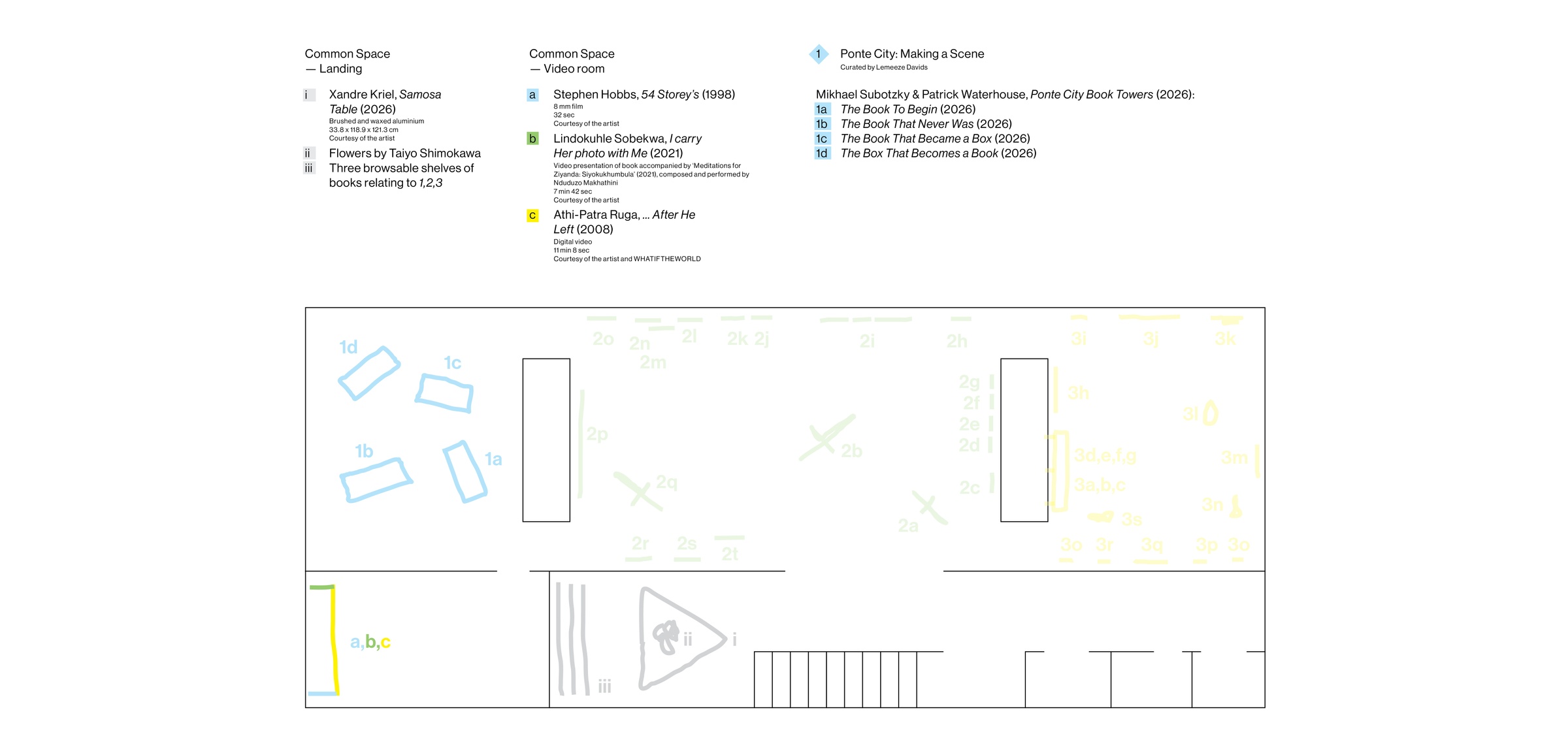
1: Curated by Lemeeze Davids
Ponte City: Making a Scene

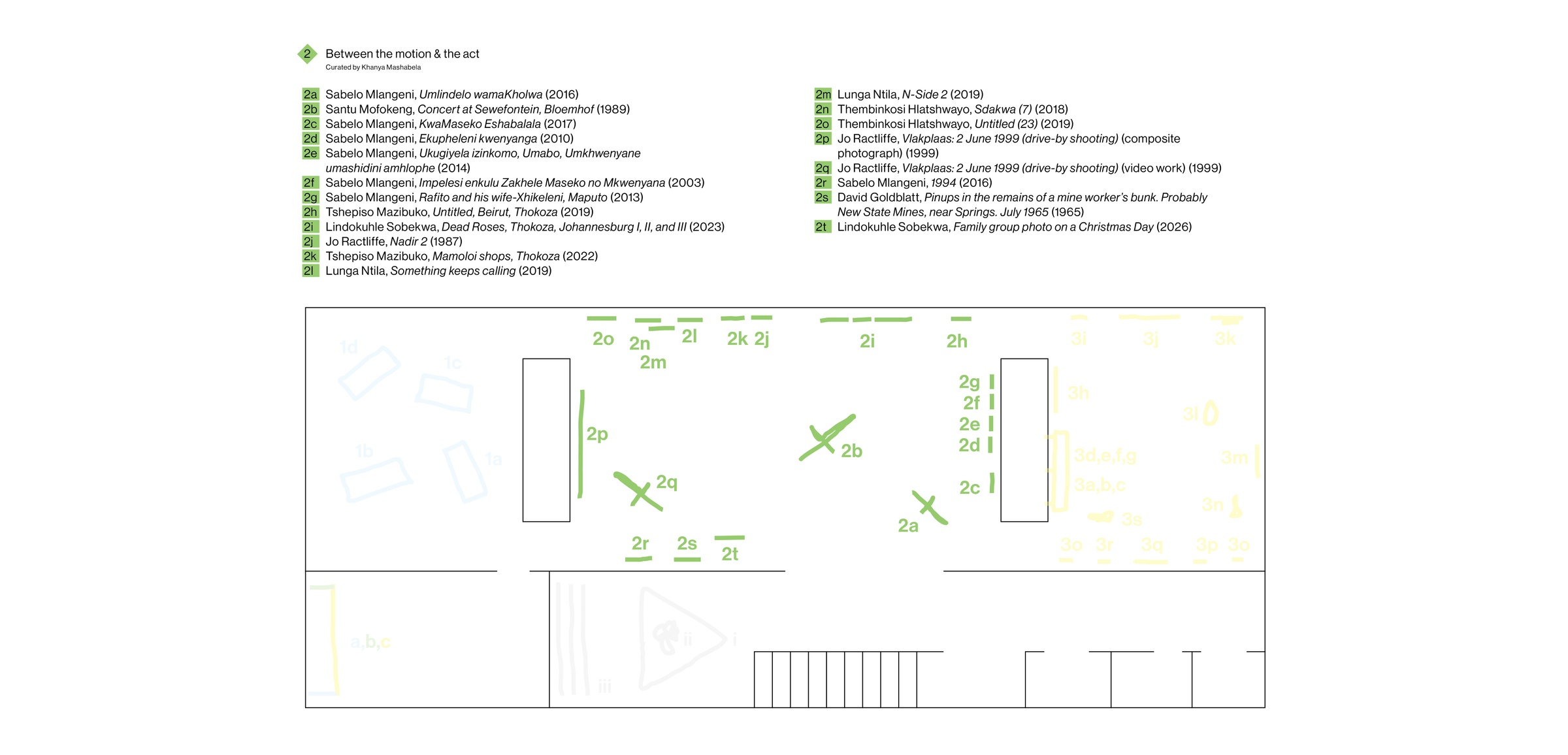
2: Curated by Khanya Mashabela
Between the motion & the act

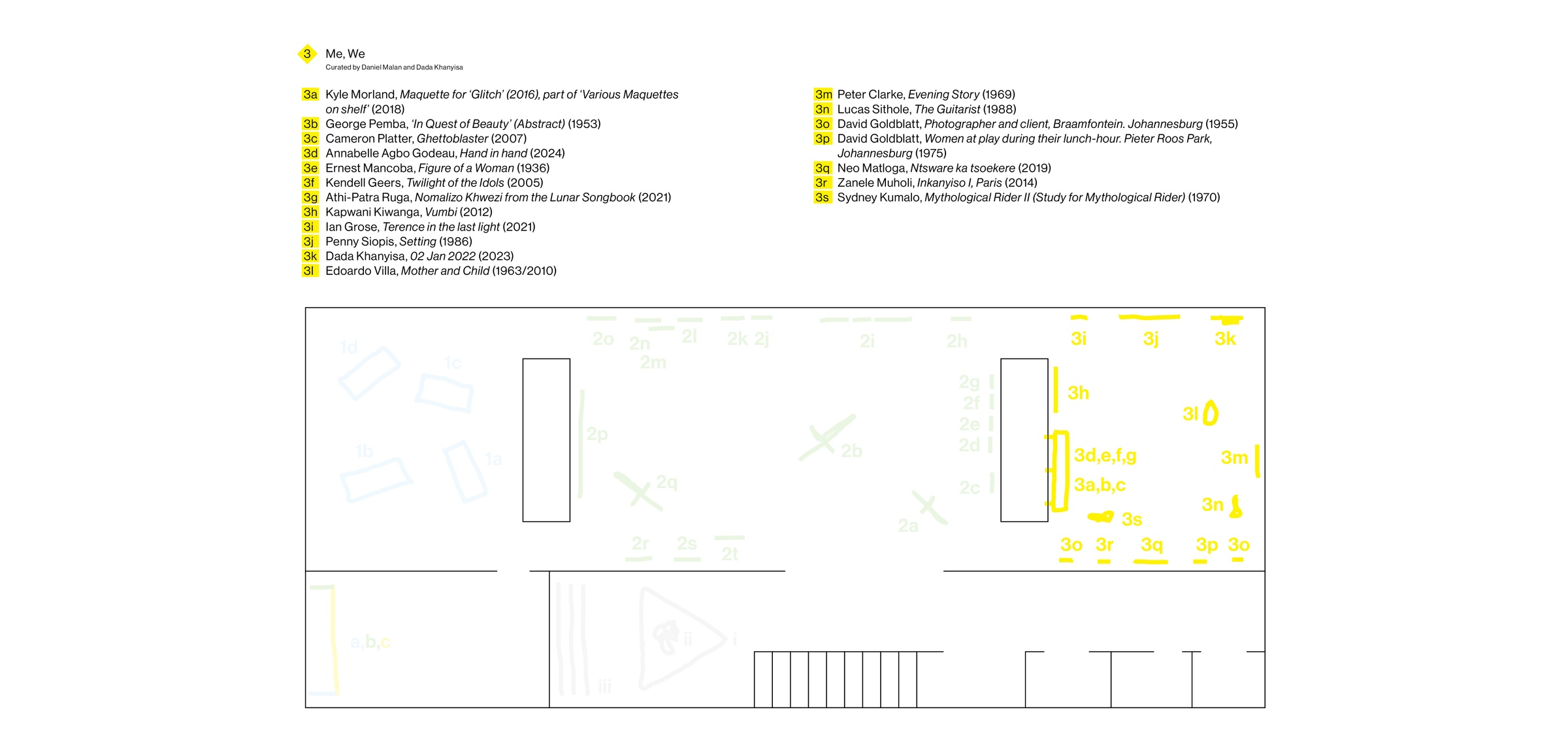
3: Co-curated by Daniel Malan and Dada Khanyisa
Me, We

Artworks by:
Annabelle Agbo Godeau, Peter Clarke, Kendell Geers, David Goldblatt, Ian Grose, Thembinkosi Hlatshwayo, Stephen Hobbs, Dada Khanyisa, Kapwani Kiwanga, Xandre Kriel, Sydney Kumalo, Ernest Mancoba, Neo Matloga, Tshepiso Mazibuko, Sabelo Mlangeni, Santu Mofokeng, Kyle Morland, Zanele Muholi, Lunga Ntila, George Pemba, Cameron Platter, Jo Ractliffe, Athi-Patra Ruga, Penny Siopis, Lucas Sithole, Lindokuhle Sobekwa, Mikhael Subotzky & Patrick Waterhouse, Edoardo Villa

Producer:
János Cserháti

Fabrication, Installation and Photography:
Kyle Morland

These three discreet projects are each organised by a curator from within A4 in collaboration with practitioner friends.

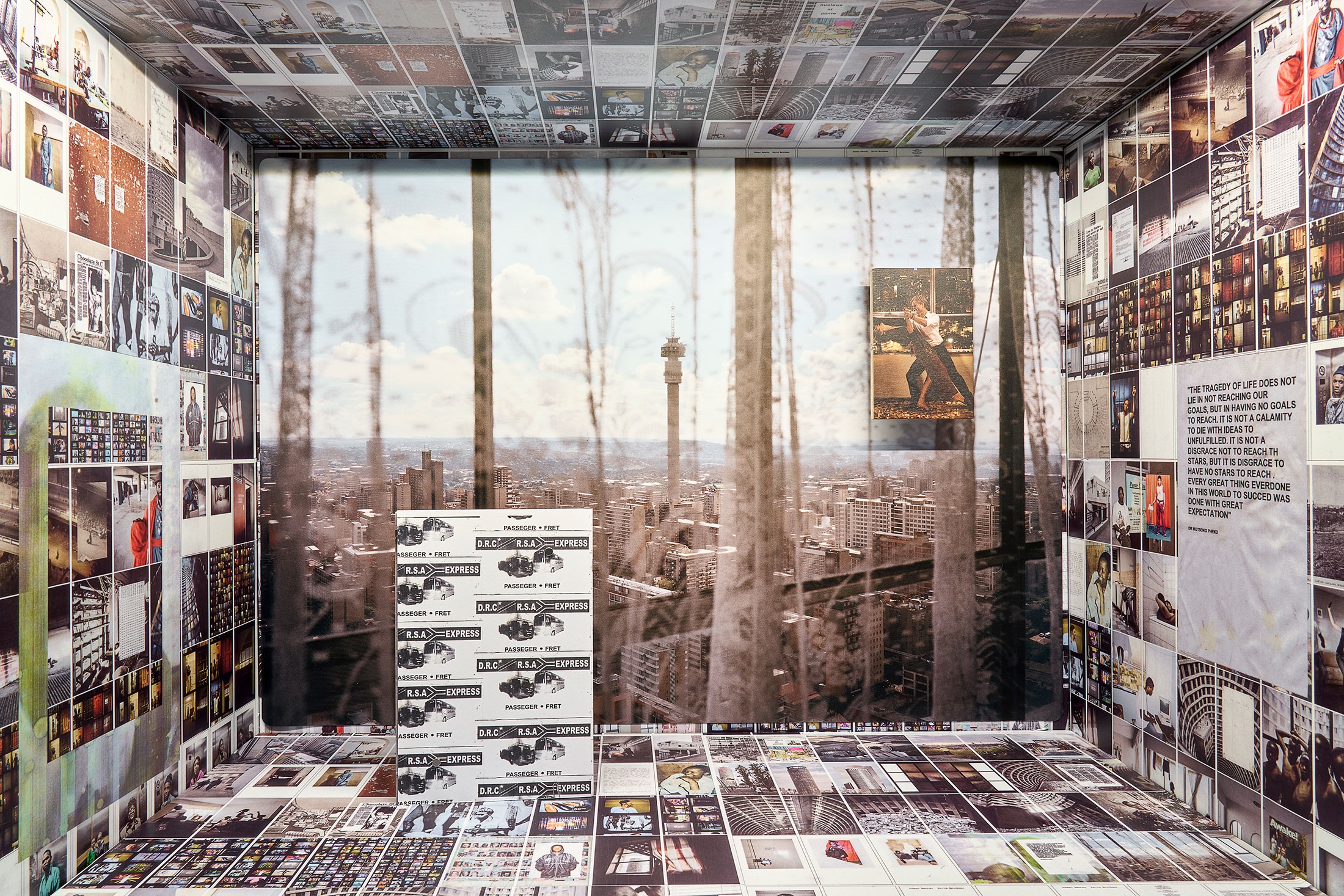
Ponte City: Making a Scene debuts the Ponte City Book Towers by Patrick Waterhouse and Mikhael Subotzky. As the first curator to engage with the towers, Lemeeze Davids chooses Luminosity to unpack the various props and component parts of these playable units. Over the course of four years, A4 has been producing the Ponte City Book Towers to house the bookmaking archive and associated material of the artists’ Ponte City project (2014–).

Davids' participation assists the artists in understanding how institutions might work with these resources, offering a case study towards their manual of use.

In Between the motion & the act, Khanya Mashabela explores agency and chance in contemporary South African photography by way of interventions from practitioners before, during, or after the capturing of an image.

Daniel Malan collaborates with Dada Khanyisa to co-curate Me, We.


1: Ponte City: Making a Scene
Curated by Lemeeze Davids
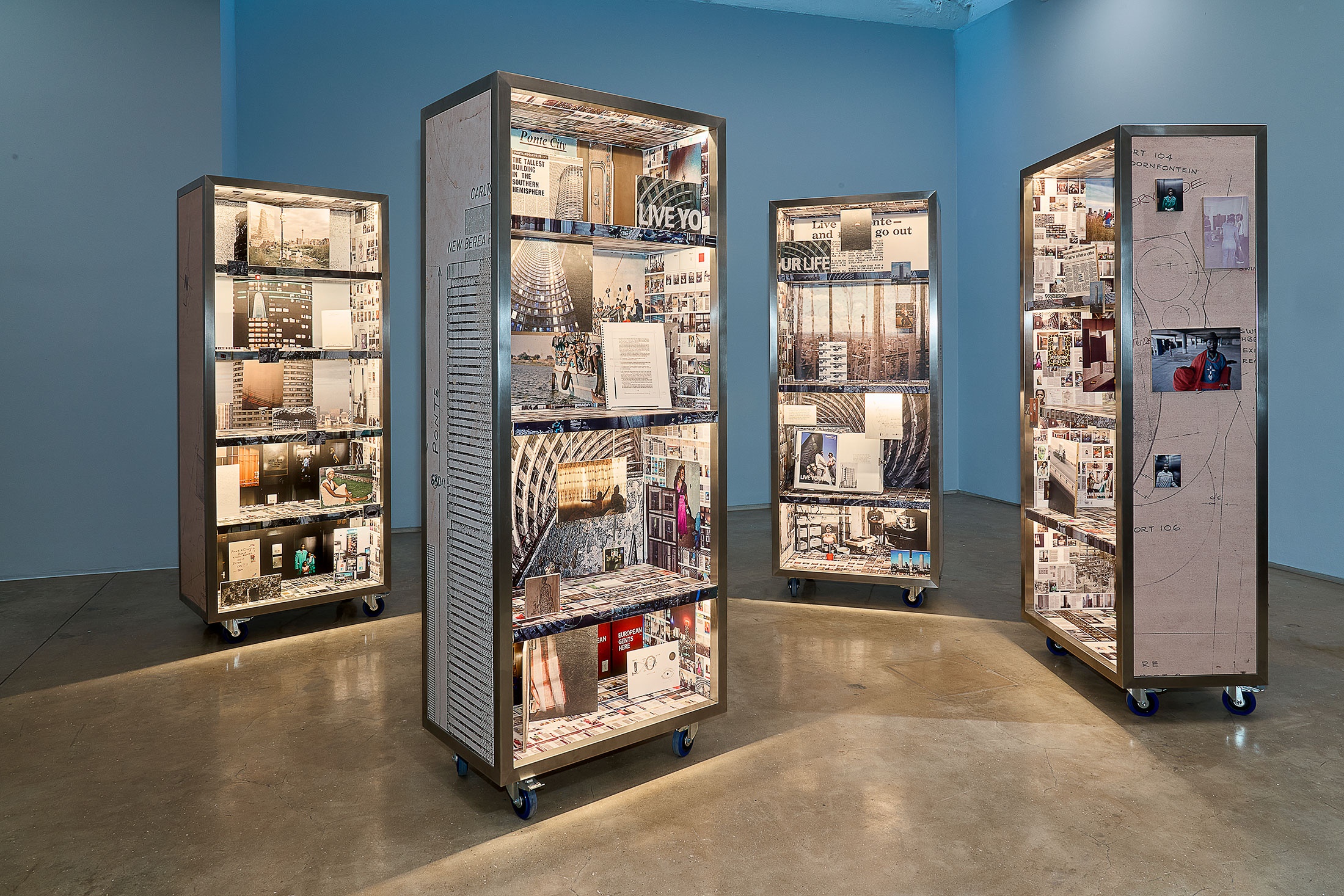
Artwork: Mikhael Subotzky & Patrick Waterhouse, Ponte City Book Towers (2026). Stainless and galvanised steel, castors, perspex lightboxes, honeycomb board storage boxes, printed vinyl, printed magnetic sheets, printed plywood, restored and reproduced print ephemera. 201 x 81 x 50 cm each. Artwork © Mikhael Subotzky, Patrick Waterhouse and A4 Arts Foundation. Image © A4 Arts Foundation.
Artwork detail: Mikhael Subotzky & Patrick Waterhouse, Ponte City Book Towers (2026). Stainless and galvanised steel, castors, perspex lightboxes, honeycomb board storage boxes, printed vinyl, printed magnetic sheets, printed plywood, restored and reproduced print ephemera. 201 x 81 x 50 cm each. Artwork © Mikhael Subotzky, Patrick Waterhouse and A4 Arts Foundation. Image © A4 Arts Foundation.


2: Between the motion & the act
Curated by Khanya Mashabela
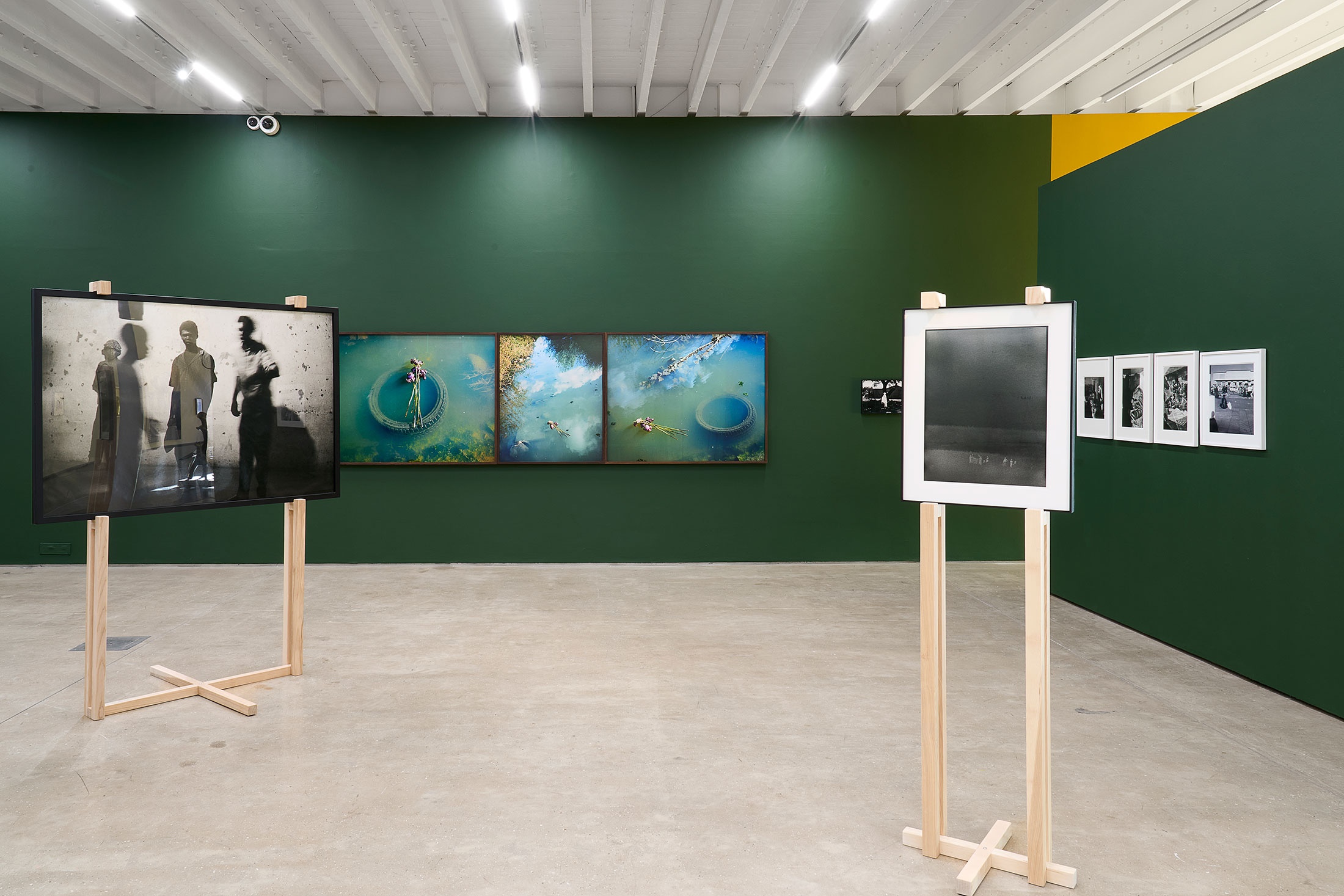
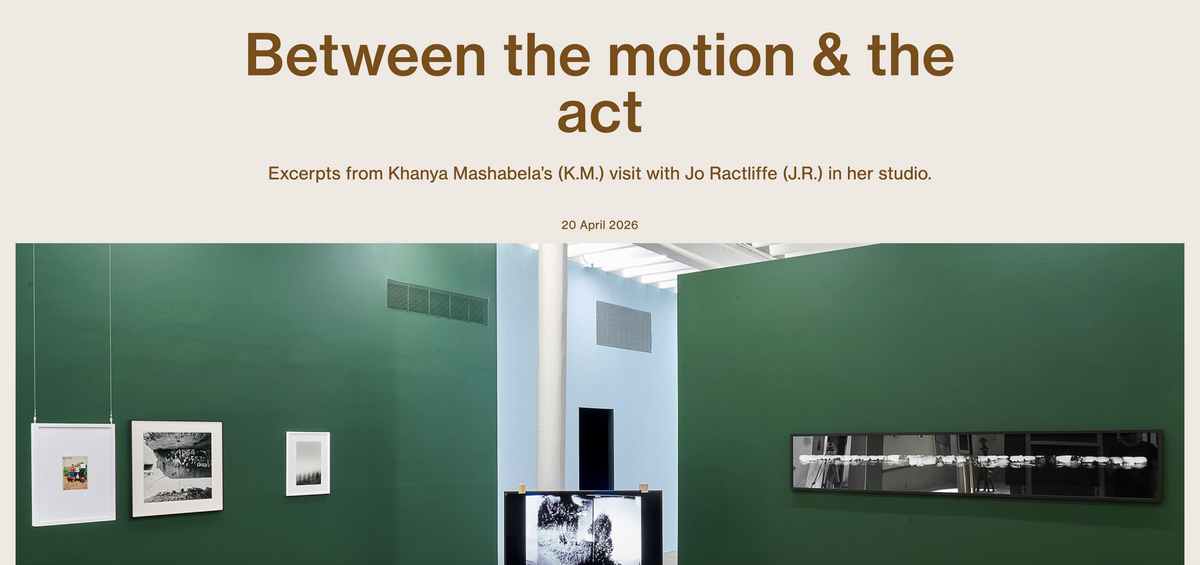
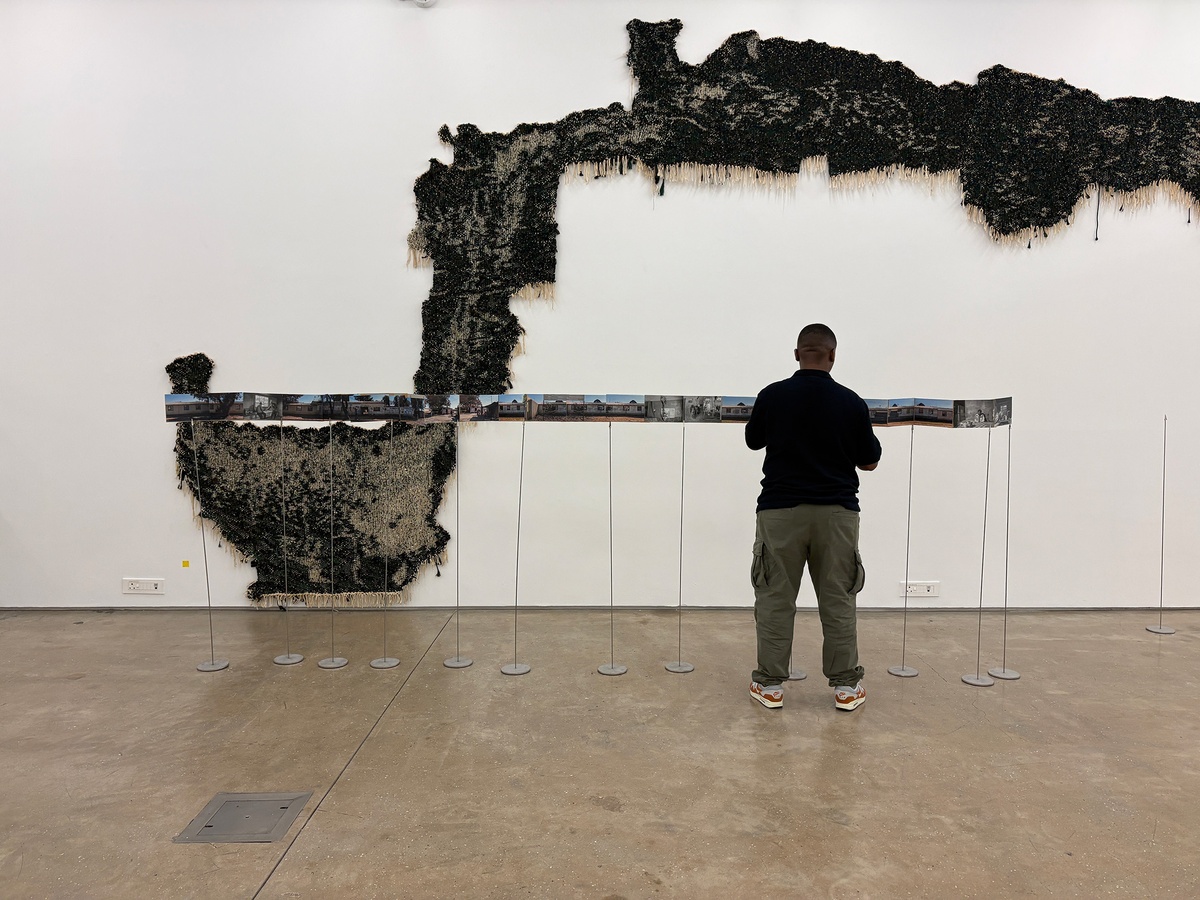
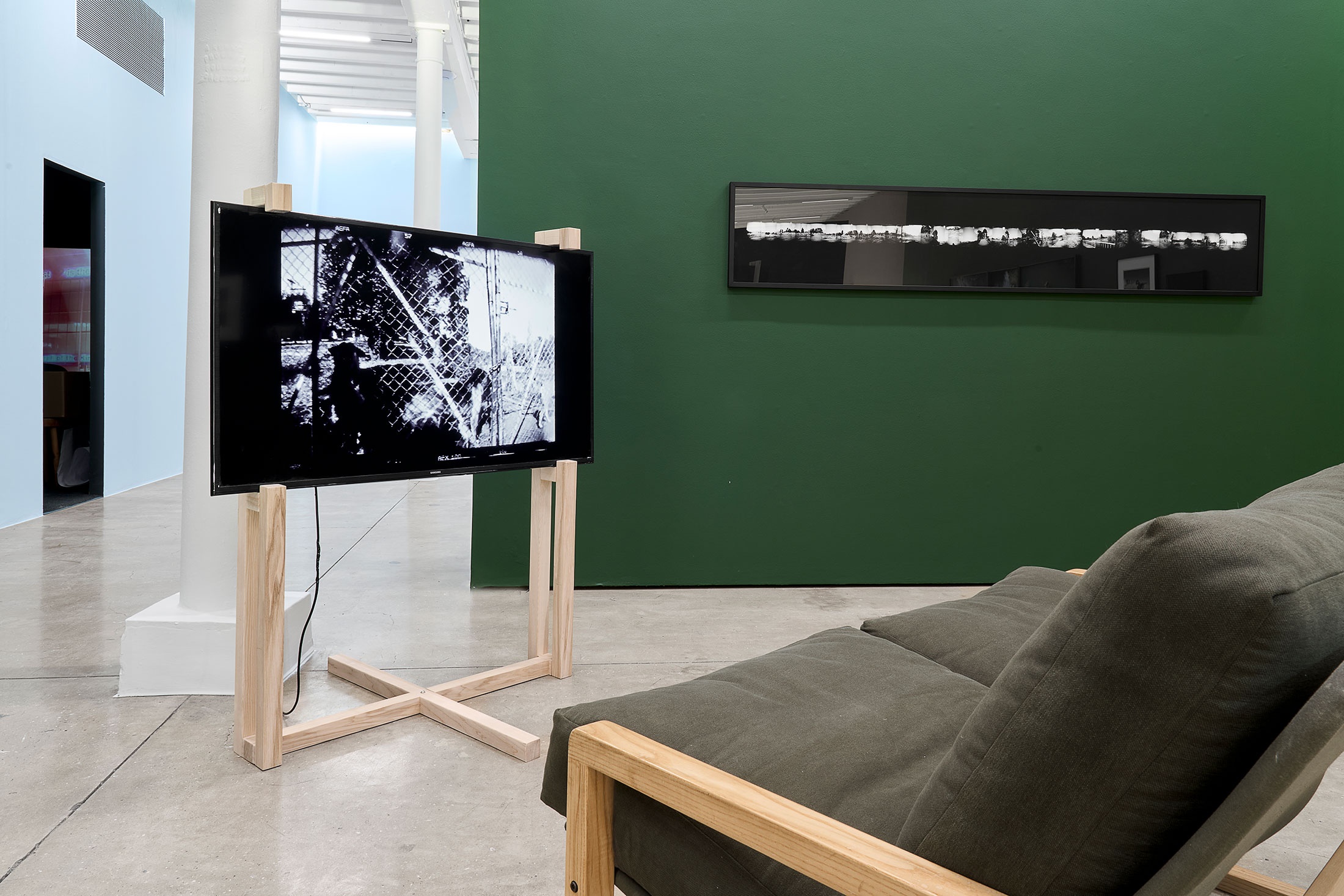
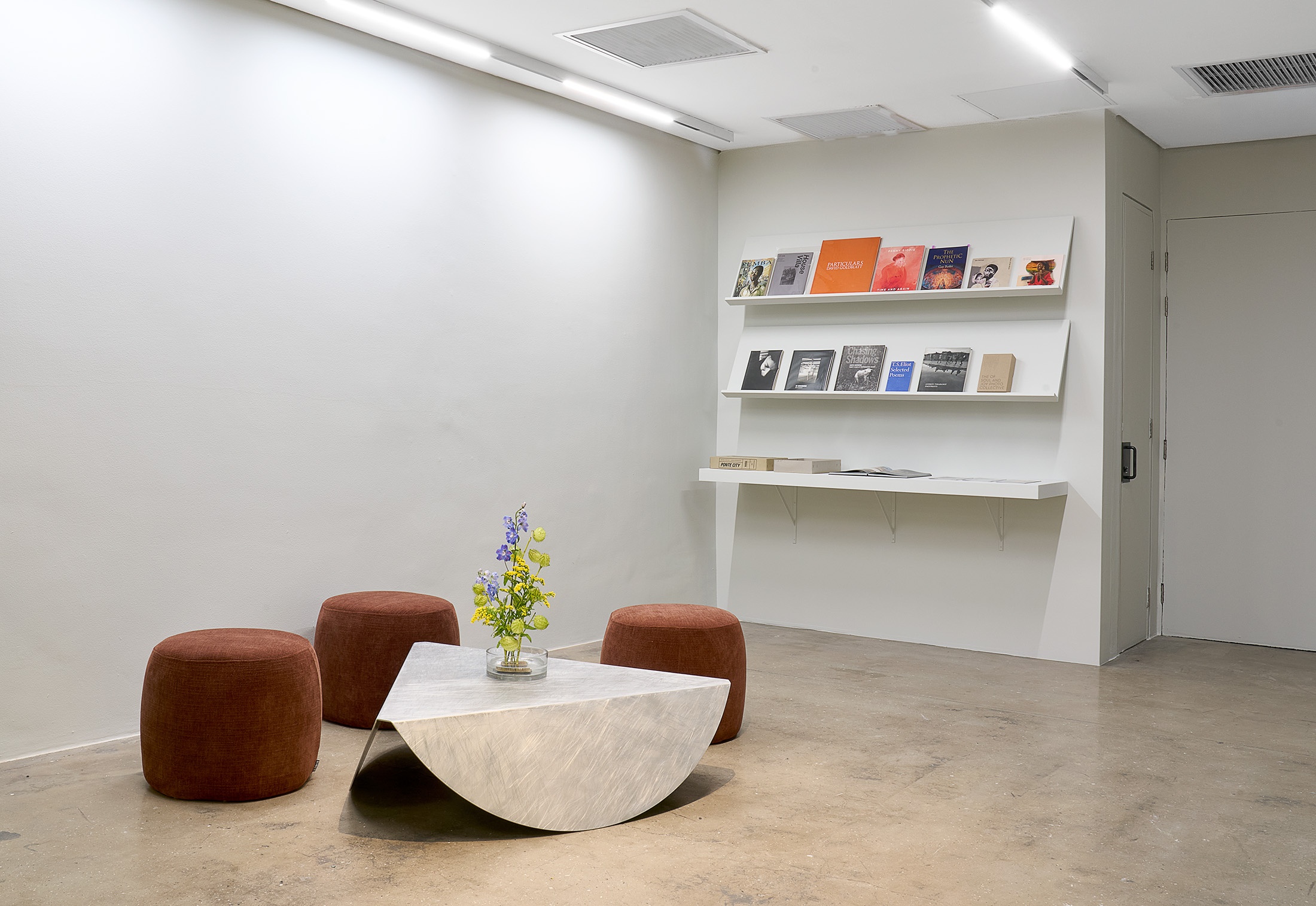
Installation view: Between the motion & the act curated by Khanya Mashabela for 1, 2, 3, May 30–September 5, 2026. Image © A4 Arts Foundation.
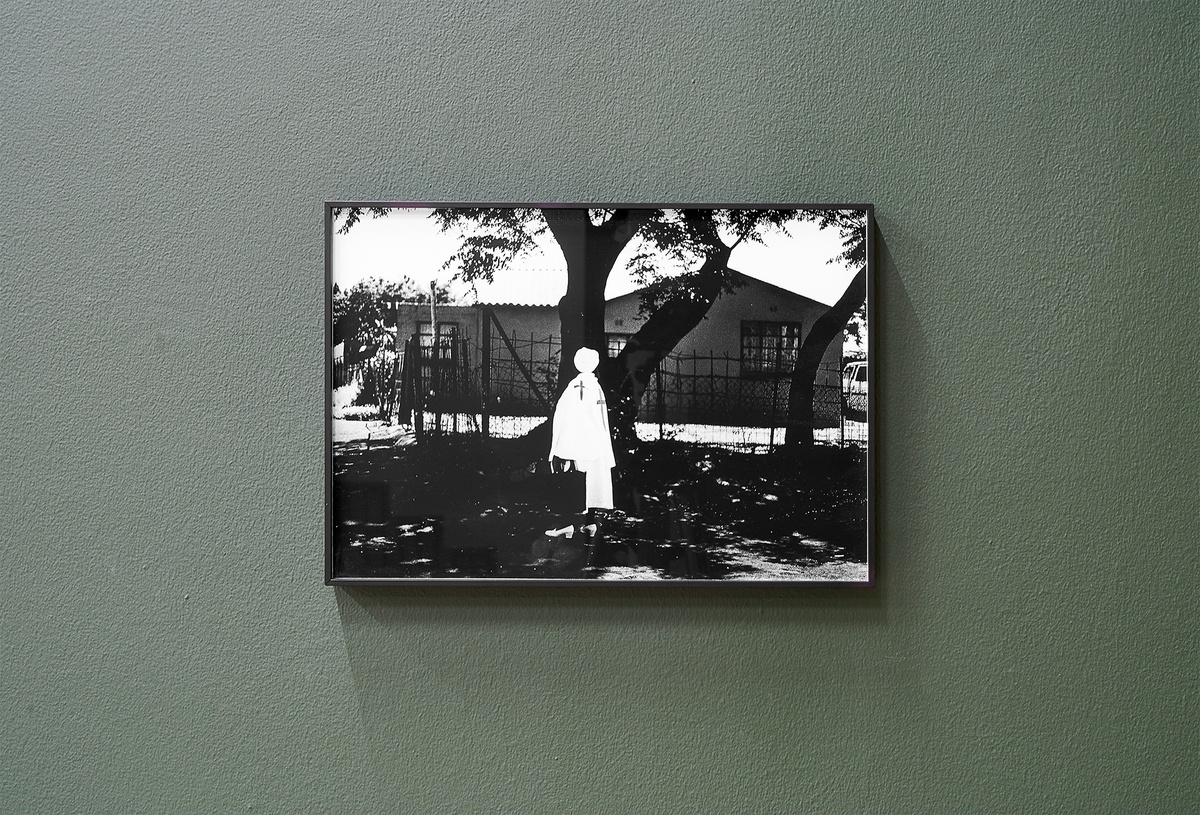
Three Trajectories
Khanya Mashabela

In their own words, Lindokuhle Sobekwa, Tshepiso Mazibuko, and Thembinkosi Hlatshwayo each reflect upon ‘Openings’, ‘Departures’, and ‘Materialities’ – from their early training and mentorship through the Of Soul and Joy programme to their present relationships with photography as working artists. – July 31, 2026

Path page
Three Trajectories
Khanya Mashabela
In their own words, Lindokuhle Sobekwa, Tshepiso Mazibuko, and Thembinkosi Hlatshwayo each reflect upon ‘Openings’, ‘Departures’, and ‘Materialities’ – from their early training and mentorship through the Of Soul and Joy programme to their present relationships with photography as working artists. – July 31, 2026
Path page

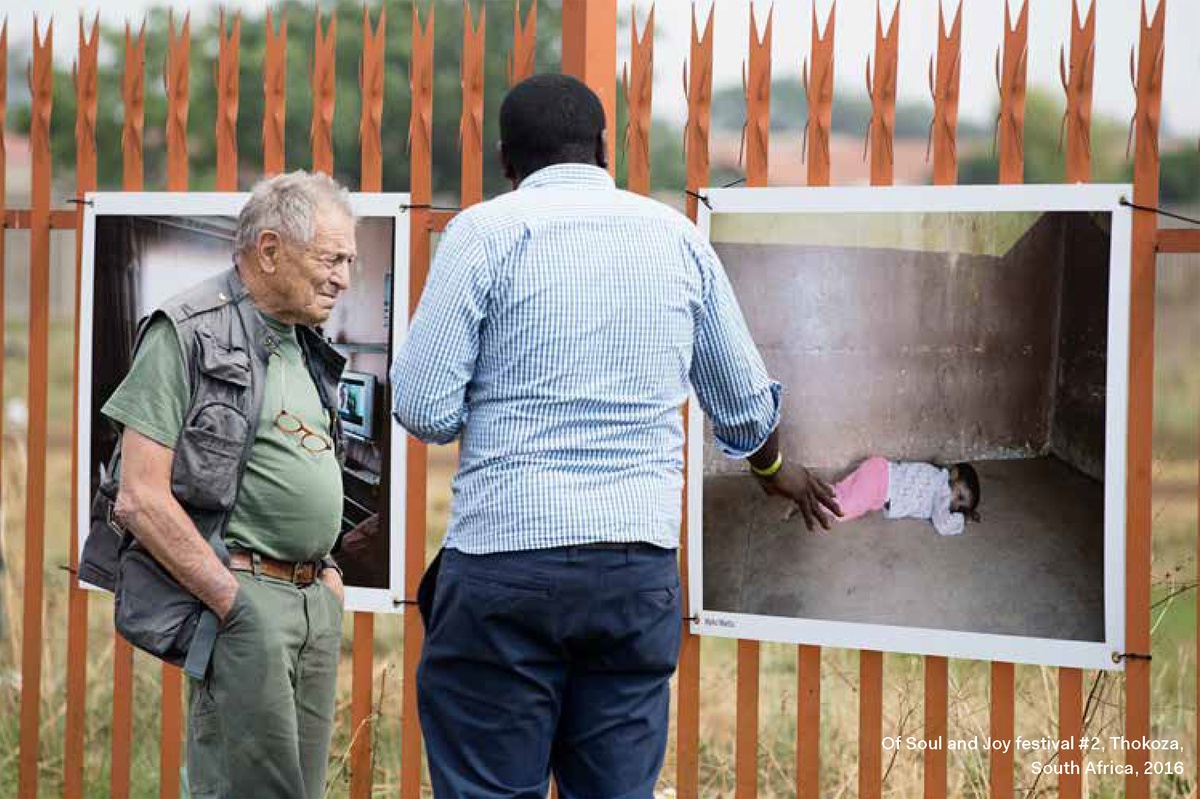
In 2012, Of Soul and Joy (OSJ) was established as an after-school photography programme at Buhlebezwe Secondary School in Thokoza, a township in the East Rand of Johannesburg, offering a sense of community and a much-needed expressive outlet to economically marginalised young people.

The aim of Of Soul and Joy is not to make everyone a photographer. It’s to introduce them to photography as an art form. Some students might come and go, but the idea is that we are a family, stronger together.

– Jabulani Dhlamini, Project Manager and Mentor, OSJ.

It is here that Lindokuhle Sobekwa (L.S), Tshepiso Mazibuko (T.M.), and Thembinkosi Hlatshwayo (T.H.) began their photographic practices.


Dhlamini, J. (5 May 2022). Harvest: Photobook! Photobook! Photobook! Marathon. Cape Town: A4 Arts Foundation. Available here.

Openings

My mother would ask local photographers to take family photos but it was a luxury that happened once a year, usually on Christmas. I remember she had to pay in installments to get the full set of my primary school portraits.

When I was in high school I thought I’d be a professional dancer. Photography is one of those things that found me by chance. I began through an after-school programme, Of Soul & Joy.

– Lindokuhle Sobekwa, in conversation (2026)

Lindokuhle and I were part of the first cohort, we all chose the name “Of Soul & Joy” together. To us it represented a chance to dream.

I wanted to be a journalist, but I couldn’t imagine where I would find the money for tuition at an institution like Rhodes University. When I received a scholarship through OSJ to go to the Market Photo Workshop, I thought I would do photography for a year while I figured things out.

And then I never let go.

– Tshepiso Mazibuko, in conversation (2026)

When I was younger, I felt like I couldn’t verbalise my thoughts so I needed another medium. In Grade 11 or 12, I began taking photos with my phone. I'd show them to my close friends and ask them what they thought they meant.

I still do that, but now I ask them how the photographs feel.

– Thembinkosi Hlatshwayo, in conversation (2026)

Departures

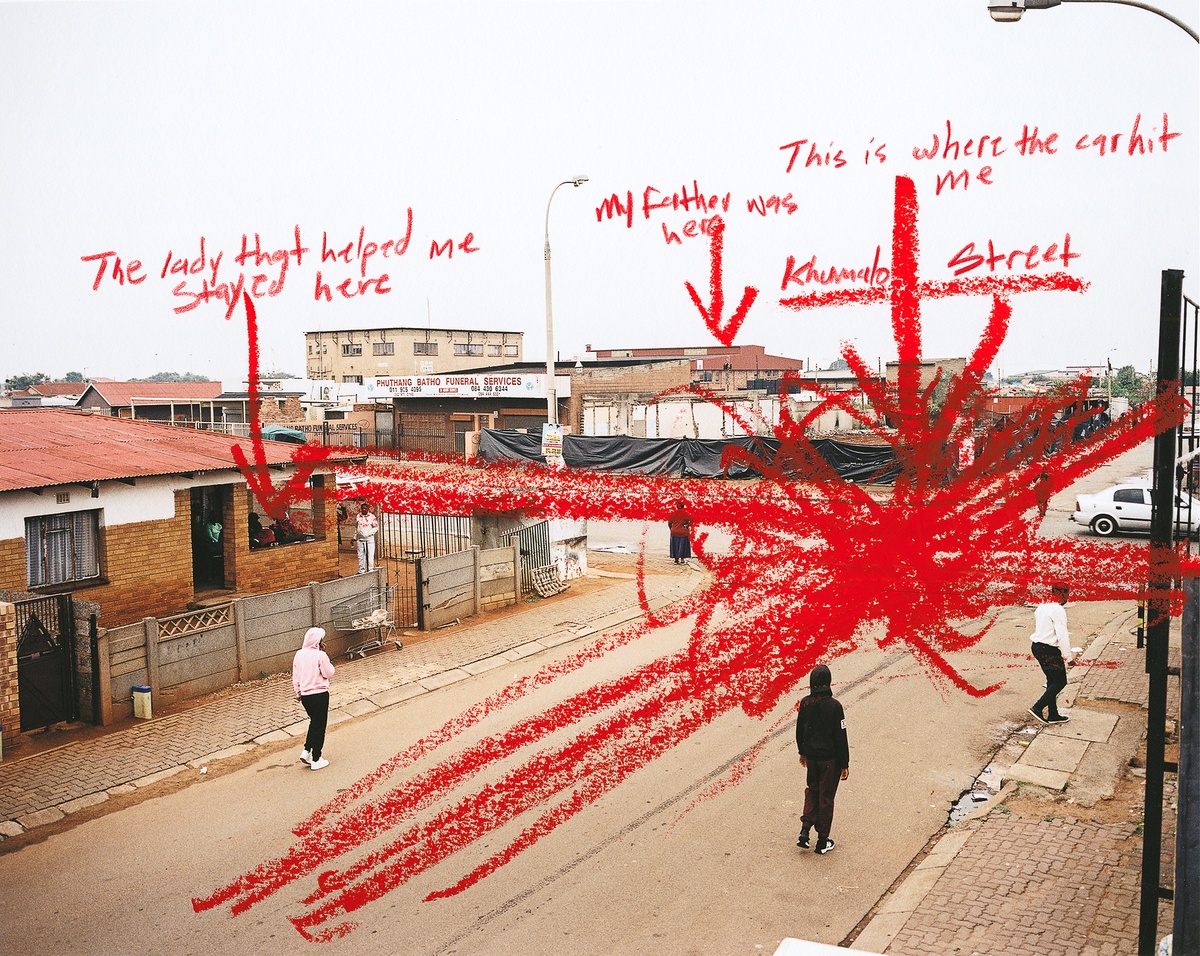
Working on I carry Her photo with Me was when I really began to feel free to tell stories the way I wanted. I had finished the dummy and both Michael Mack and I felt it was a solid book. Then I showed it to my brother, and he said, "But you don't have a photograph of yourself. And you don't have a photograph of where the car hit you."

I went back through all my self-portraits, but none of them felt right. I returned to the place where the accident happened and took a photograph there. It looked like an ordinary day, so I began drawing onto the image, marking what I remembered. That photograph became the centre spread of the book.

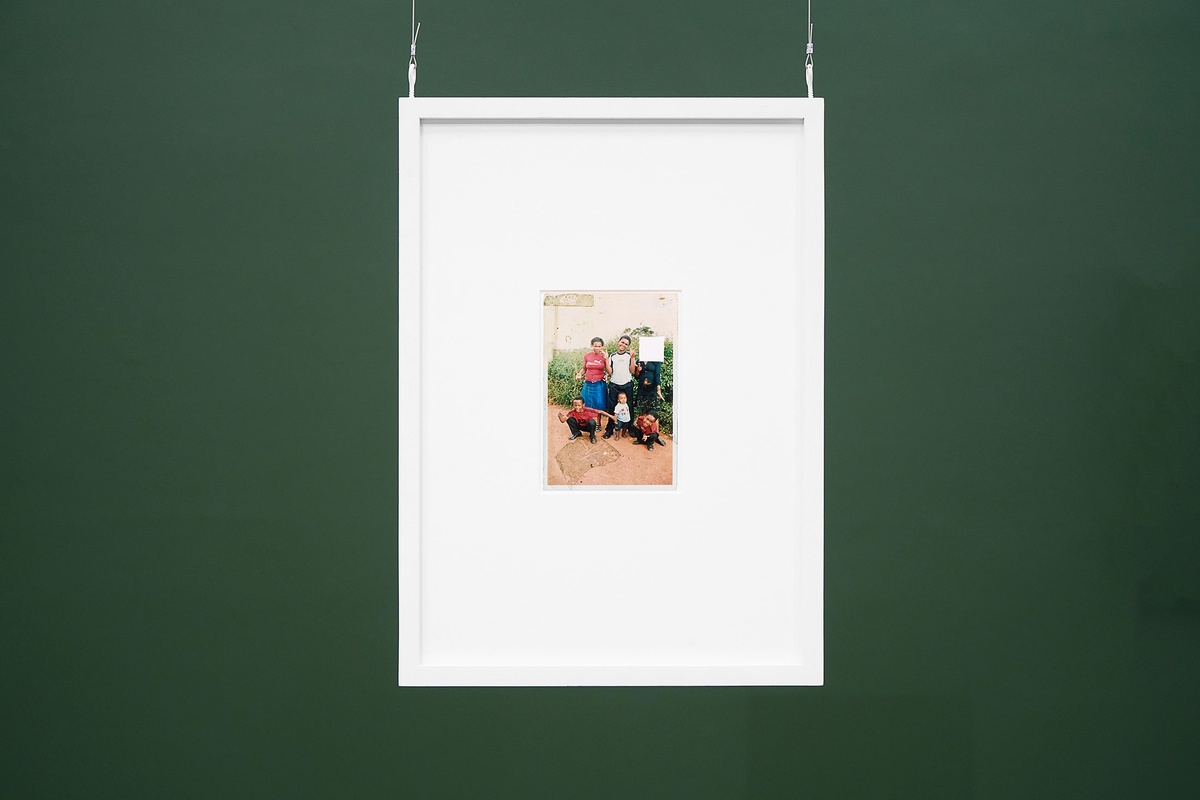
I began thinking differently about the relationship between text and image, looking through old family photographs, writing onto them, making marks. Realising that I could intervene in the photographs in that way felt incredibly liberating. It opened up a new visual language for telling stories that photography alone couldn't hold.


Sobekwa, L. (2024). I carry Her photo with Me. London: MACK BOOKS. Available here.

Documentary photography gave me the tools I needed but it felt like there wasn’t room to play.

I was learning about the politics of photography, particularly the burden of representation and the othering gaze, and I realised it was time for me to find my own voice. I started experimenting with materiality and working with film.

Taking photographs began to feel like more than just documentation. I was photographing emotions.

– Tshepiso Mazibuko, in conversation (2026)

In some ways OSJ represented a more ‘traditional’ documentary photography which I automatically fell into, so working on ‘Slaghuis’ was intimidating. I asked Jabulani and some of my peers what they thought about the idea and they said, “Just do it and see what happens.”

I had just produced ‘Betterment Promised’ (2016), about the shared home of an Islamic migrant community, and I felt challenged to return to my own home. Within my family’s tavern I opened myself up, exploring its textures and my feelings about the place, reimagining specific scenes and the gestures of the patrons.

My family was curious about the work. They didn’t understand it visually but they understood what the work was doing inside of me.

– Thembinkosi Hlatshwayo, in conversation (2026)

Materialities

I saved up and bought my first analogue, medium format camera, a Mamiya RB67. It’s a big camera and it makes a lot of noise.

One of the first photographs I made with it was of my sister Ziyanda's dress hanging on the washing line after she passed away. My family had washed her clothes before putting them away, and that photograph later became the cover image for I carry Her photo with Me.

The original negative was marked by a significant light leak that we eventually had to crop out. I made many mistakes in those early days, but that's how I learned the camera. Those mistakes became part of the process of finding my way as a photographer.

– Lindokuhle Sobekwa, in conversation (2026)

I've been exploring time and movement. I'm interested in seeing how places change, and how I change with them.

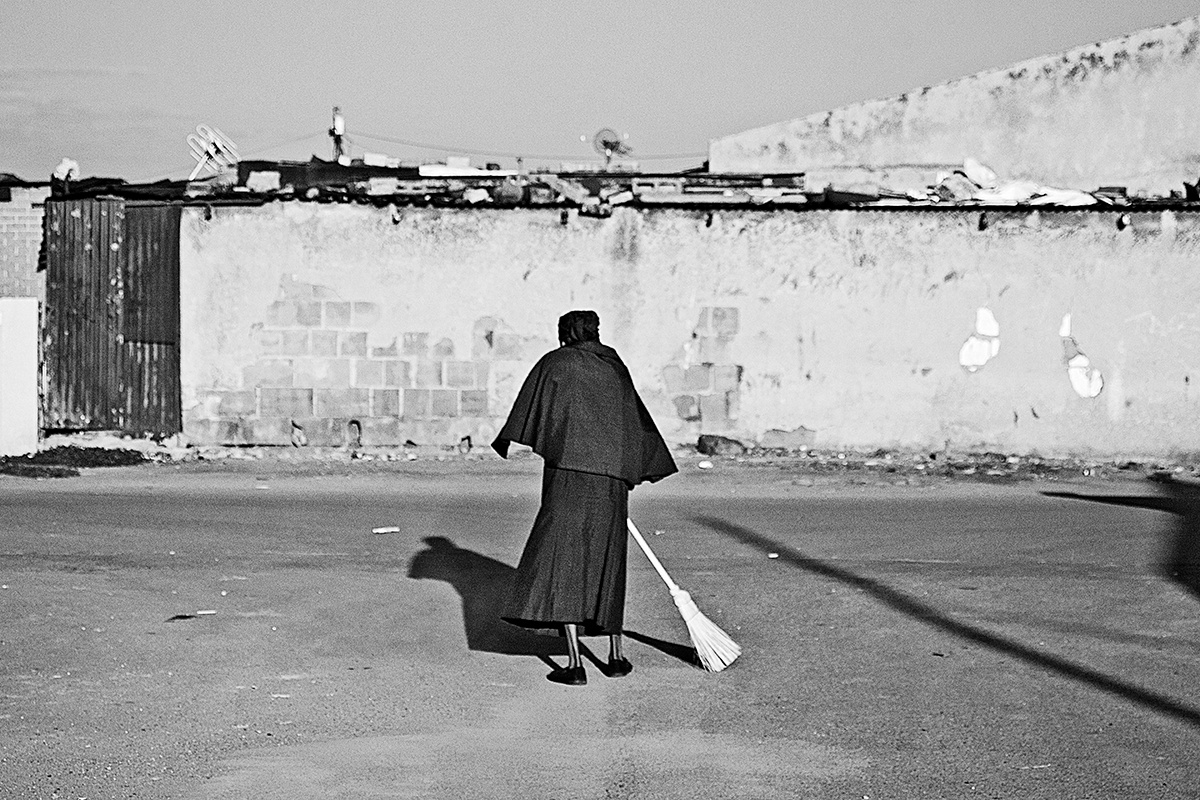
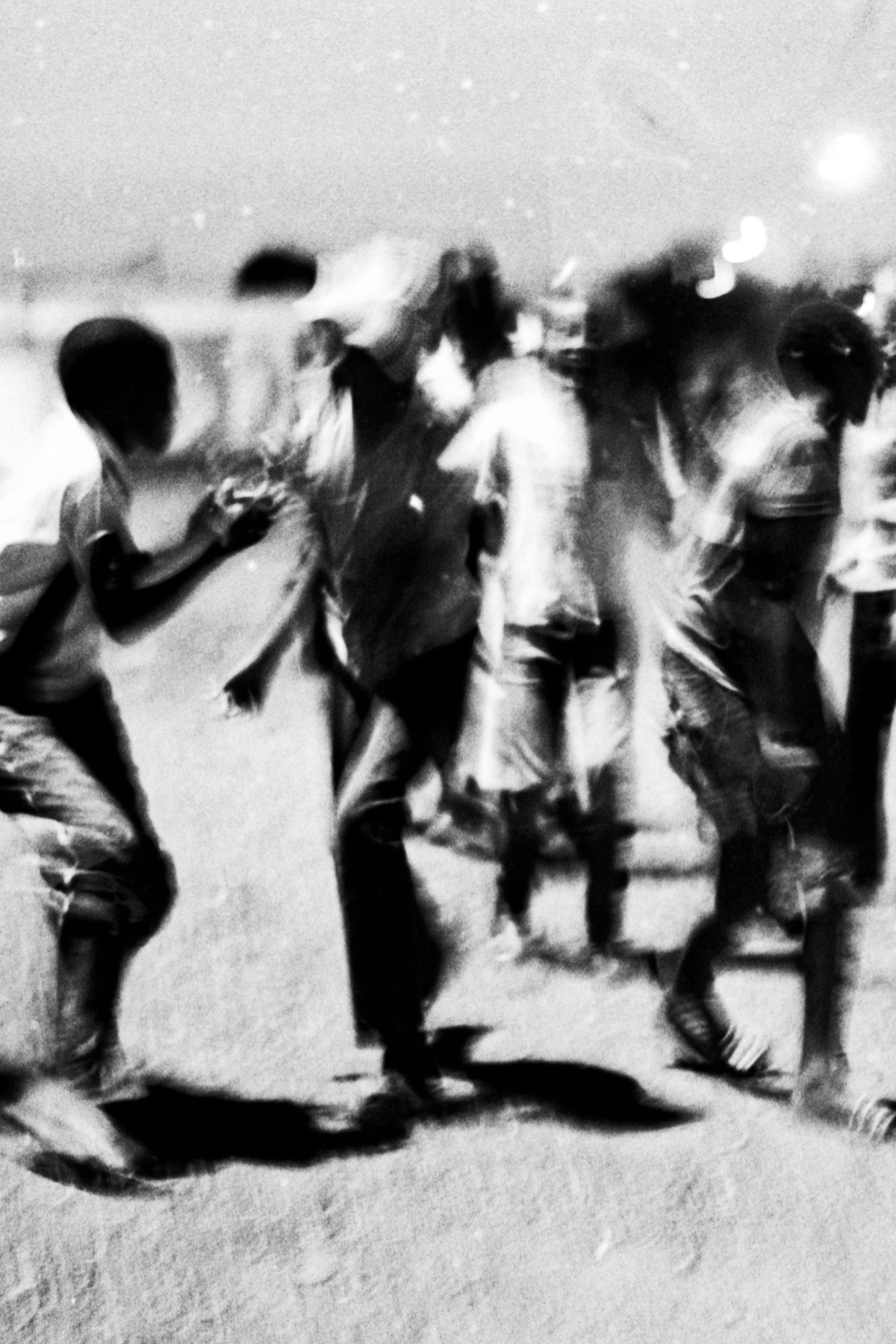
After seeing Ed Ruscha's Every Building on the Sunset Strip (1966), I wondered what that approach might look like in Thokoza. I photographed Hostel Strip (2025) from the window of a moving minibus taxi, then stitched the photographs together. The lines of the ground don't perfectly connect, but I'm not interested in creating "perfect" photographs. I want people to feel a sense of movement.

It probably goes back to dancing, rhythm has always stayed with me. I haven't found a way to bring performance into my photographic practice, but maybe one day.

– Lindokuhle Sobekwa, in conversation (2026)

In 2016, I won a prize at the Addis Foto Fest in Ethiopia and was awarded a really great digital camera. That night everyone was going out to celebrate and I just wanted to stay in my hotel room and hold the camera and stare at it.

But when I got home and started shooting, it felt like a burden. People sensed that it was an expensive thing. I had to look around to see that the ‘coast was clear’ before taking it out… It was killing my process.

That’s part of what pushed me further towards analogue photography.

– Tshepiso Mazibuko, in conversation (2026)

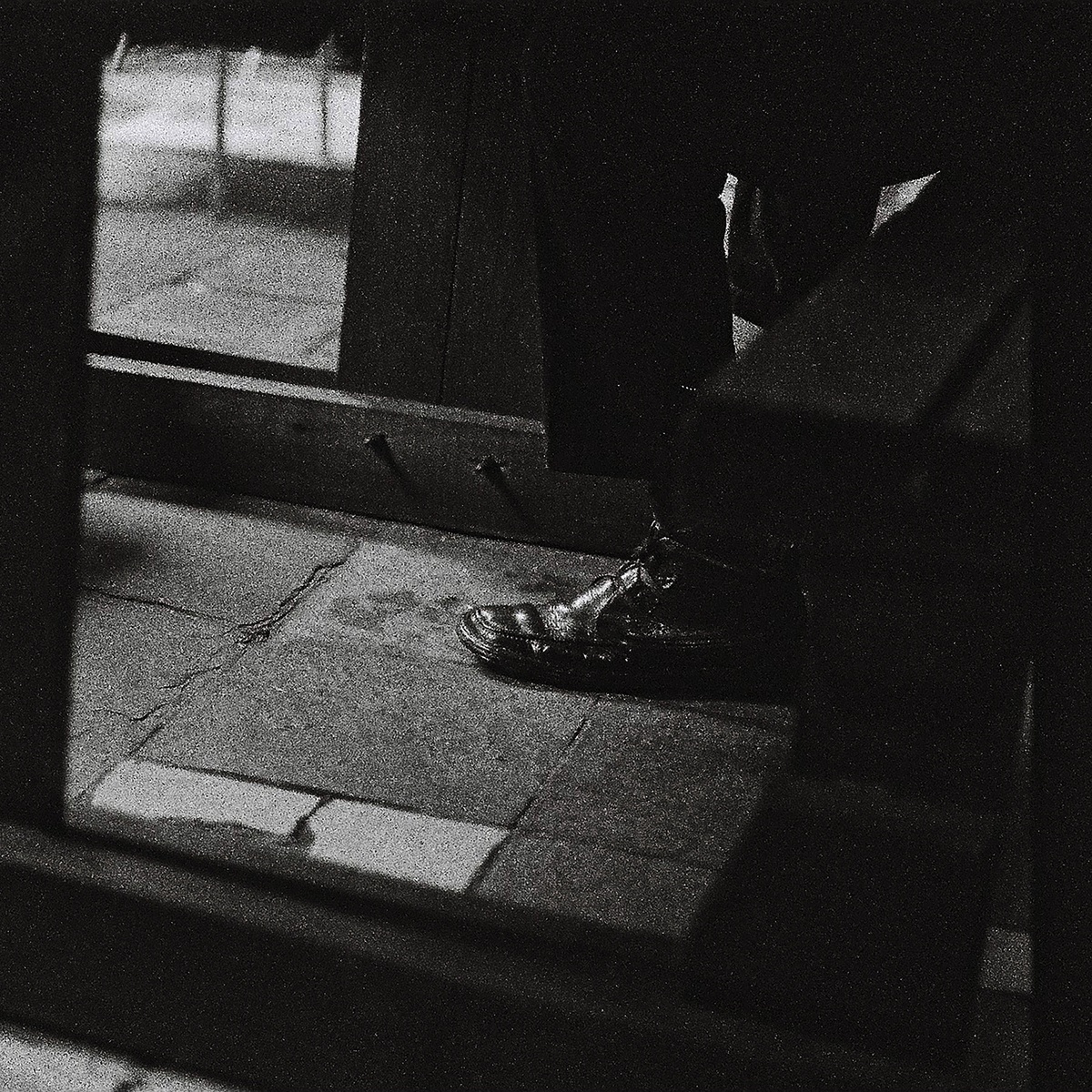
Over time analogue photography has trained my eye. I’m able to see a scene in black-and-white before I take the photo, and I know what the light and the shadows are going to do.

It also made me more patient and intentional. I know I'm working with a limited number of frames so I give myself no more than three shots: one to get the exposure right and two for creativity and composition.

– Tshepiso Mazibuko, in conversation (2026)

Film doesn't really expire. There's never a moment when you can't use it, the effect just changes.

– Tshepiso Mazibuko, in conversation (2026)


Tshepiso Mazibuko came to present her work to my class at OSJ – I think she was at the Market Photo Workshop at the time. She had photographed a body of work with expired film. I was deeply inspired by the idea of an image with an ‘unclean’ surface.

– Thembinkosi Hlatshwayo, in conversation (2026)

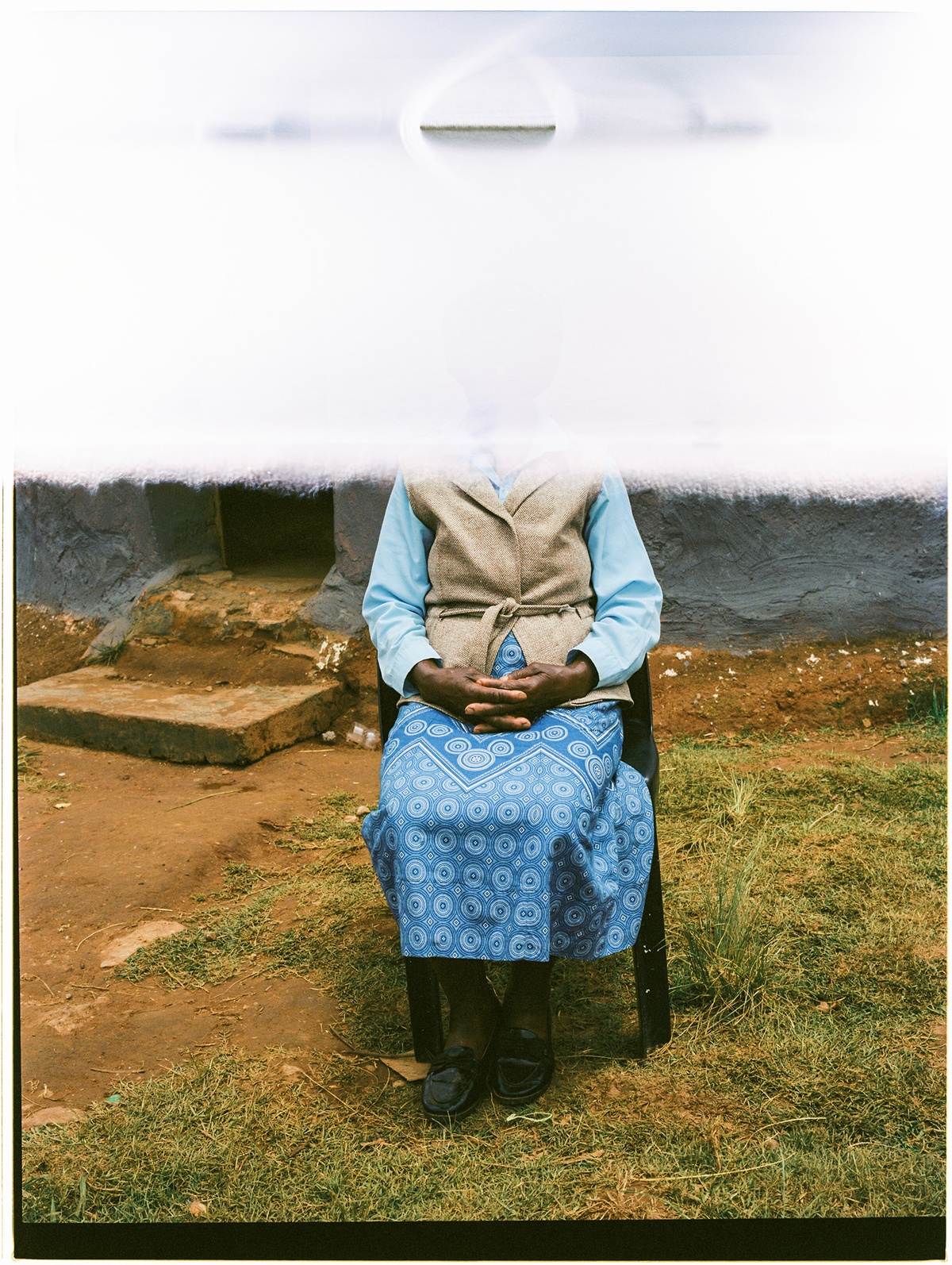
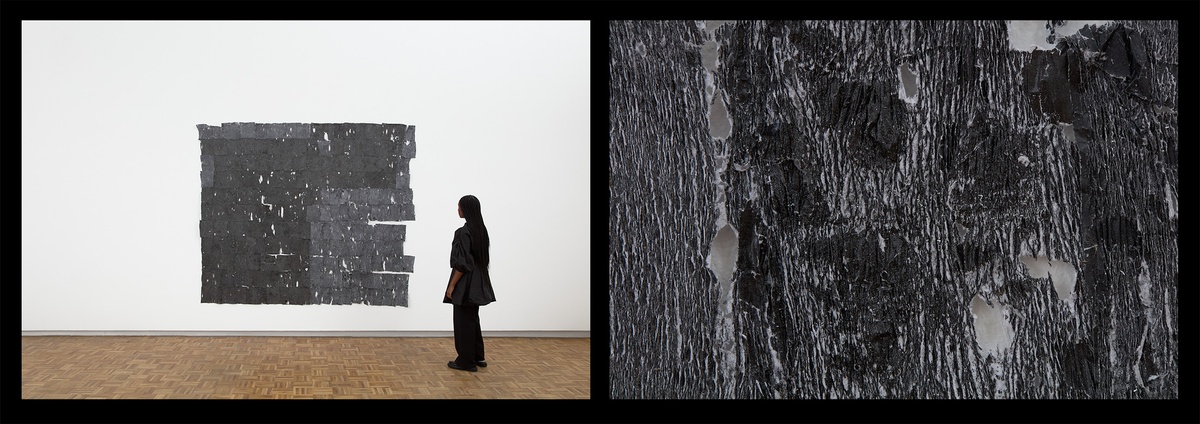
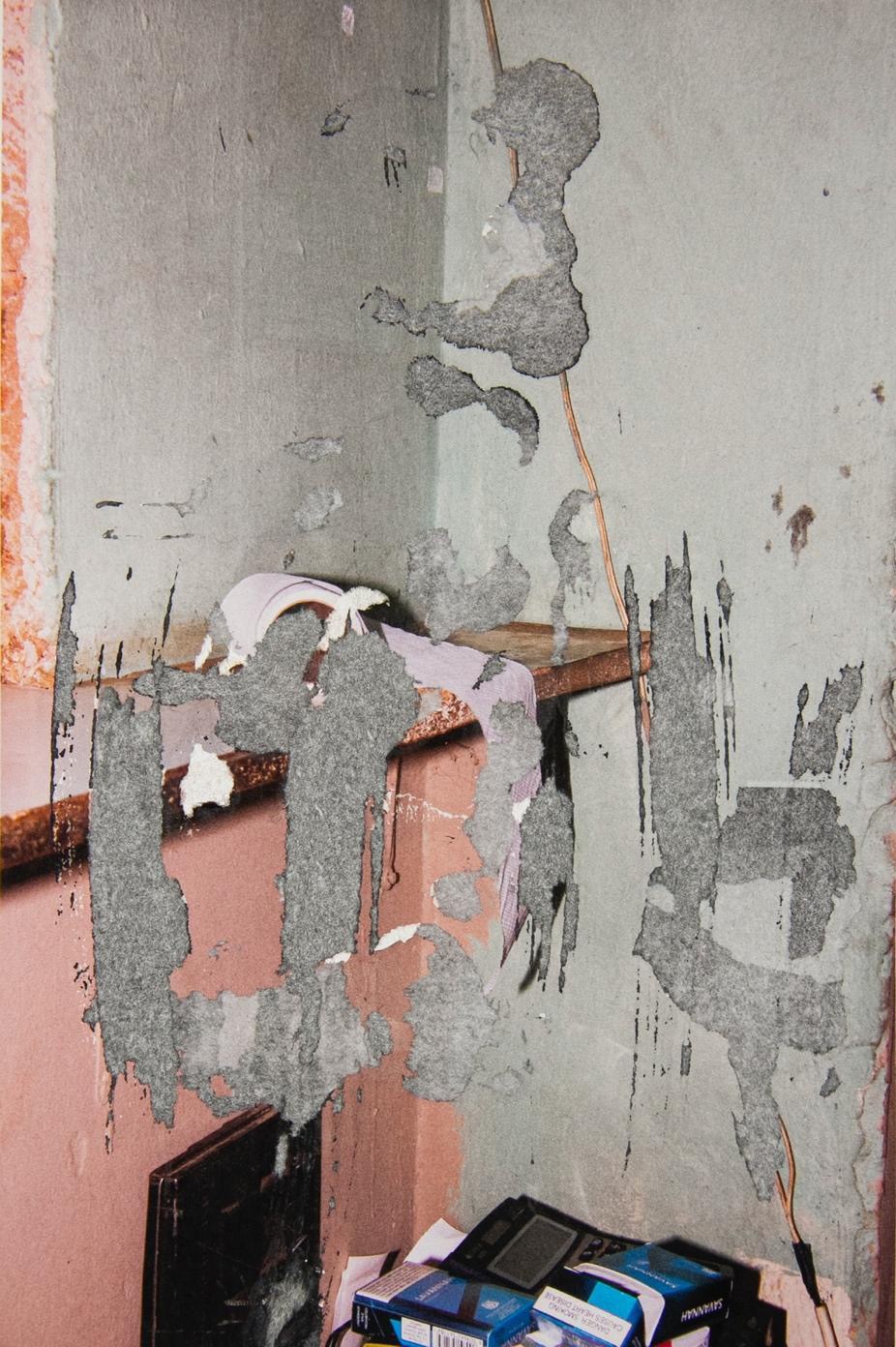
I've been working with the paper itself as a form of expression and exhibiting that as the final image. I’m making unique artworks rather than re-photographing the altered surfaces.

I think I’m a ‘visual artist’ more than a ‘photographer’ but I don’t mind either label… Yesterday I was photographing my brother and I was reminded of how much I enjoy the feeling. Sometimes it feels like breathing. Like taking a deep breath in and out.

– Thembinkosi Hlatshwayo, in conversation (2026)

Installation view: Between the motion & the act curated by Khanya Mashabela for 1, 2, 3, May 30–September 5, 2026. Image © A4 Arts Foundation.


3: Me, We
Co-curated by Daniel Malan and Dada Khanyisa
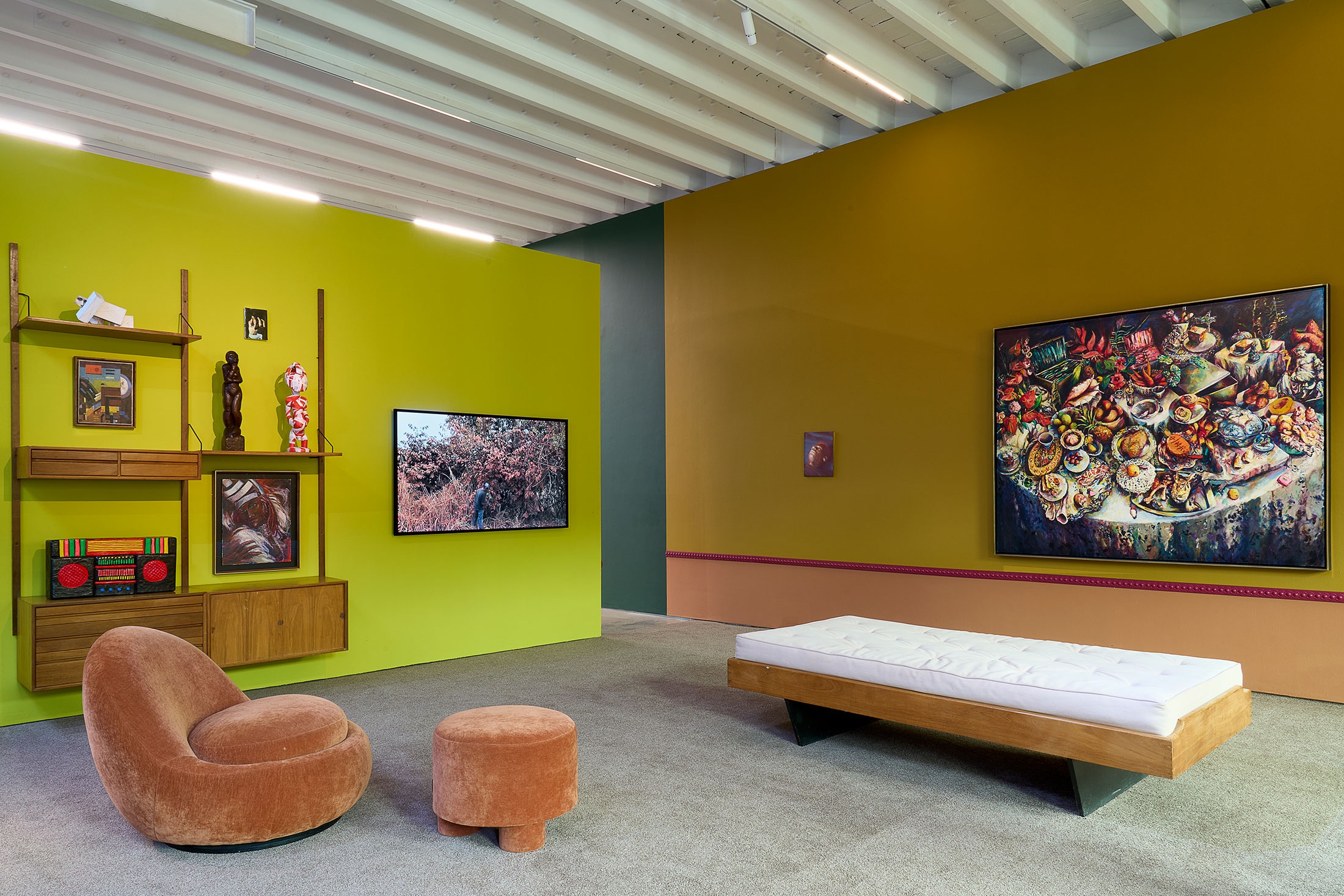
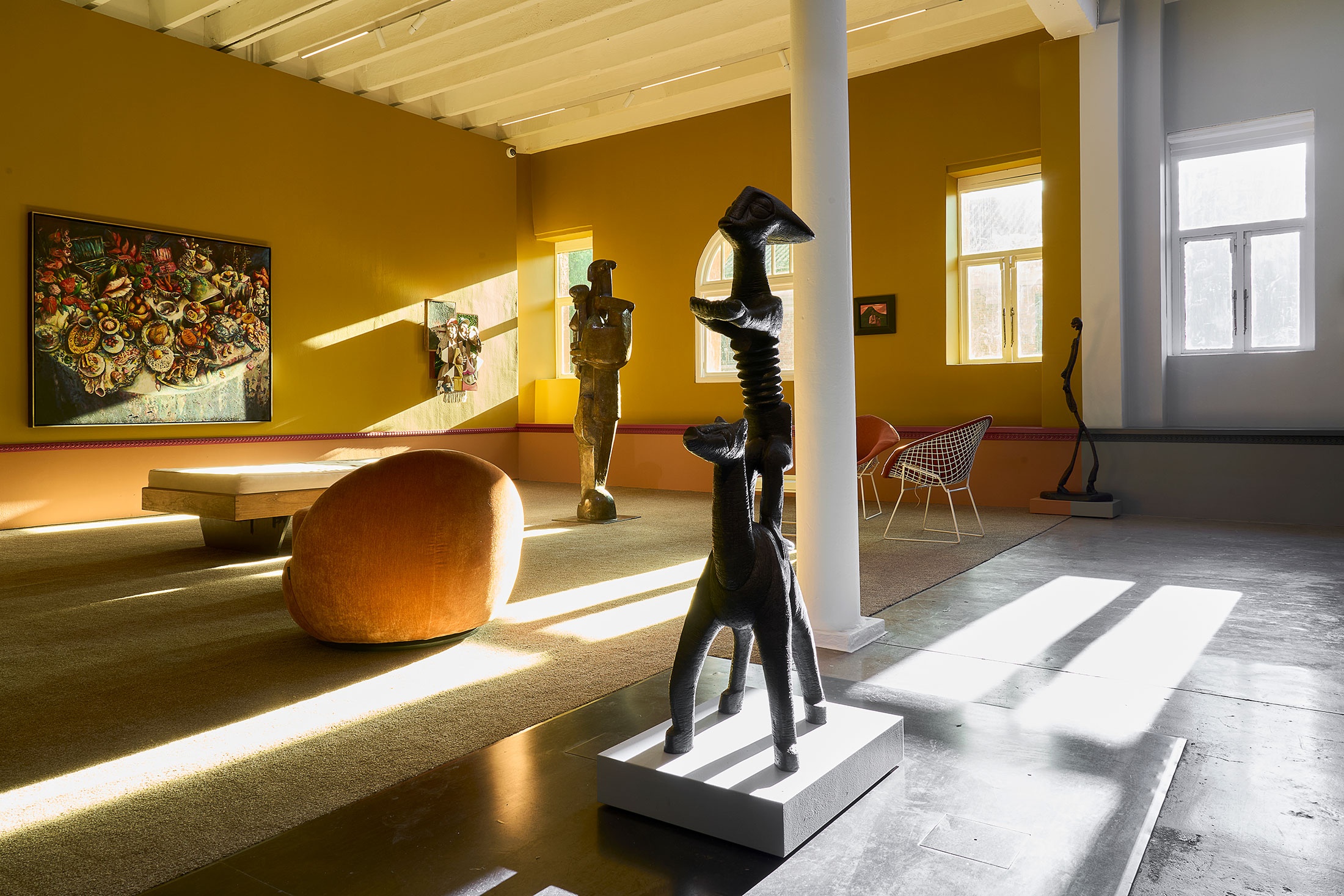
Installation view: Me, We curated by Daniel Malan and Dada Khanyisa for 1, 2, 3, May 30–September 5, 2026. Image © A4 Arts Foundation.
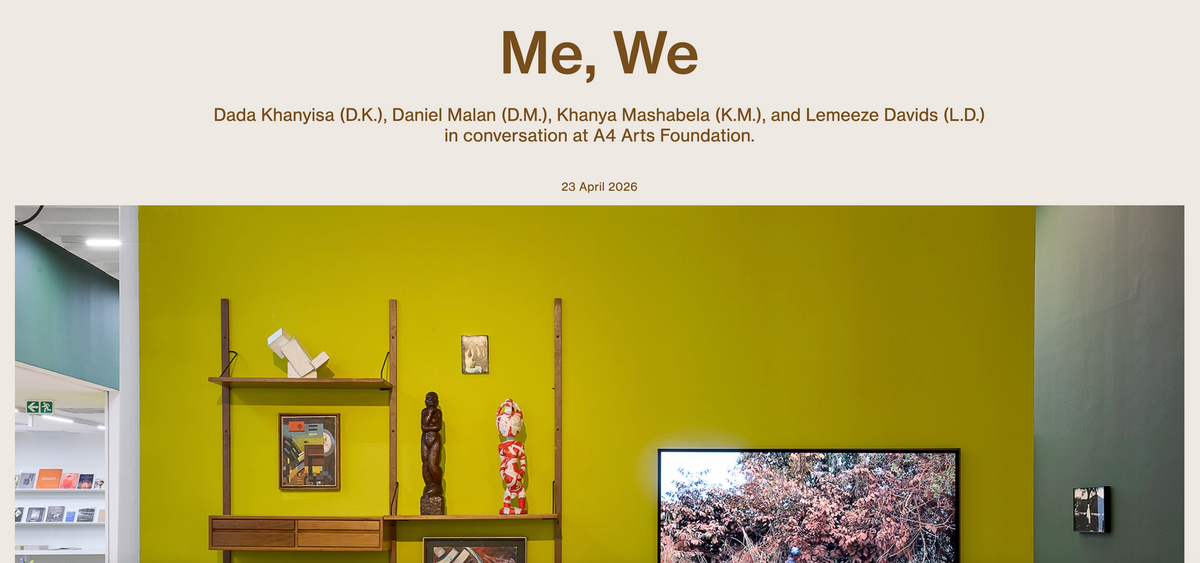
Installation view: 1, 2, 3 curated by Lemeeze Davids, Khanya Mashabela, Daniel Malan and Dada Khanyisa, May 30–September 5, 2026. Image © A4 Arts Foundation.
Text