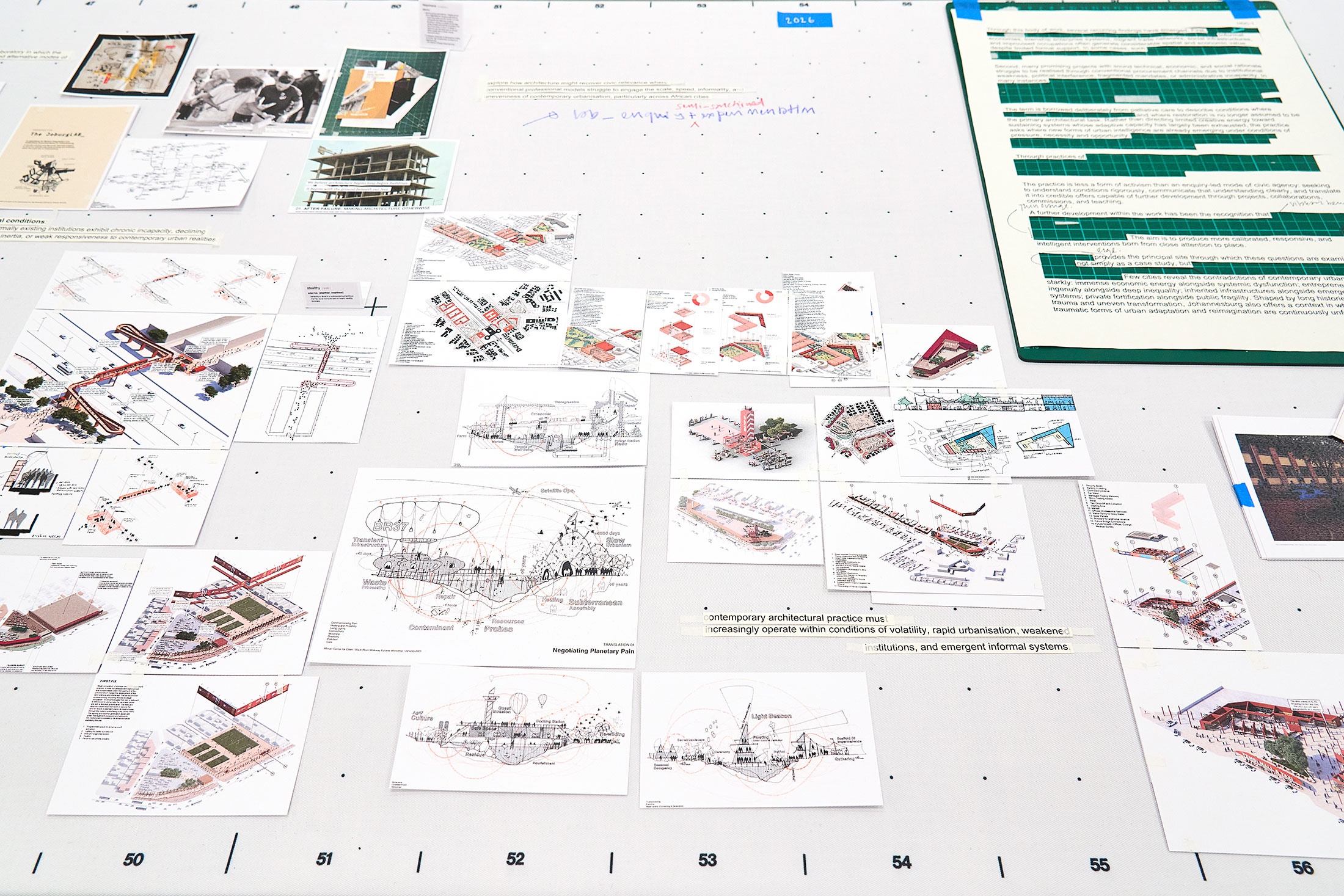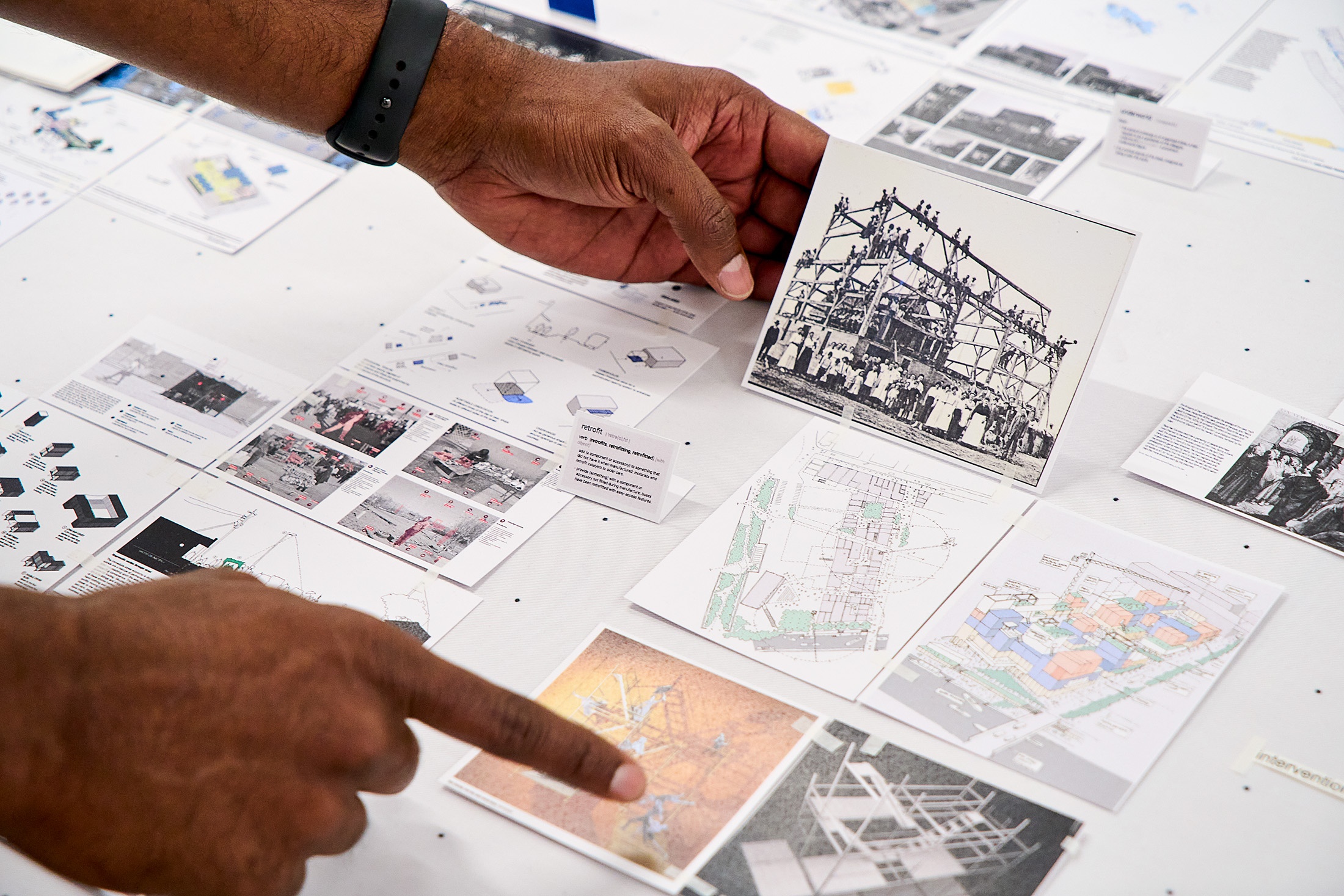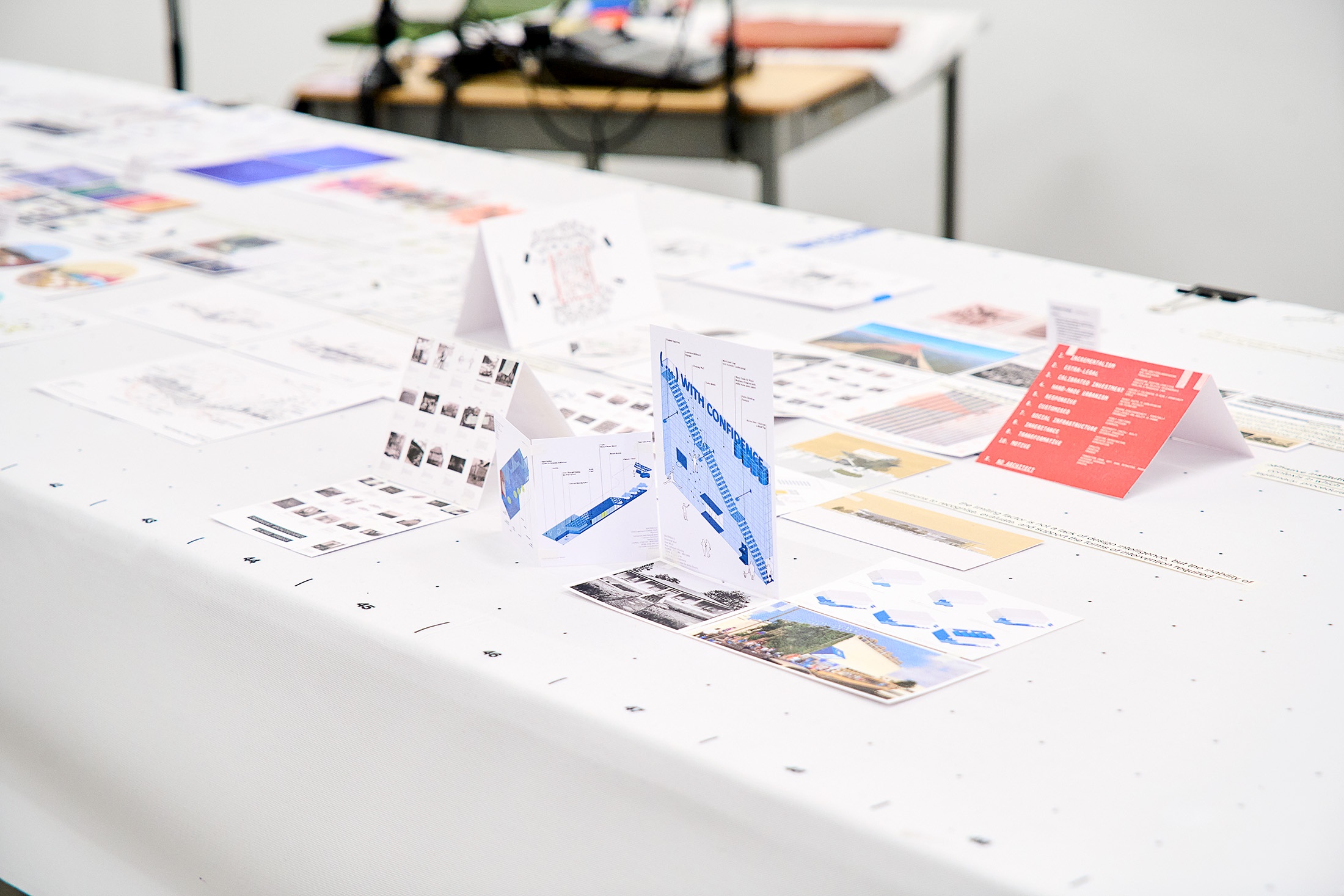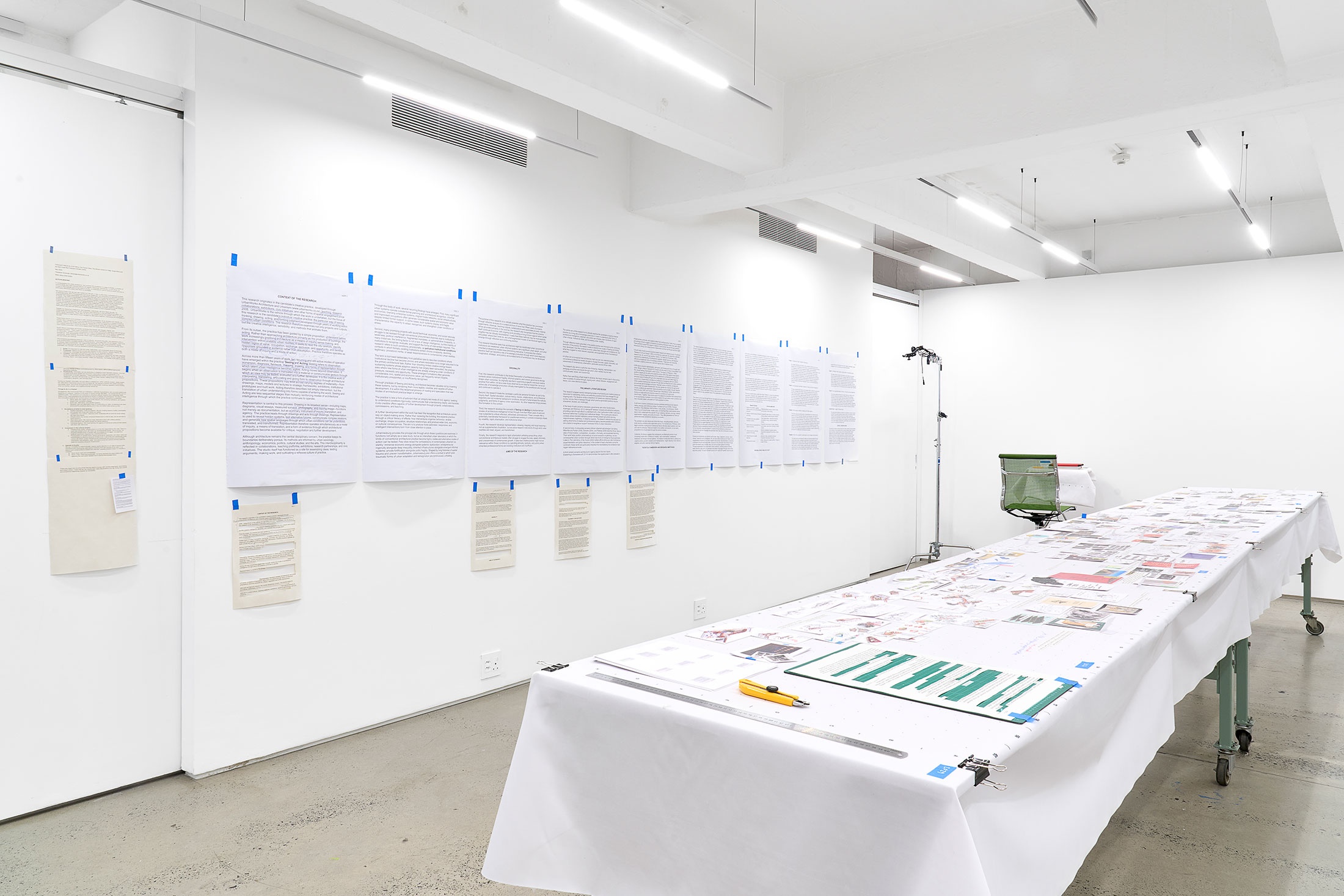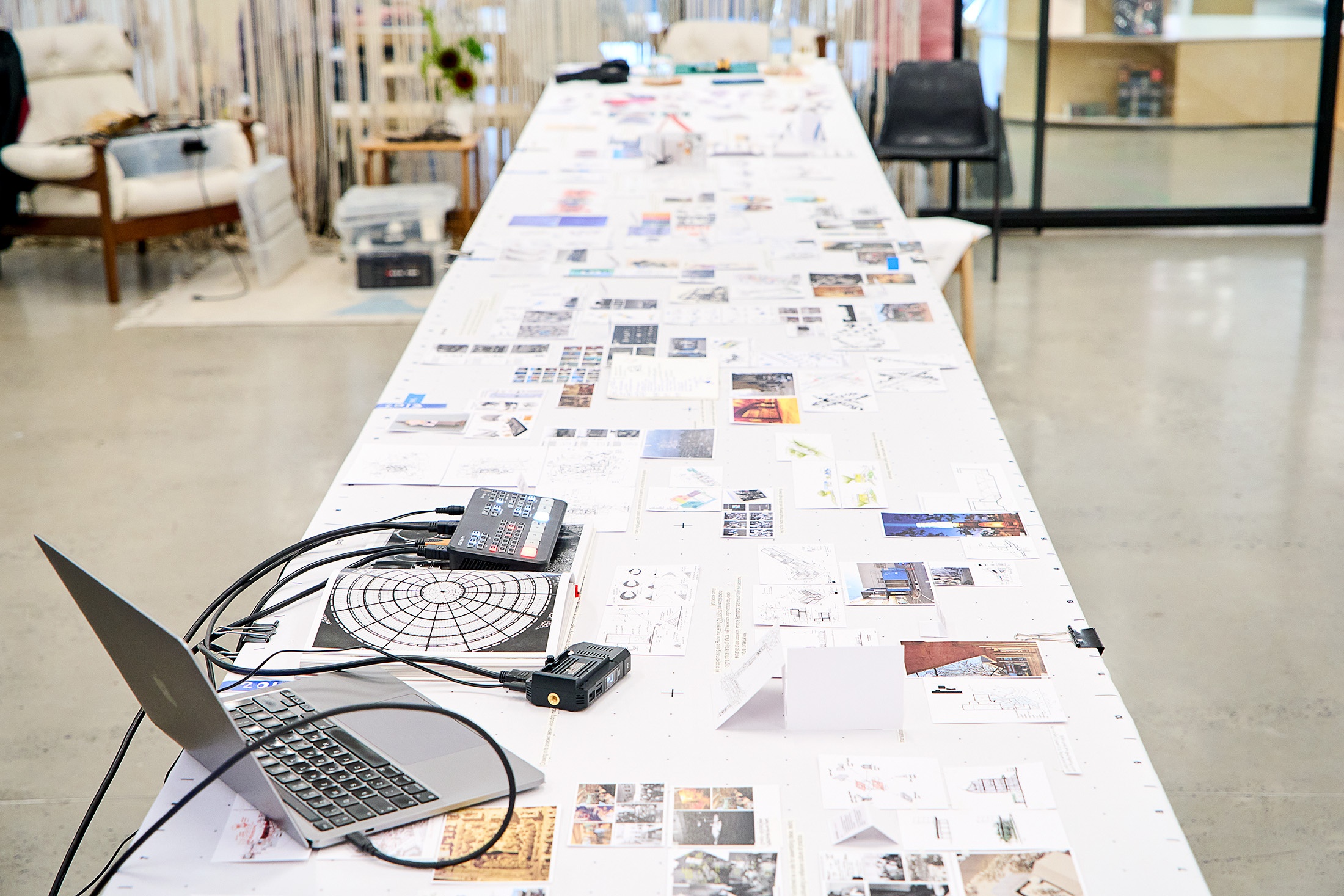
In 2023, Thiresh Govender began mapping and drawing a reflexive assessment of Johannesburg-based UrbanWorks research studio’s interdisciplinary practice since 2008. He continues this project in A4’s Reading Room across an intense five-day schedule, working across a 6m ream of canvas to plot his projects and interventions while meeting with curator Josh Ginsburg three times a day each day. Their conversations, conducted in the spirit of critical friendship, will be recorded, and then revisited by Govender as material for upcoming sessions.
As an example of what Govender will be revisiting are case studies for a style of ‘insurgent’ intervention in the urban environment, evident in a series of roadside benches commissioned in 2010 by the City of Johannesburg’s Development Agency for Soweto’s historic Vilakazi Street. Mimicking structural interventions and spatial arrangements used by informal business owners to circumvent urban planning policies that may result in gentrification and displacement, Govender’s bench offers itself up for adaptation, open to being used as a site for temporary intervention and transformation by those who may wish to use it, when and if necessary. Its design follows all the rules and regulations city planners insist upon while remaining rebellious. Where the installation of street benches, while intended as an act of public service, may have disrupted the way the street was already in use by informal traders and customers, Govender’s insurgent method mitigates against the adverse effects that even the best intentions of urban planners might engender.
During his residency, the contours, coordinates and grids Govender draws across the canvas offer a practical means to explore two interlinked research questions: how to engage with African urban contexts often characterised by rapid change and economic scarcity on the one hand, and the ethical imperative to represent overlooked social interactions and values without prompting bias on the other hand.
–
A4's Reading Room is an adaptable space attached to A4's Library and Archive. Intended to solve for form depending on its required function, it is at once a book-ish environment for reading and contemplation and a place to unpack artists' archives. The Reading Room's inter-leading doors become walls when locked to create a stand-alone spatial research studio that hosts residents and practices site-specific work that most-often is connected to packing and unpacking projects as a form of research.