Translator:
下川太陽
Taiyo Shimokawa
Producer A4:
János Cserháti
Producer Kyotographie:
Shinsuke Tamaki
Co-founders and directors of Kyotographie Photography Festival:
Lucille Reyboz and Yusuke Nakanishi
What is a photobook?
When does a printed and bound volume composed principally of photographs qualify as a photobook?
What makes it South African?
Photobook Photo-book Photobook! is a continuation of an ongoing research project into the South African photobook. This browsable exhibition presents a large and contradictory archive of photobooks made between 1945 and 2025.
As the variant spelling of the exhibition’s title implies, clarity and meaning around this area of bookmaking are still fluid. Alongside classical examples of photobooks, the exhibition presents artists’ books, literary experiments, coffee-table books, activist pamphlets and various examples of state and corporate propaganda. Almost all the books on display are browsable.
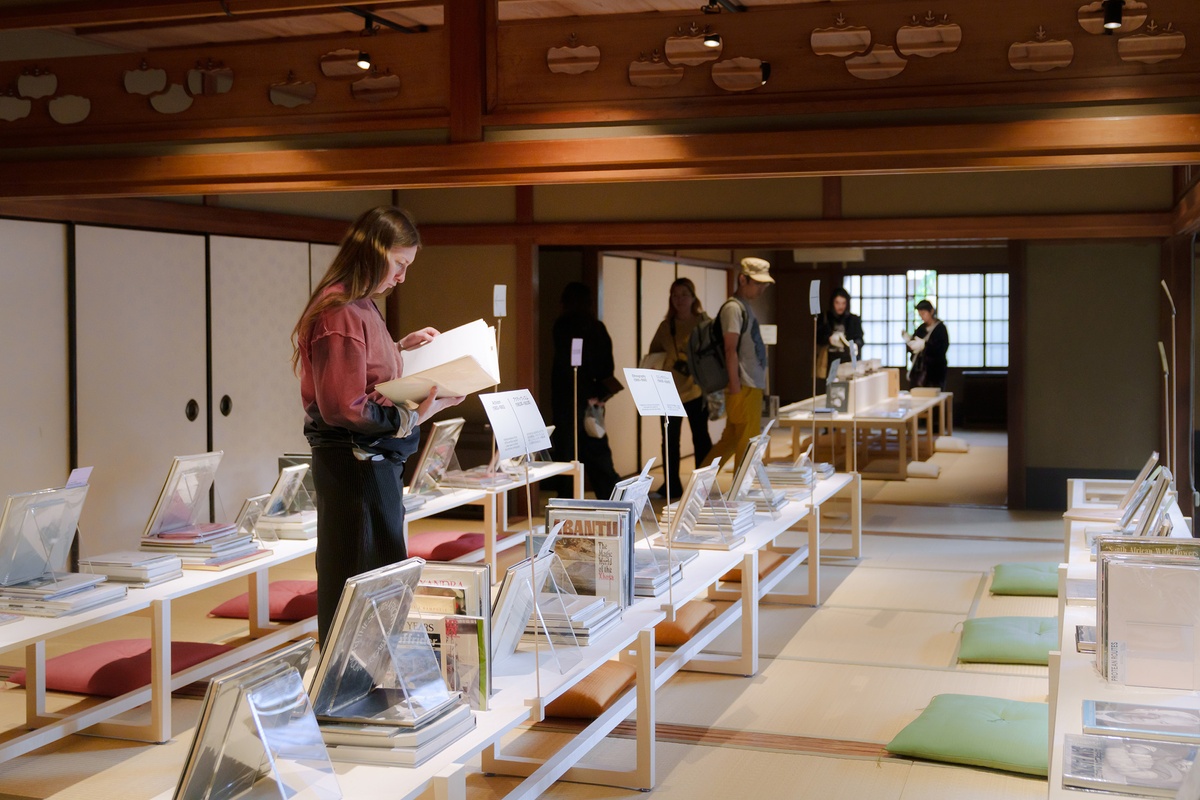
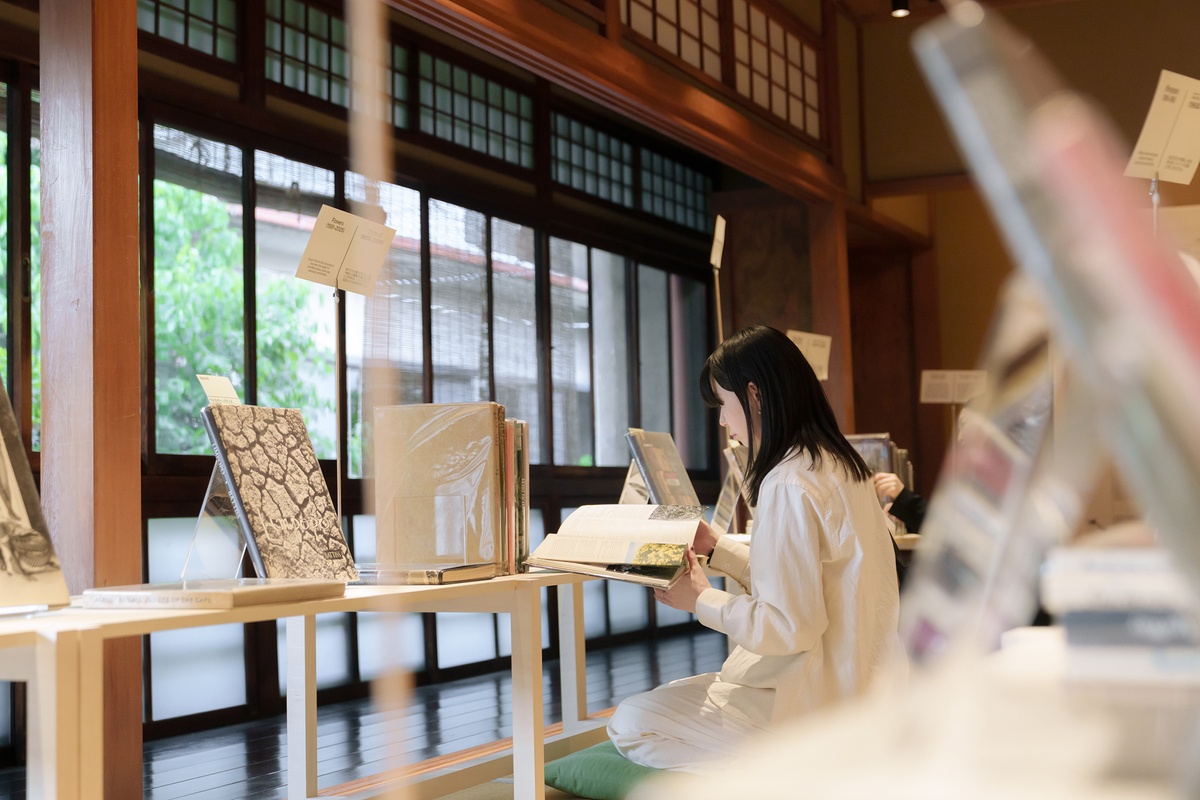
This gesture is central to the exhibition. Books are not decorative objects, they are meant to be touched, their ideas engaged. In 2022, when Photo book! Photo-book! Photobook! was presented at A4 Arts Foundation in Cape Town, the books were chronologically displayed on a ledge that ran along the perimeter of the gallery. The timeline is a tested conceptual device that offers a useful means to tell a complicated story.
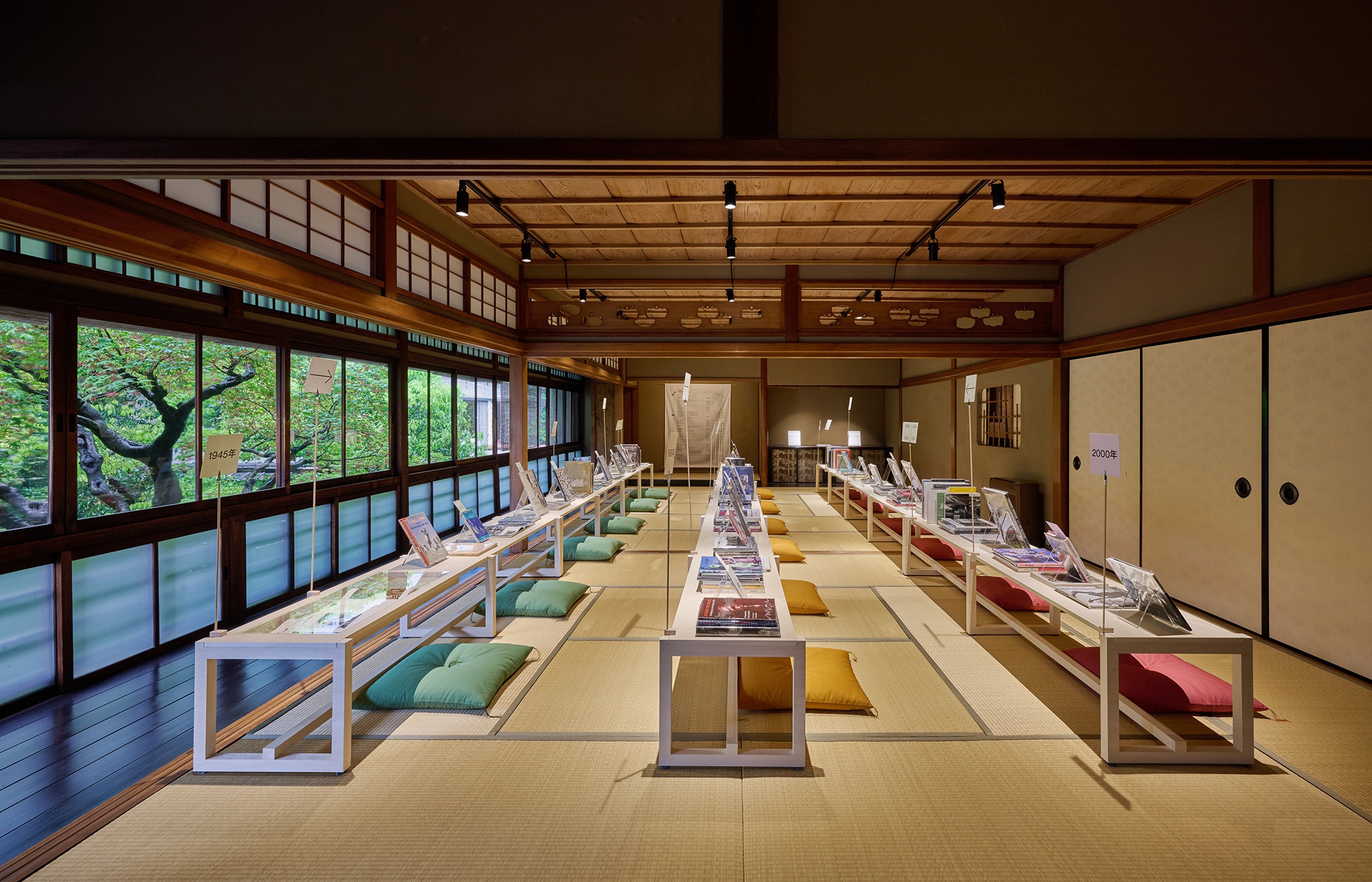
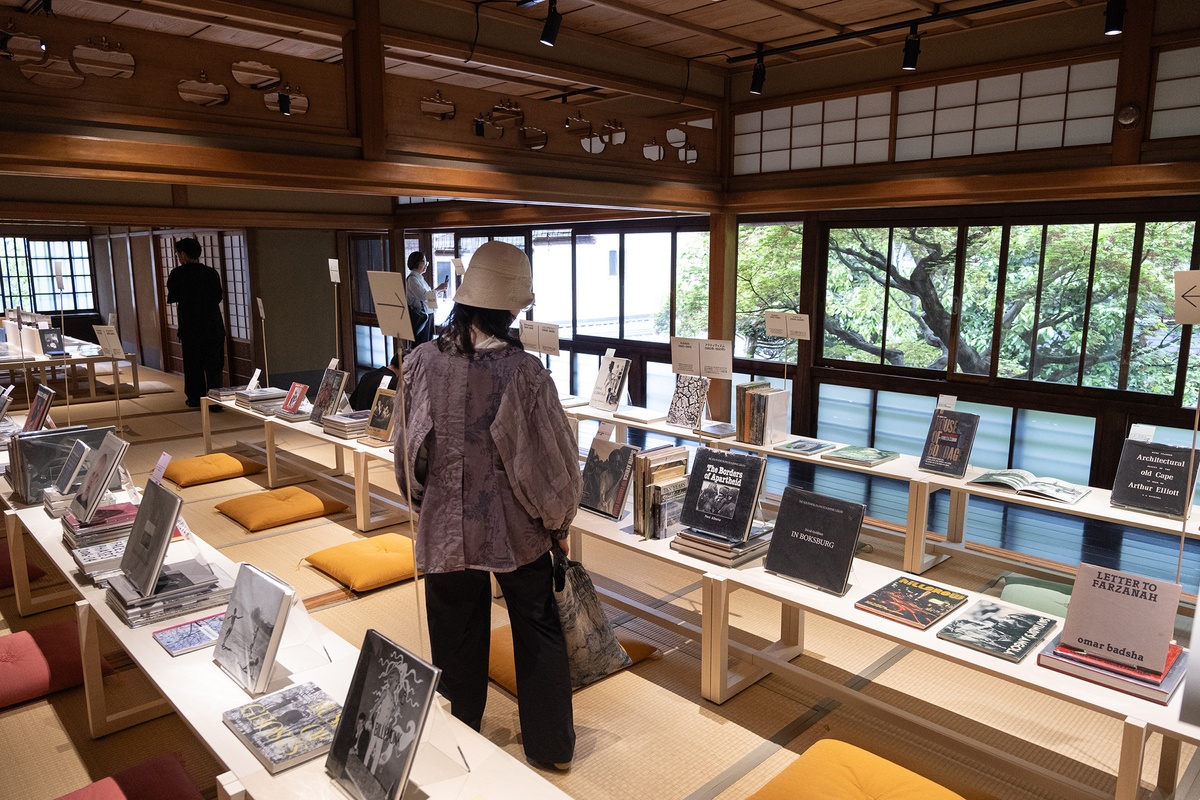
The books here on the first floor of Kyoto’s Hachiku-an (former Kawasaki residence) are also chronologically displayed in a timeline, albeit across three tables. This timeline presents evidence of the beginnings of a cosmopolitan book culture during the politically charged years of high apartheid years (1948–94), when state repression and censorship ensnared even photobooks. It also includes abundant examples of innovation in photography and book design in the democratic years that followed (1994–present).
Additionally, there is a curated display of important and outstanding photobooks from the last four decades.
フォトブック(写真集)とは何か。写真を主とする印刷・製本された一冊は、どの時点でフォトブックと呼び得るのか。そして、それを南アフリカのものとする要素とは何か。
「フォトブック、フォト・ブック、フォトブック!」は、南アフリカのフォトブックをめぐる継続的なリサーチの延長に位置づけられる。本展は、1945年から2025年にかけて制作されたフォトブックによる、大規模で相反する側面を併せ持つアーカイヴを提示する。
タイトルの「Photobook」が様々な表記になっているように、写真集制作の意味や定義はいまなお変化し続けています。本展は、古典的な意味合いでの一般的な写真集だけでなく、アーティストブックや実験的な文学作品、コーヒーテーブルブック(大判の豪華本)、アクティビスムから生まれたパンフレット、さらには国家や企業によるプロパガンダの実例まで、幅広く展示しています。ほとんどの本は実際に手に取ってページをめくり、閲覧することができます。
「手に取れる」ということこそが、この展覧会の主なコンセプトです。本は飾るためのものではありません。手に取って、その内容と向き合うべきものなのです。2022年にケープタウンのA4 Arts Foundationで開催された「Photo book! Photo-book! Photobook!」では、ギャラリーの内周にぐるりと設置された棚に写真集を時系列で並べて展示していました。こうした展示方法は、複雑な歴史のストーリーを伝えるうえで有効な手法として確立されています。
京都の八竹庵(旧川崎家住宅)2階での展示も同様に時系列にそった配置ですが、ここでは3つのテーブルを展示台として使用しています。これは、国家による弾圧と検閲が写真集をも巻き込み、政治的緊張に包まれたアパルトヘイト政策下(1948-1994年)において、いかに現代的な写真集の出版文化が南アフリカで芽生えたかを示しています。また、民主化後(1994年から現在)のセクションでは、写真表現やブックデザインにおける革新的な取り組みの事例も数多く紹介されています。
さらに、過去40年間における、重要かつ傑出した写真集をピックアップして紹介する展示スペースも設けられています。
Books Through Time
時代とともにみるフォトブック
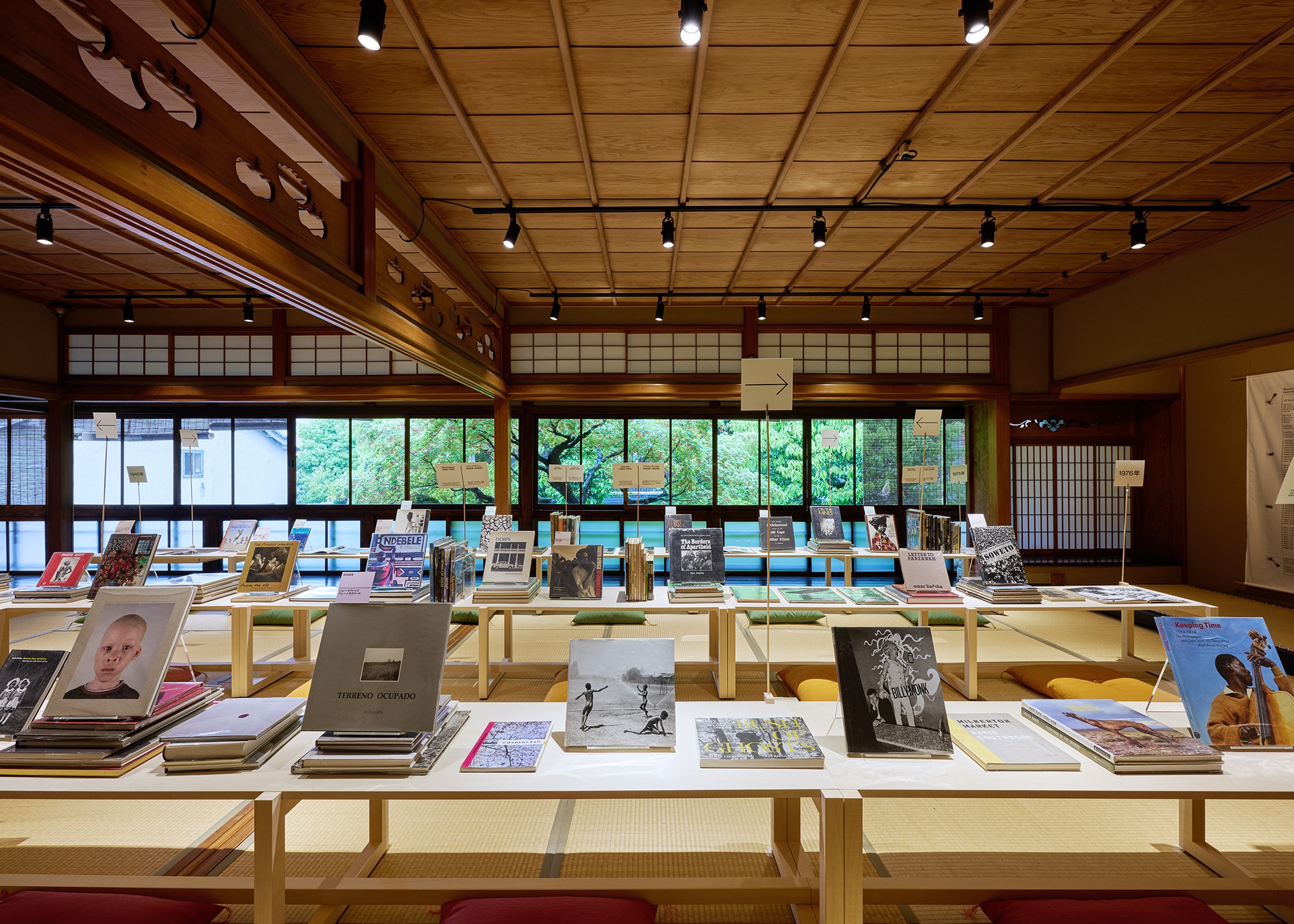
Process: Photo book! Photo-book! Photobook! Kyotographie curated by Sean O’Toole in collaboration with A4 Arts Foundation, Hachiku-an (Former Kawasaki Residence), April 17–May 17, 2026. Image © Wen-Lin Lan-KYOTOGRAPHIE 2026.
Process: Photo book! Photo-book! Photobook! Kyotographie curated by Sean O’Toole in collaboration with A4 Arts Foundation, Hachiku-an (Former Kawasaki Residence), April 17–May 17, 2026. Image © Wen-Lin Lan-KYOTOGRAPHIE 2026.
Process: Photo book! Photo-book! Photobook! Kyotographie curated by Sean O’Toole in collaboration with A4 Arts Foundation, Hachiku-an (Former Kawasaki Residence), April 17–May 17, 2026. Image © Dave Spencer-KYOTOGRAPHIE 2026.
c.1945–c.1975
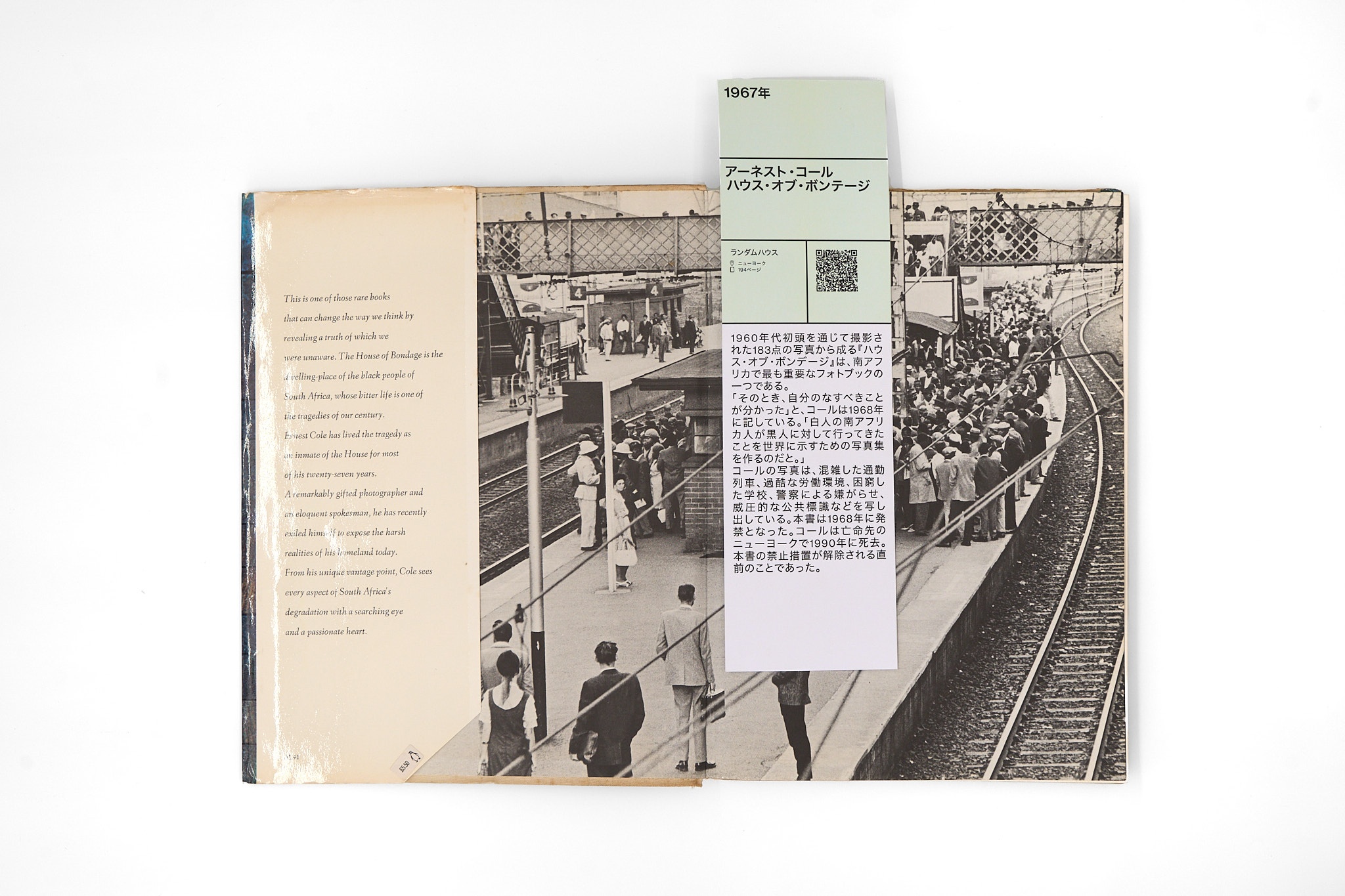
The three decades after World War Two witnessed the emergence of a cosmopolitan photobook culture in South Africa marked by formal experimentation, not only photographically but also at the level of book design and printing. Pictorialism and ethnography, ways of seeing and telling refined in the pre-war decades, continue to direct the subject preoccupations of many white photographers. Nonetheless, the aesthetic regime of the salons and photo societies is in decline. The National Party election victory in 1948 cannot be overlooked. State propaganda, surveillance and censorship are pronounced hallmarks of this period, and the next. Ernest Cole’s House of Bondage, published in 1967, marks a rupture. The white story about black life in South Africa is shown to be a lie. The book is banned, as are a number of photobooks with an evidentiary focus issued during this period.
• Keywords: whiteness, pictorialism, ethnography, amnesia, statism, propaganda, surveillance, terrorist
1945年頃ー1975年頃
第二次世界大戦後の約30年間、南アフリカでは現代的な写真集文化が台頭し、写真表現のみならず、書籍のデザインや印刷においても多様な形式的実験が展開された。戦前の数十年にわたり洗練されてきたピクトリアリズムや民族誌的視点、すなわち「見る方法」と「語る方法」は、この時代においてもなお、多くの白人写真家の主題選択を方向づけ続けていた。
しかしながら、サロンや写真協会によって築かれてきた美的体制は、次第にその影響力を失っていった。1948年の国民党の選挙勝利は、この時代を理解するうえで見過ごすことのできない転換点である。国家によるプロパガンダ、監視、検閲は、この時代から次の時代にかけて顕著な特徴となり、写真表現のあり方にも大きな影響を及ぼした。
1967年に刊行されたアーネスト・コールの『ハウス・オブ・ボンデージ』は、ひとつの断絶を示すものであった。南アフリカにおける黒人の生活をめぐる白人側の語りが虚構であったことが明らかにされる。本書は発禁処分となり、同時期に刊行された、証拠性に重きを置く複数の写真集も同様に禁止された。
キーワード:白人性、ピクトリアリズム、民族誌学、健忘、国家主義、プロパガンダ、監視、テロリスト
c.1976–c.1999
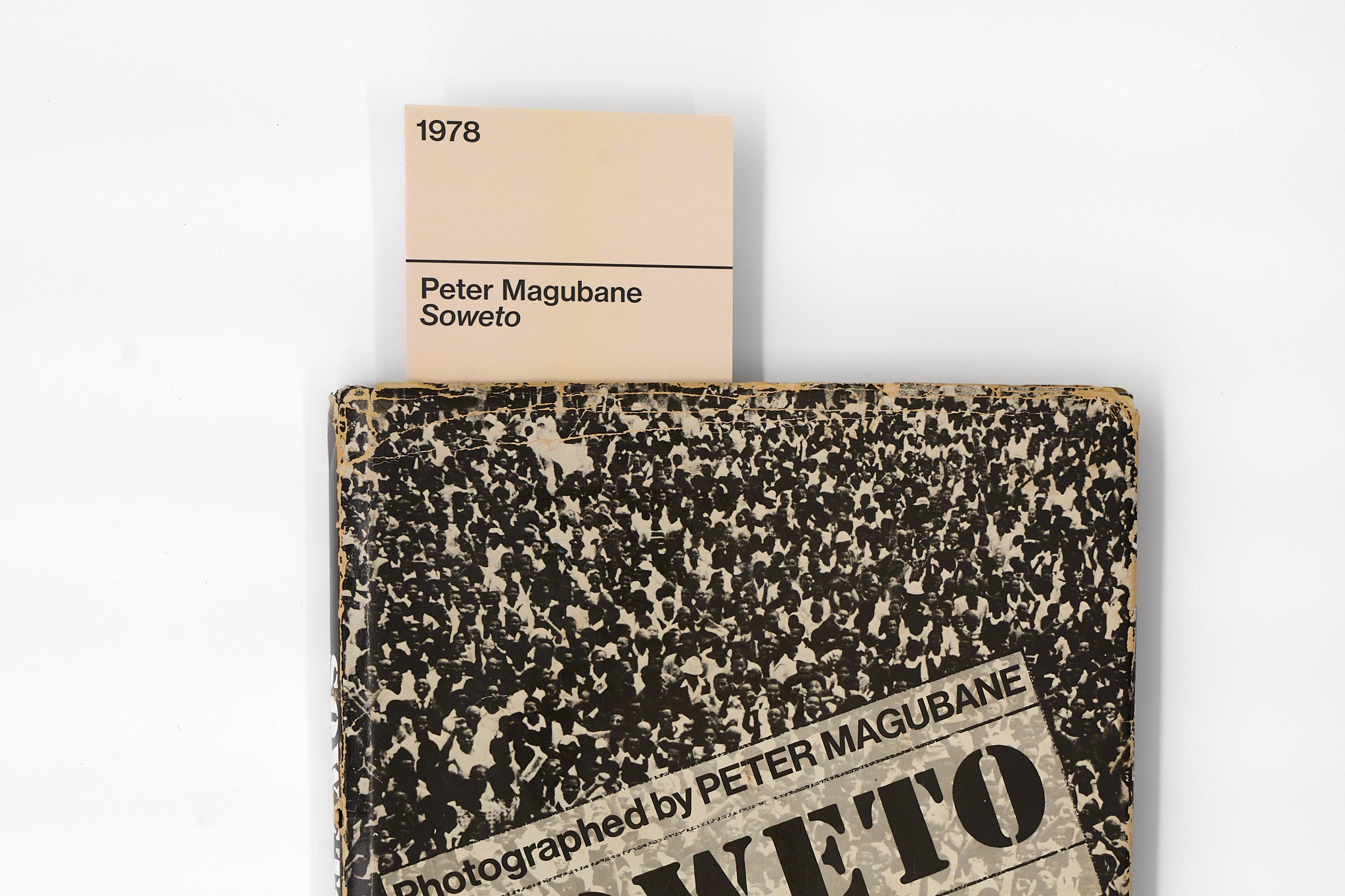
“Photography can’t be divorced from the political, social and economic issues that surround us daily,” argue the curators of a 1983 photography exhibition organised by Staffrider, part of a vigorous alternative press committed to disseminating documentary photography. Partisan engagement characterises many books from this period. The advent of democracy in 1994 is prefaced by a confused sense of purpose as the image economy shifts. Artists explore other forms of risk in the photobook.
• Keywords: evidence, political risk, censorship, quotation, interregnum, aesthetic risk, conscience, facsimile
1976年ー1999年
1983年、ドキュメンタリー写真の流通を担ったオルタナティブ・プレスであるStaffriderが企画した写真展のキュレーターは、「写真は、私たちを日々取り巻く政治的・社会的・経済的問題から切り離すことはできない」と述べている。この時期の多くの書籍は、党派的な関与によって特徴づけられる。1994年の民主化の到来に先立ち、イメージの流通構造の変化とともに、目的意識の揺らぎが生じていた。アーティストたちは、フォトブックという形式において、別様のリスクを探求していく。
キーワード:エヴィデンス(証拠性)、政治的リスク、検閲、引用、インターレグナム(空位期)、美的リスク、良心、ファクシミリ(複製)
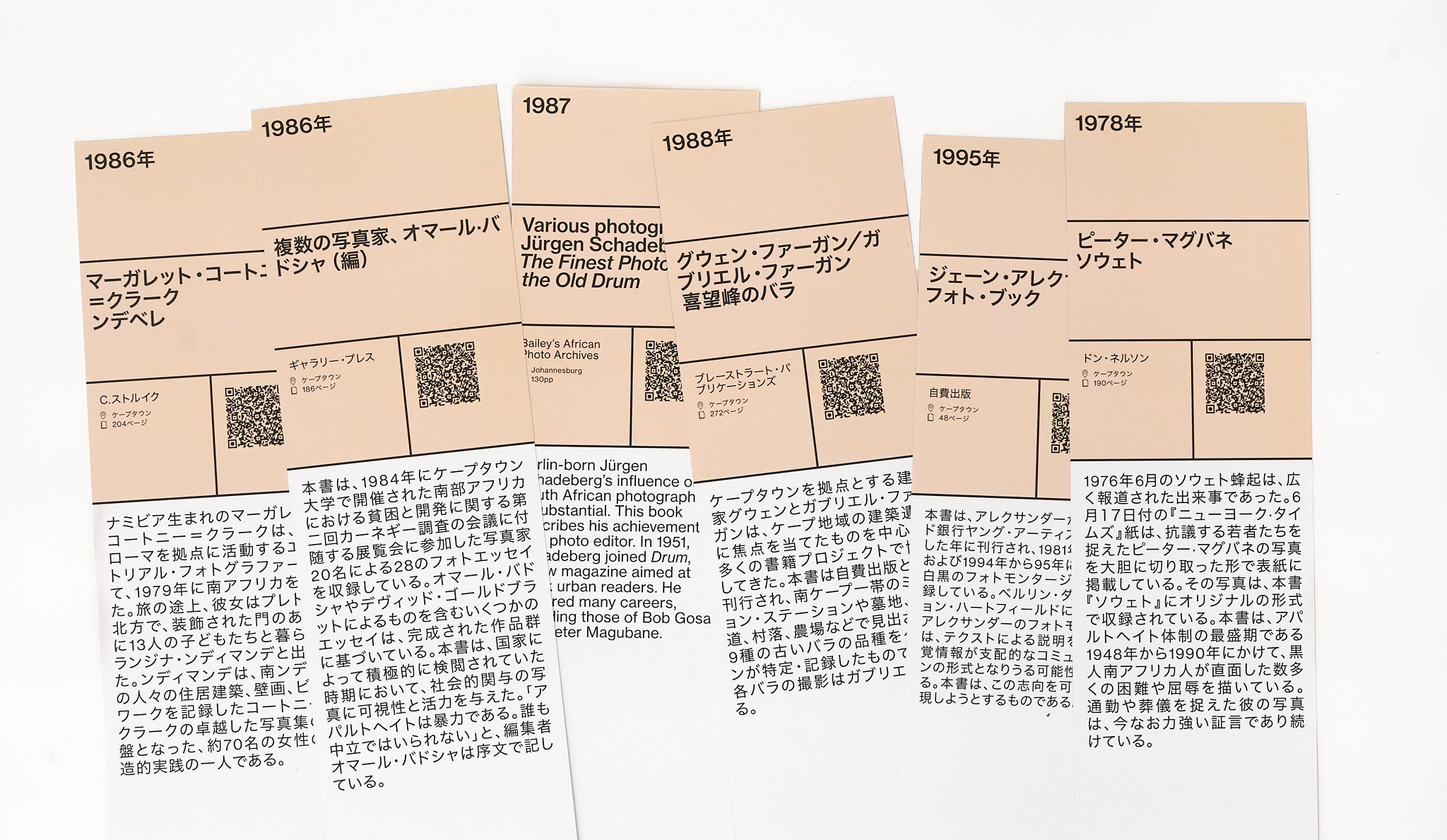
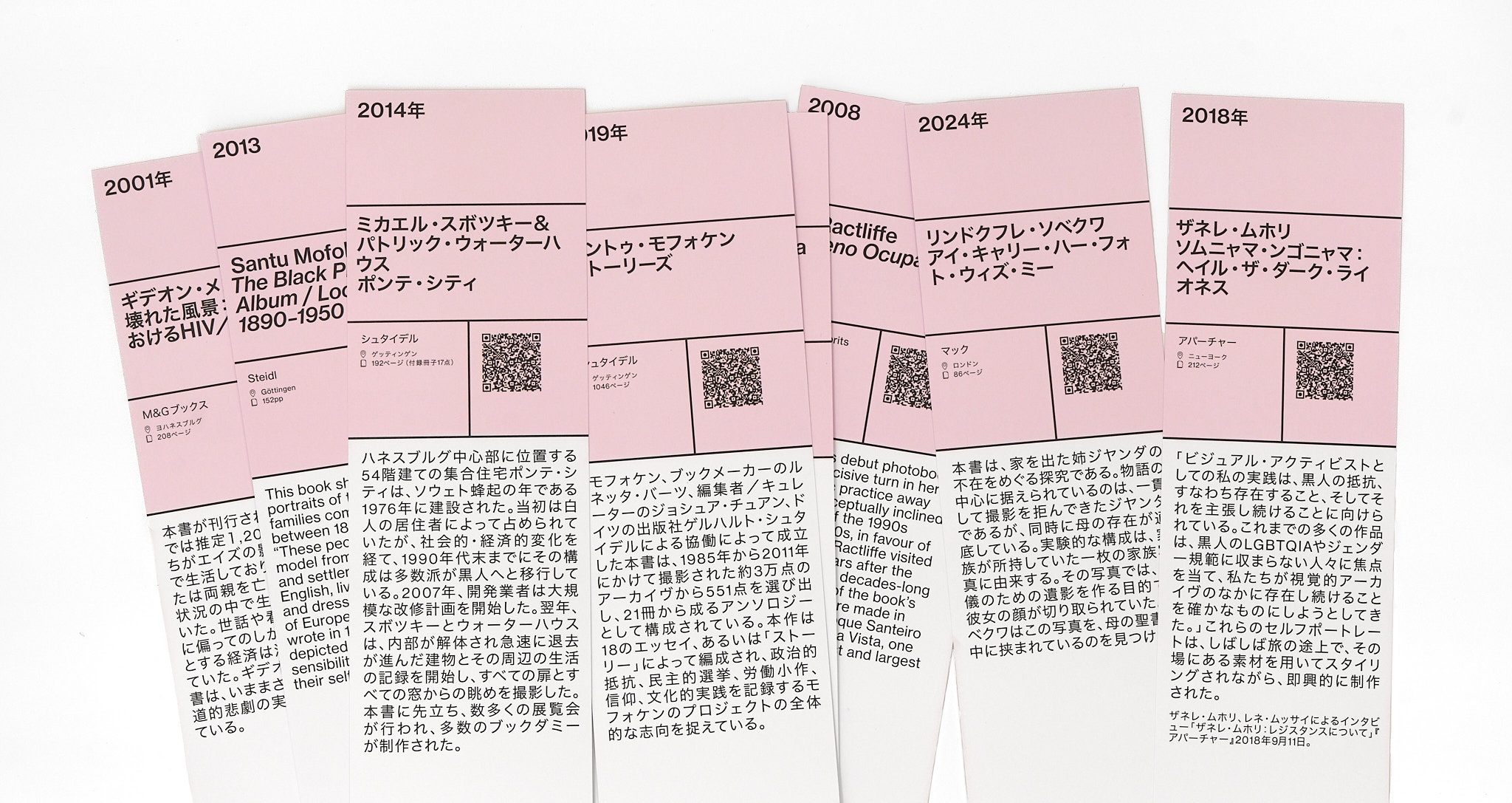
c.2000–2025
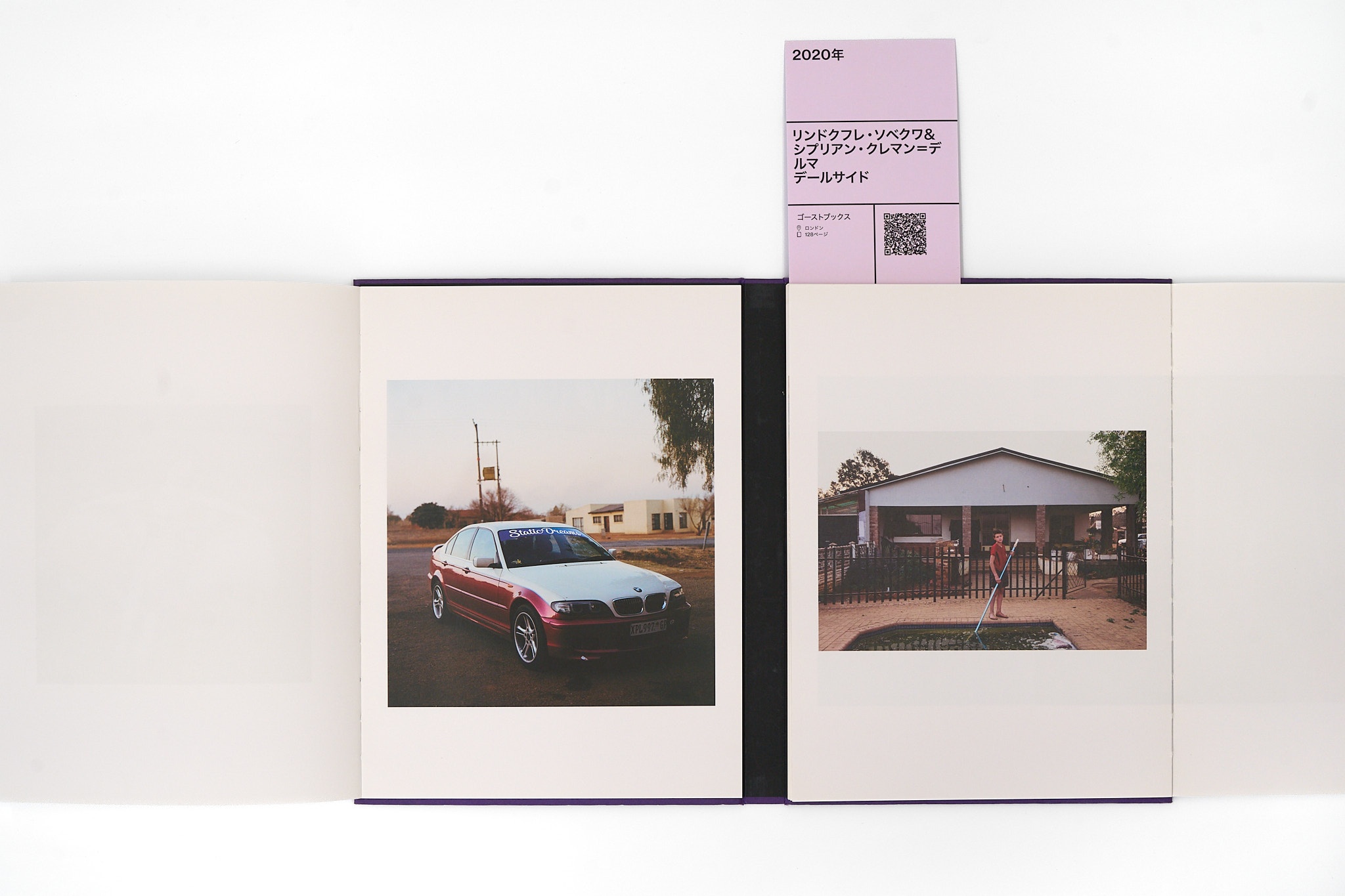
The early years of South Africa’s democracy see a meagre output of photobooks, followed by a remarkable flourishing. The increasing use of photography by artists, coupled with the emergence of a vibrant international art market, sponsors a proliferation of photobook publishing. It also muddies the fuzzy boundaries distinguishing the artists’ book, photobook and promotional catalogue. The internet, now a dominant presence in daily life, also qualifies the book’s apex position as primary store of distributed knowledge. Vivid experiments and bland rehearsals typify the books of this period. Colonial and apartheid history is a site of frequent excavation. Identity remains an abiding concern of photobook practitioners.
• Keywords: Internet, freedom, art, new/post/anti-documentary, studio, seriality, memory, identity
2000年頃-2025年
南アフリカの民主化初期にはフォトブックの刊行は限られていたが、その後、顕著な広がりを見せる。アーティストによる写真表現の拡張と、国際的なアート市場の活性化が相まって、フォトブック出版の増加を後押しした。同時に、アーティストブック、フォトブック、プロモーショナル・カタログを隔てる曖昧な境界は、さらに揺らいでいく。
日常生活において大きな存在感を持つようになったインターネットは、分散された知の主要な蓄積媒体としての書物の位置づけを相対化している。この時期の書籍は、鮮烈な実験と反復的な試みのあいだを往還している。植民地主義およびアパルトヘイトの歴史は繰り返し掘り起こされ、アイデンティティはフォトブックの実践者にとって持続的な関心であり続けている。
キーワード:インターネット、自由、アート、ニュー/ポスト/アンチ・ドキュメンタリー、スタジオ、連続性、記憶、アイデンティティ
“Jacobsen’s” Index of Objectionable Literature (1956–)
ジェイコブセン・インデックス・オブ・オブジェクショナブル・リテラチャー(1956年ー)
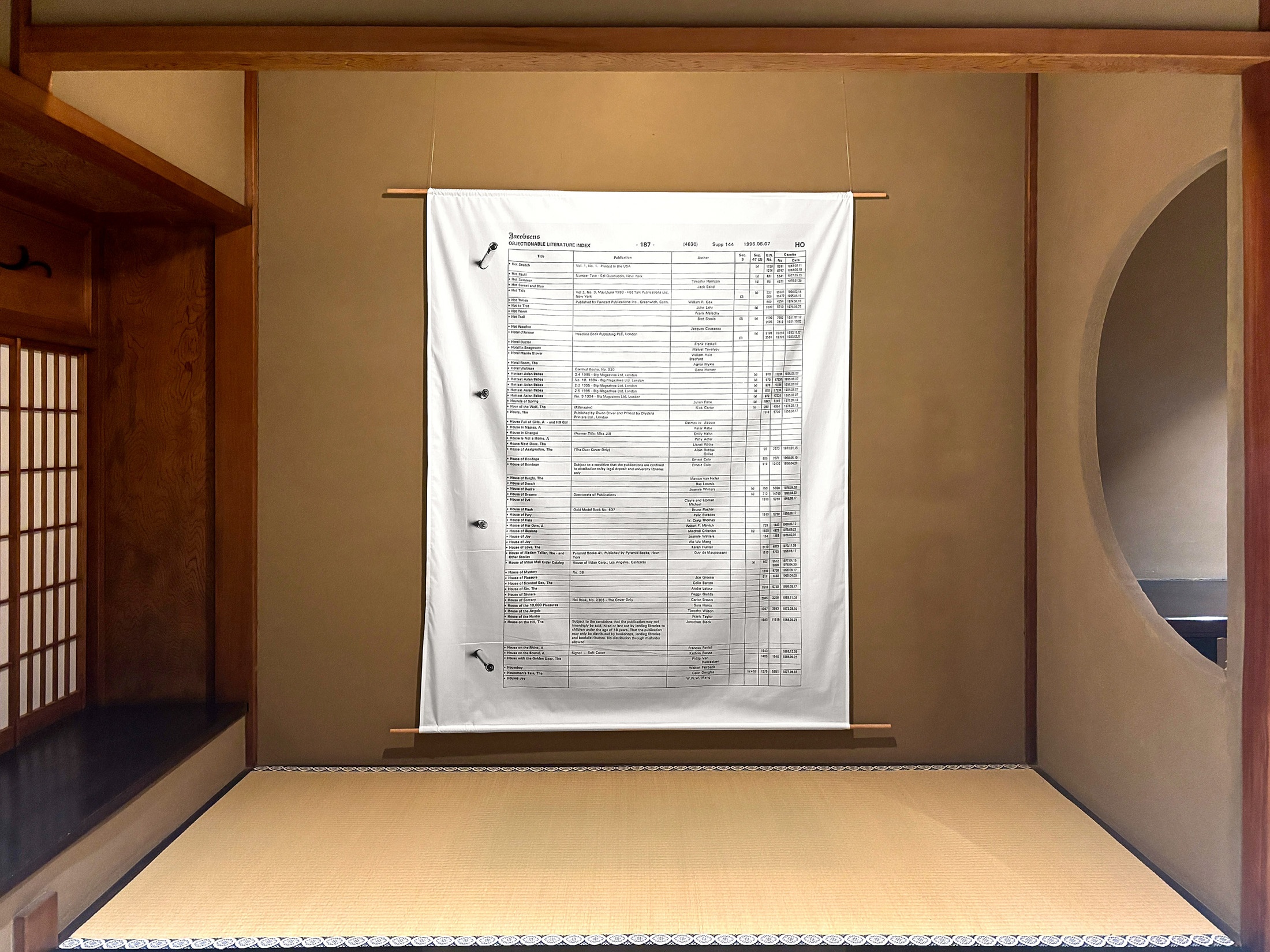
The apartheid state made it its mission to regulate sex and politics, to tightly control morality and ideology. This loose-leafed publication updated editors, librarians, booksellers and authors on printed matter banned by apartheid state censors. House of Bondage by Ernest Cole (1967) is listed here as banned on 10/05/1968 and repealed (with conditions) on 20/04/1990.
アパルトヘイト体制は、人種間の関係や婚姻を含む私的領域と政治の双方を統制し、道徳とイデオロギーを厳格に管理していた。本書はルーズリーフ形式で刊行され、編集者、図書館員、書店関係者、著者に向けて、検閲当局によって禁止された出版物の情報を更新し続けた。『ハウス·オブ·ボンデージ』は、1968年5月10日に発禁とされ、1990年4月20日に(条件付きで)解除された記録がここに記されている。
Thematic Book Stacks
テーマに沿ってまとめられた書籍
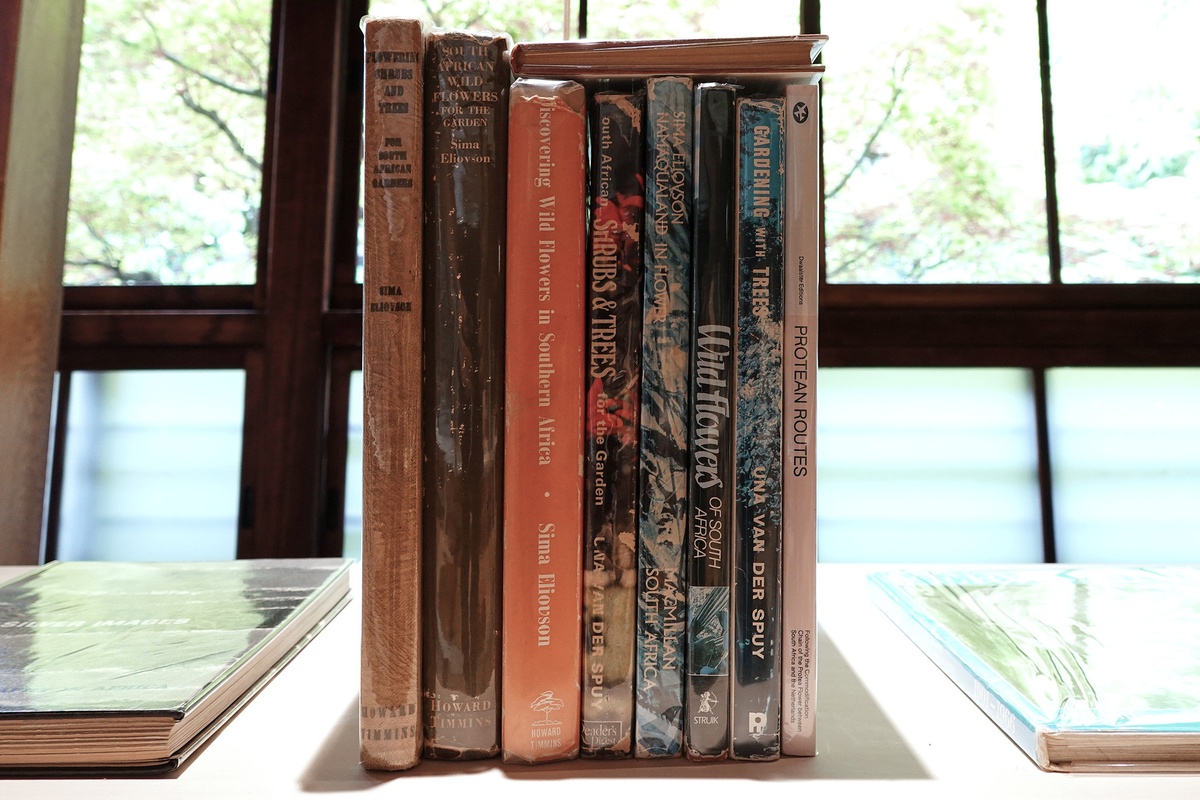
South Africa’s floral abundance has been the subject of countless books, some less obviously photobooks.
フラワーズ (1951年ー2025年)
南アフリカの豊かな花々は、これまで数多くの書籍の主題となってきた。その中には、フォトブックとしては捉えにくいものも含まれている。
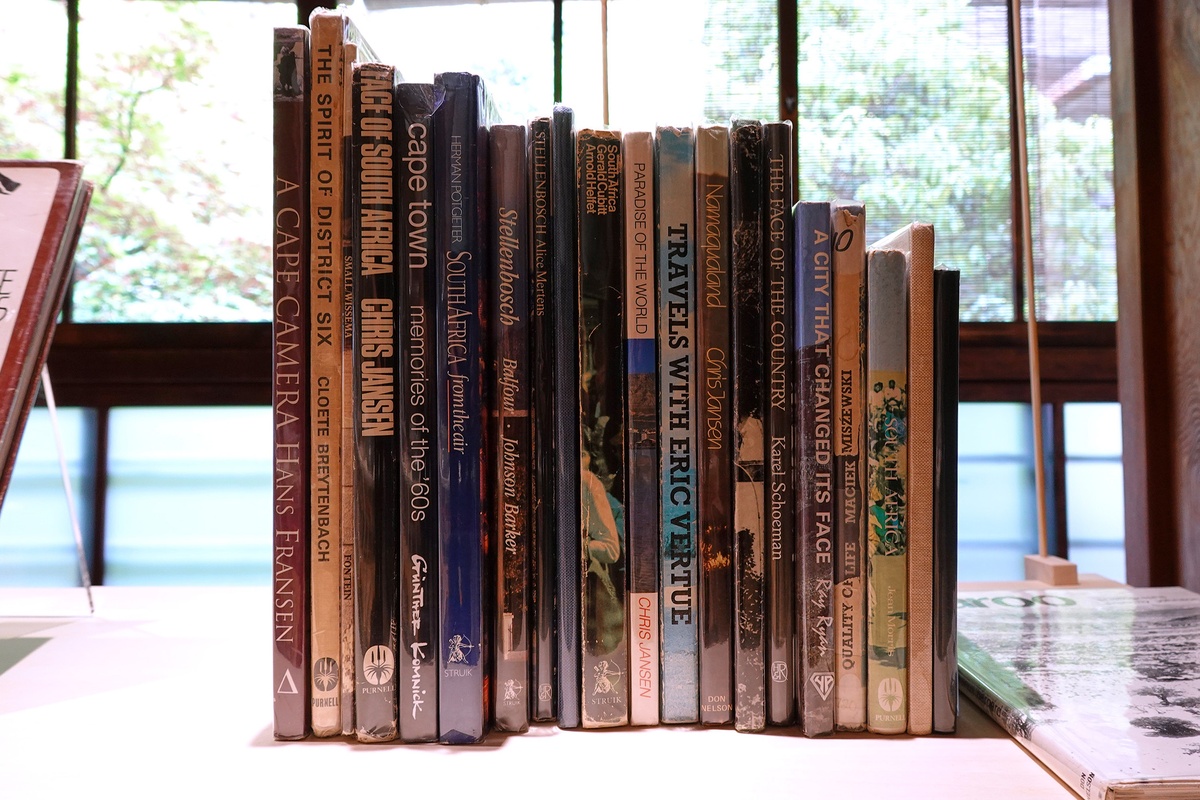
Emerging out of photo salons and clubs, pictorial photography was influential on post-war photobook publishing.
ピクトリアリズム(1964年ー2013年)
写真サロンやクラブを背景に発展したピクトリアル写真は、戦後のフォトブックに影響を与えた。
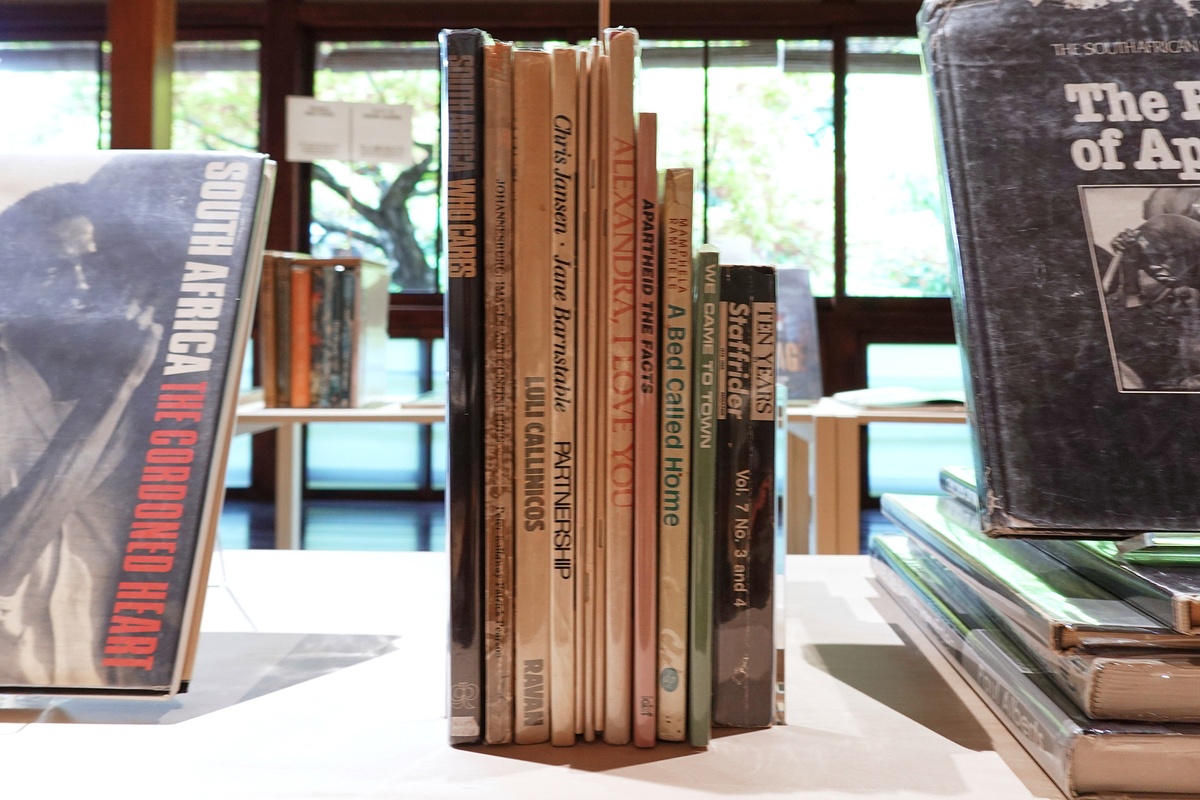
Political tensions of the 1970s and 80s inspired a new wave of activist documentary photography.
アクティヴィズム(1983年ー1993年)
1970年代から80年代にかけての政治的緊張は、アクティヴィズムに根ざしたドキュメンタリー写真の新たな潮流を生み出した。
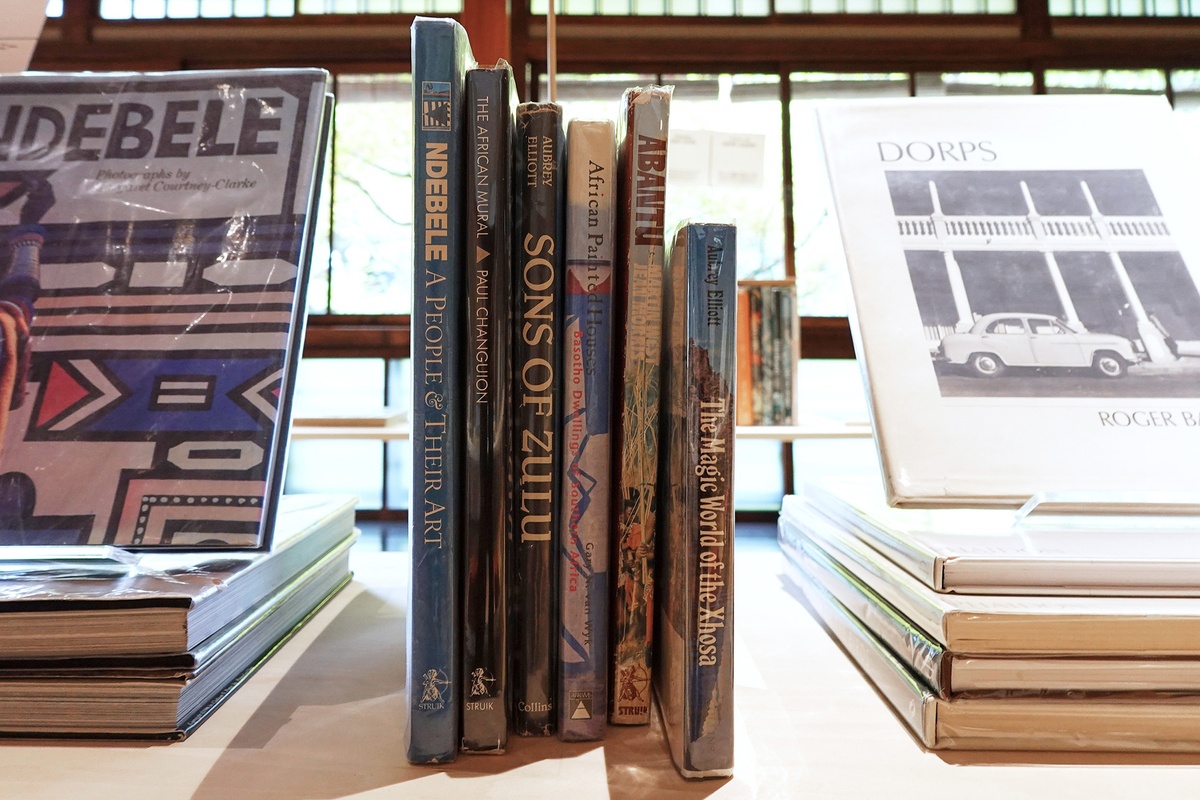
Indigenous cultures and practices have been the subject of photobooks since the late 1800s.
エスノグラフィー(1966年ー1995年)
先住民の文化や実践は、19世紀後半以降、フォトブックの主題として取り上げられてきた。
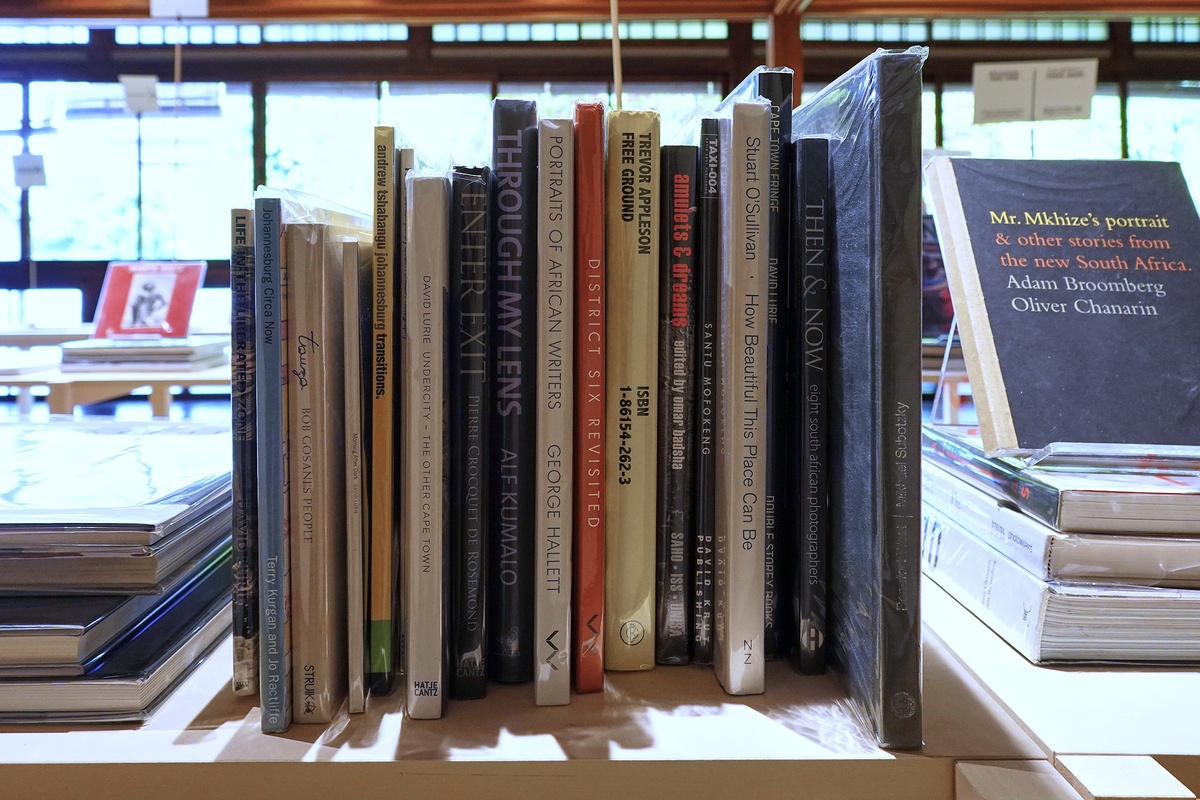
Once marginalised, socially conscious documentary photography emerged as the dominant tradition in books.
ドキュメンタリー(2001年ー2025年)
かつて周縁に置かれていた社会的関心を伴うドキュメンタリー写真は、やがて書籍における主要な表現のひとつとなった。
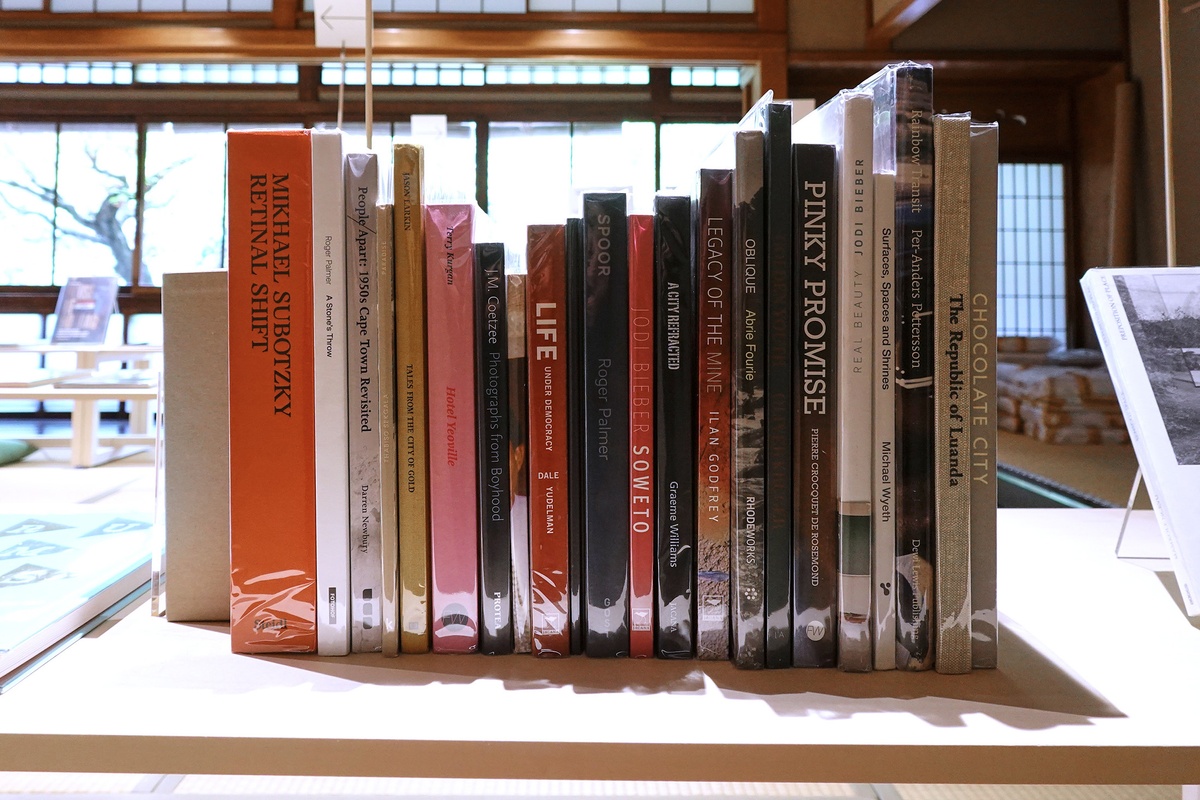
The themes of photobooks since 2010 have multiplied: autobiography, art, archives, lived reality.
エヴリシング(2010年ー2022年)
2010年以降、フォトブックの主題は多様化し続けている。自伝、アート、アーカイブ、そして生きられた現実へと広がりを見せている。
Exceptional Books 1975–2025
特筆すべきフォトブック 1975年ー2025年
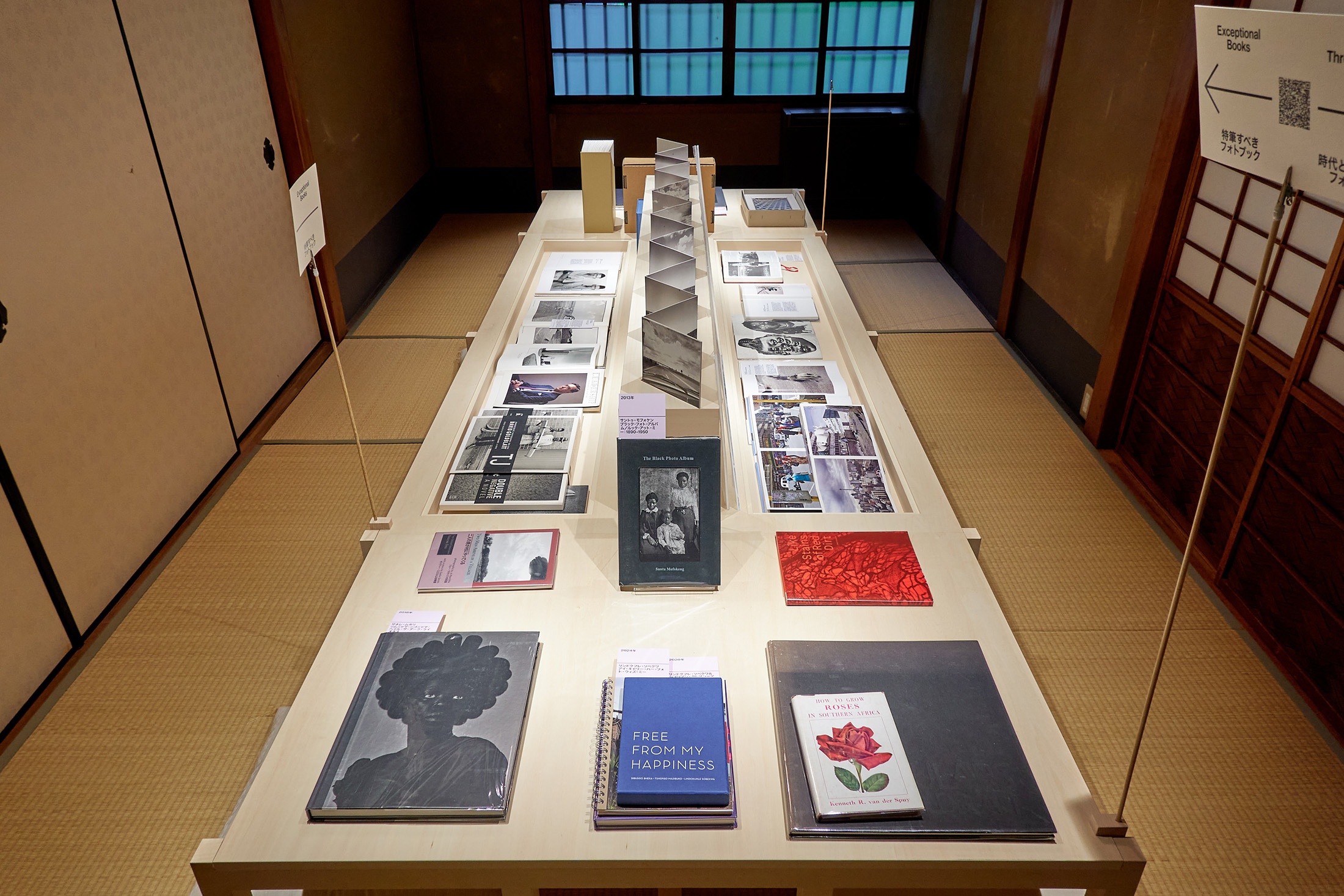
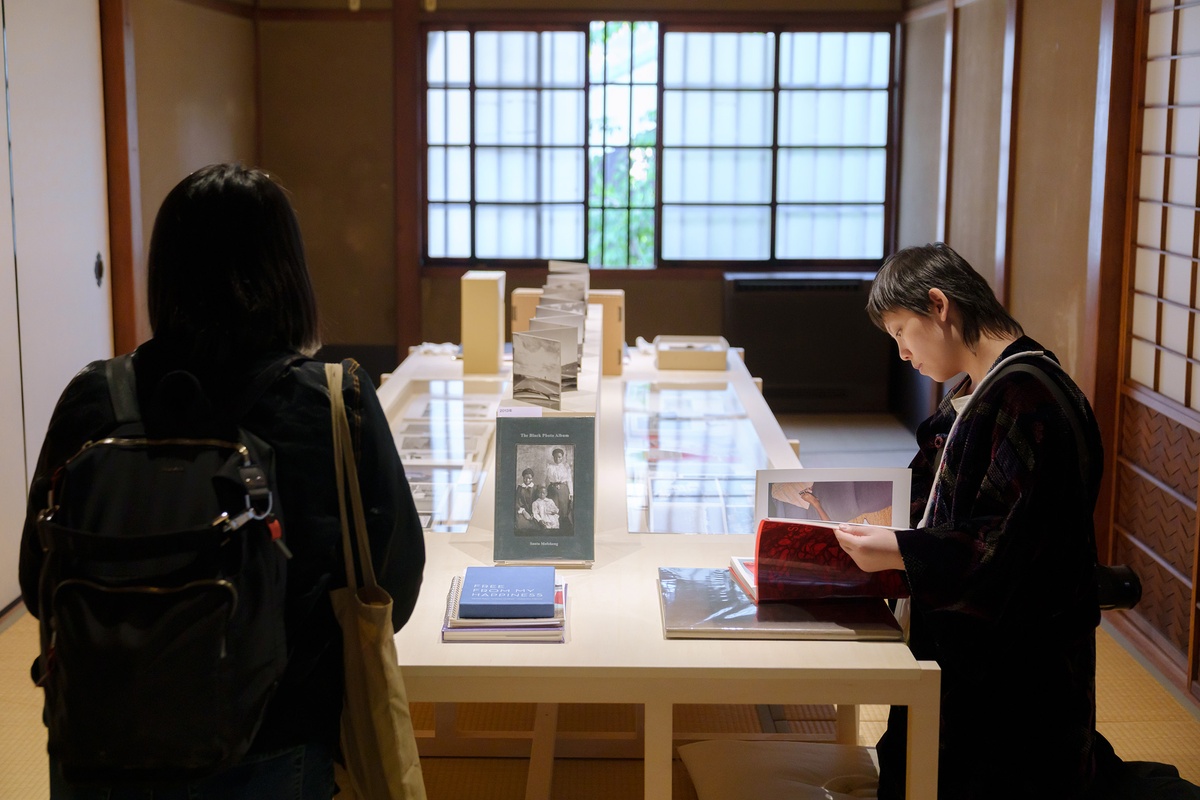
Process: Photo book! Photo-book! Photobook! Kyotographie curated by Sean O’Toole in collaboration with A4 Arts Foundation, Hachiku-an (Former Kawasaki Residence), April 17–May 17, 2026. Image © Wen-Lin Lan-KYOTOGRAPHIE 2026.
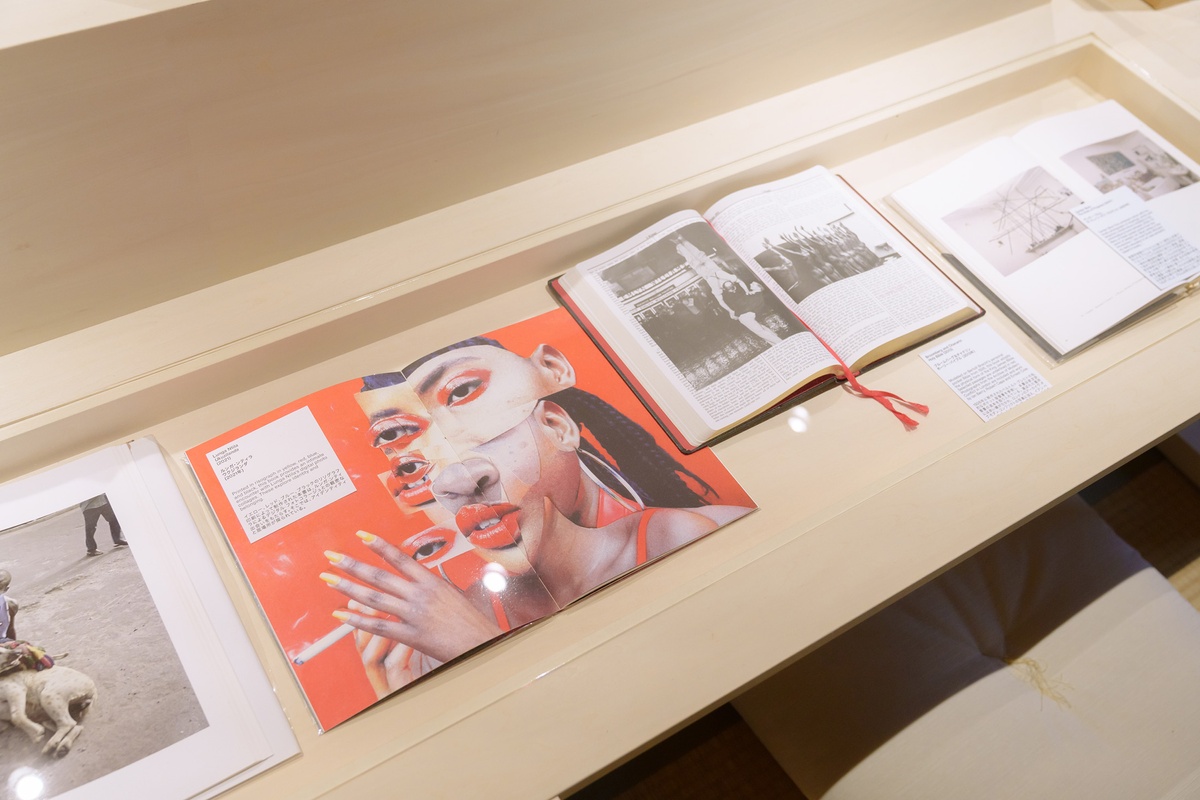
Process: Photo book! Photo-book! Photobook! Kyotographie curated by Sean O’Toole in collaboration with A4 Arts Foundation, Hachiku-an (Former Kawasaki Residence), April 17–May 17, 2026. Image © Wen-Lin Lan-KYOTOGRAPHIE 2026.
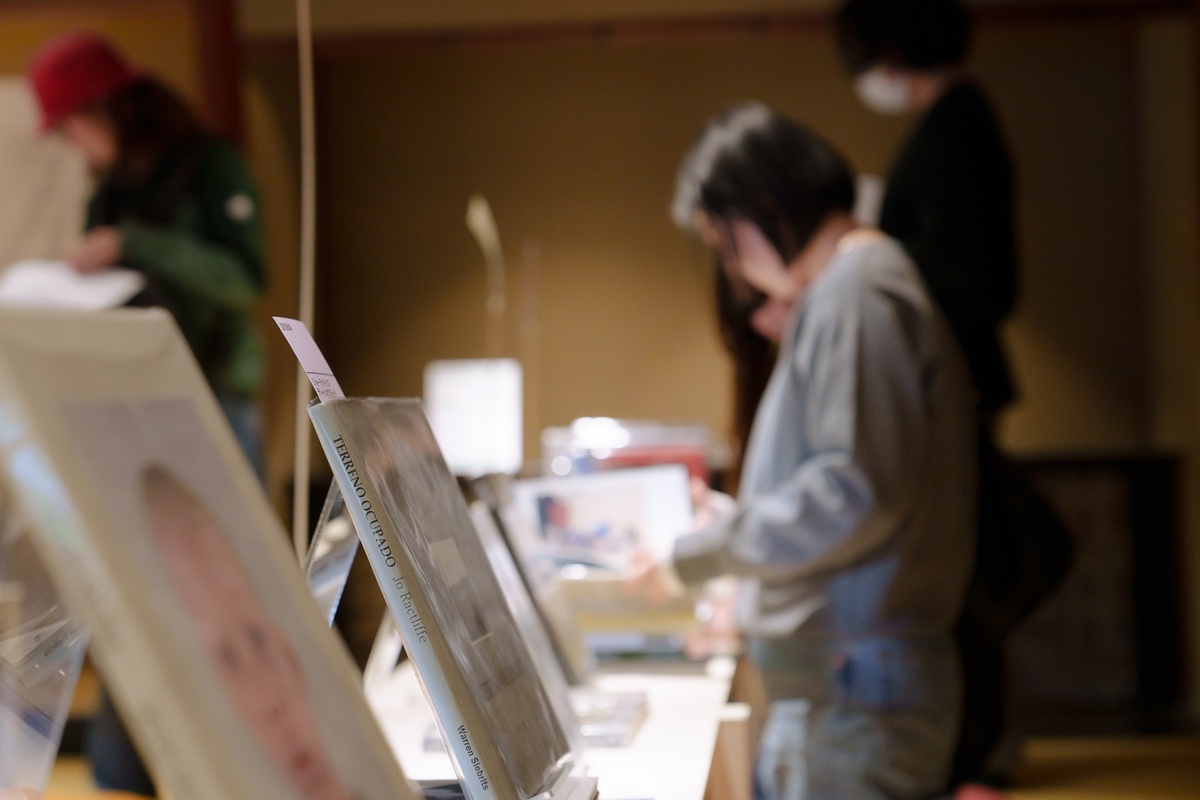
Process: Photo book! Photo-book! Photobook! Kyotographie curated by Sean O’Toole in collaboration with A4 Arts Foundation, Hachiku-an (Former Kawasaki Residence), April 17–May 17, 2026. Image © Wen-Lin Lan-KYOTOGRAPHIE 2026.
About the location
Under the theme of ‘inheriting the culture of Kyoto,’ Kurochiku Corporation, whose business includes the sale of miscellaneous Japanese products, traditional architectural design, and the restoration of machiya townhouses, took possession of the residence in 2022 with the aim of preserving its historical value. An ancestor of the current head of Kurochiku Corporation was one of the carpenters who participated in the original construction of the townhouse. Culture and history continued to be carried on thanks to people who sustain relationships across generations, maintain family tradition, and work to protect important cultural sites and towns.
The scenography centres two curatorial choices: that the collection of photobooks from 1945–2025 should be displayed chronologically, and that the majority of the books should be browsable. “The timeline is a tested conceptual device that offers a useful means to tell a complicated story,” says Sean O'Toole of these decisions. “Books are not decorative objects; they are meant to be touched, their ideas engaged.” First shown at A4 Arts Foundation in 2022, the timeline took the form of a long shelf running the length of the gallery. For Kyotographie, this guiding structure is carefully adapted to the spatial logic of Kyoto’s Hachiku-an (former Kawasaki residence), articulated across three long, low tables. This encourages an intimate, seated engagement with the photobooks. Visitors can read the books facing the large windows and outdoor walkway, which allows natural light to illuminate the environment. An adjacent, smaller room, presents a curated selection of rare and multi-volume publications.
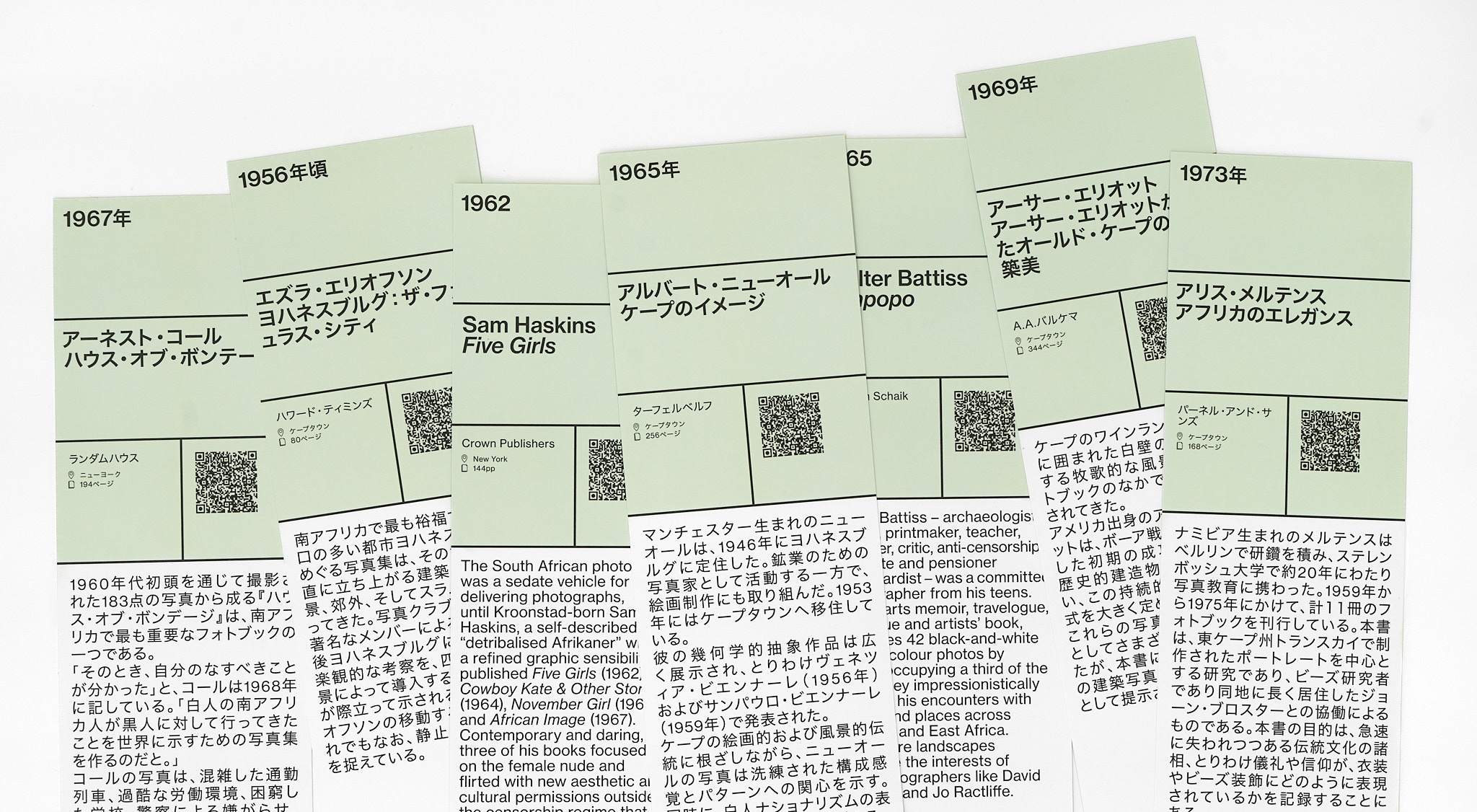
Made from birch, the tables are deliberately restrained in form, ensuring that the book collection remains the primary focus. Wayfinding is achieved through colour-coded bookmarks, discreet signs, and zabuton aligned with three chronological sections of the timeline that guide visitors through the exhibition.
「京文化の継承」をテーマに和雑貨・伝統意匠建築設計・町家再生など手掛けてきた株式会社くろちくが、歴史的価値が高いこの住宅の存続を願い、2022年に所有した。代表の黒竹氏の先祖が大工方としてこの住宅の建立に参与していたという縁もあったそうだ。縁を繋げ、家を守り、場所と町を守ろうとする御仁がいるからこそ、文化と歴史は続いていく。
本展の展示構成(シノグラフィー)は、二つのキュラトリアルな選択を中心に組み立てられている。すなわち、1945年から2025年までのフォトブックのコレクションを年代順に展示すること、そしてその大半を実際に手に取って閲覧できるようにすることである。「タイムラインは、複雑な物語を語るための有効な方法として、これまでにも実証されてきた概念的装置です」と、この構成についてショーン・オトゥー ルは語る。「本は装飾的なオブジェではありません。触れられ、その中のアイデアと向き合われるべきものなのです。」このタイムラインは、 2022年に南アフリカのA4 Arts Foundationで初めて発表され、ギ ャラリーの全長にわたる長い棚として構成されていた。KYOTOGRAPHIEでは、この基本構造を京都・八竹庵(旧川崎家住宅)の空間構造に合 わせて慎重に再構成し、三つの低く長いテーブルとして展開している。これにより、来場者は座った姿勢でフォトブックと親密に向き合うことができる。大きな窓と縁側に面して本を読むことができるため、自然光が空間全体をやわらかく照らす。隣接する小さな部屋では、希少な出版物や複数巻から成る書籍を厳選して紹介する。
テーブルは、樺の木で制作されている。形状はあえて簡素に抑えられ、フォトブックのコレクションそのものが主役となるよう配慮されている。会場の導線は、色分けされたしおりや控えめなサイン、そして三つの年代区分に合わせて配置された座布団によって示され、来場者をタイムラインに沿って展示へと導いていく。
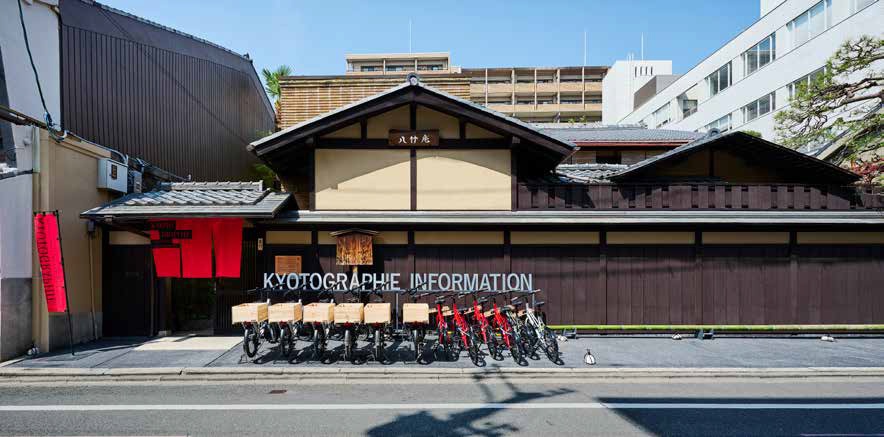
Process: 八竹庵(旧川崎家住宅) | Hachiku-an (Former Kawasaki Residence). Image © KYOTOGRAPHIE 2026.
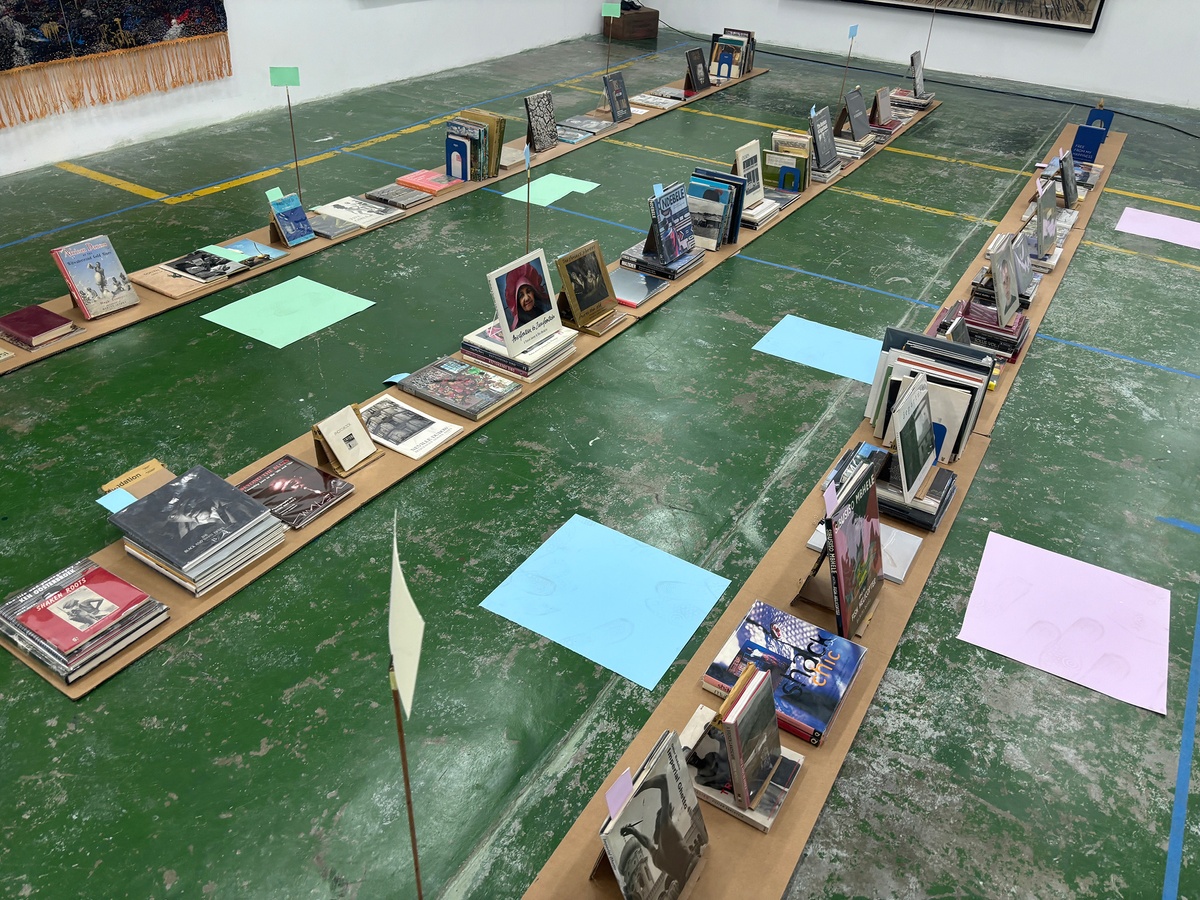
Process: Model towards the upcoming installation Photo book! Photo-book! Photobook! Kyotographie curated by Sean O'Toole, March 4, 2026. Image © A4 Arts Foundation.
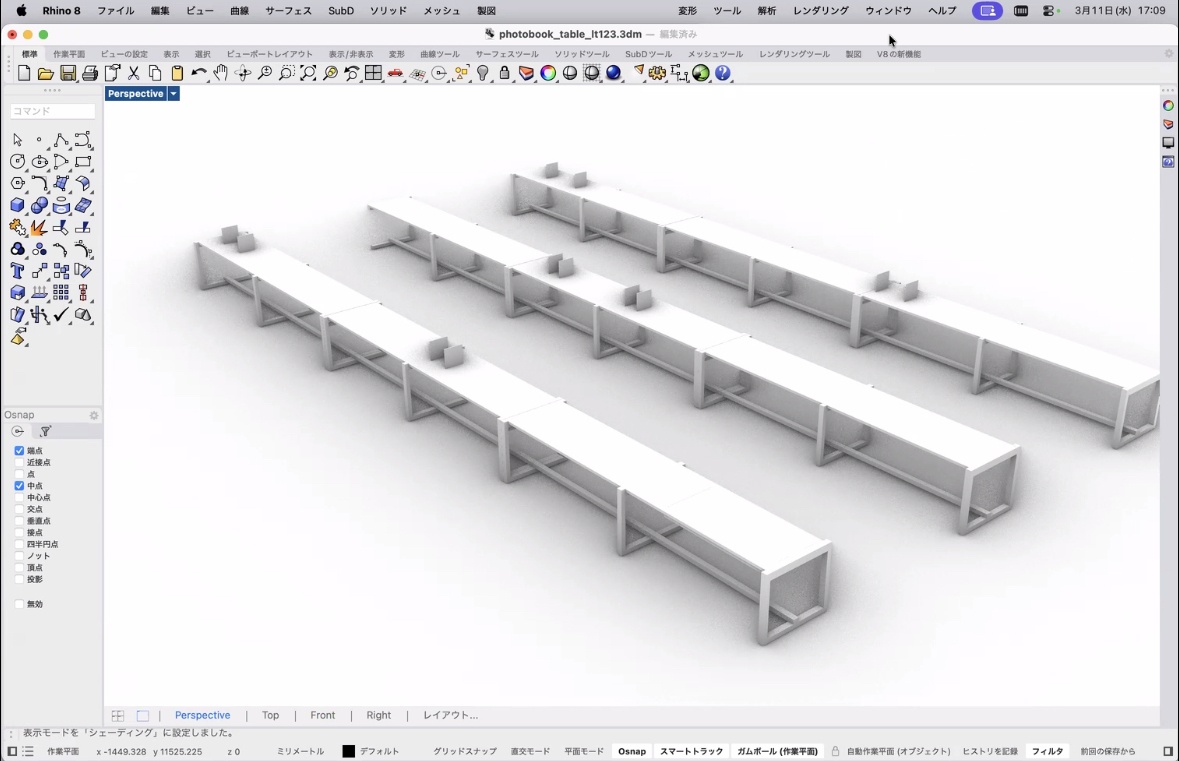
Process: Photo book! Photo-book! Photobook! Kyotographie curated by Sean O'Toole in collaboration with A4 Arts Foundation, Hachiku-an (Former Kawasaki Residence), April 17–May 17, 2026. Image © KYOTOGRAPHIE 2026.
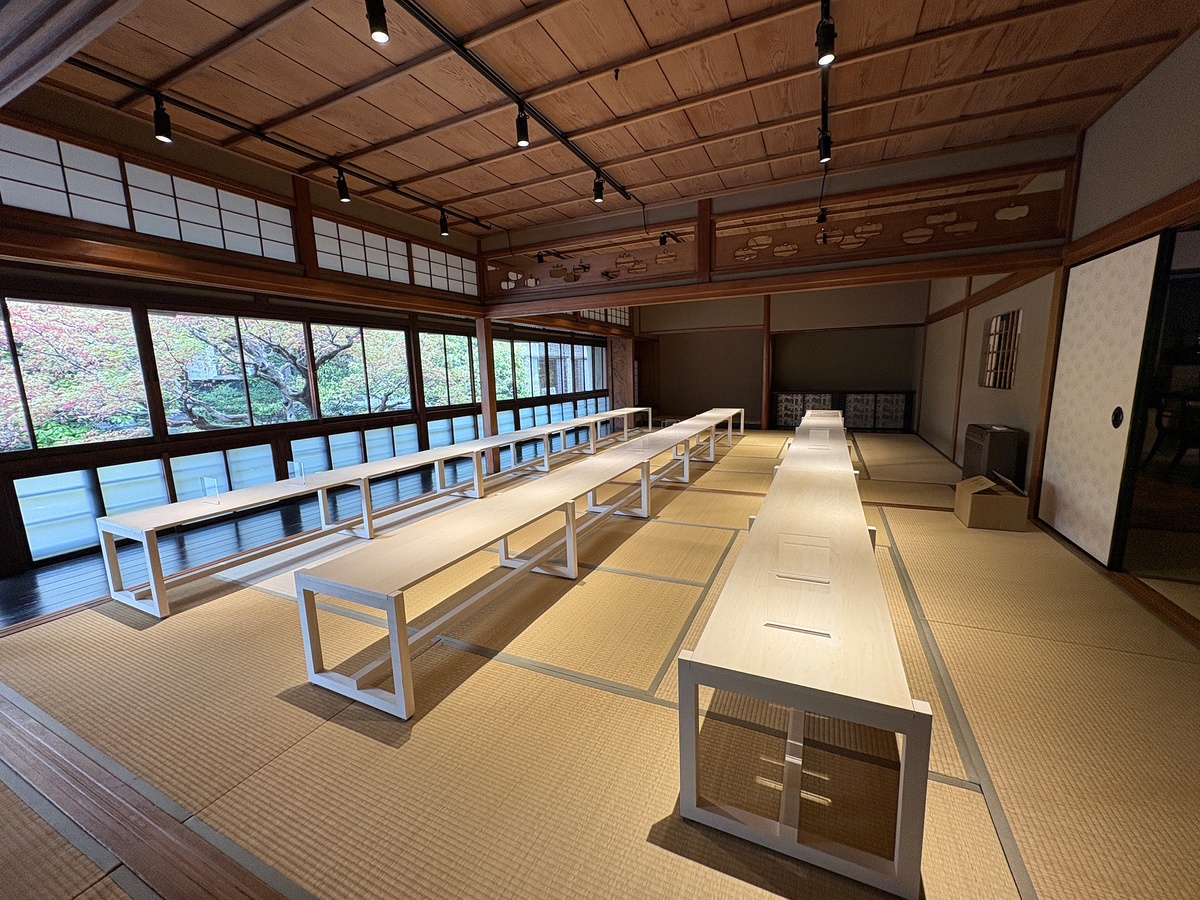
Process: Setting up the upcoming installation Photo book! Photo-book! Photobook! Kyotographie curated by Sean O'Toole in collaboration with A4 Arts Foundation, Hachiku-an (Former Kawasaki Residence), April 17–May 17, 2026. Image © Shinsuke Tamaki-KYOTOGRAPHIE 2026.
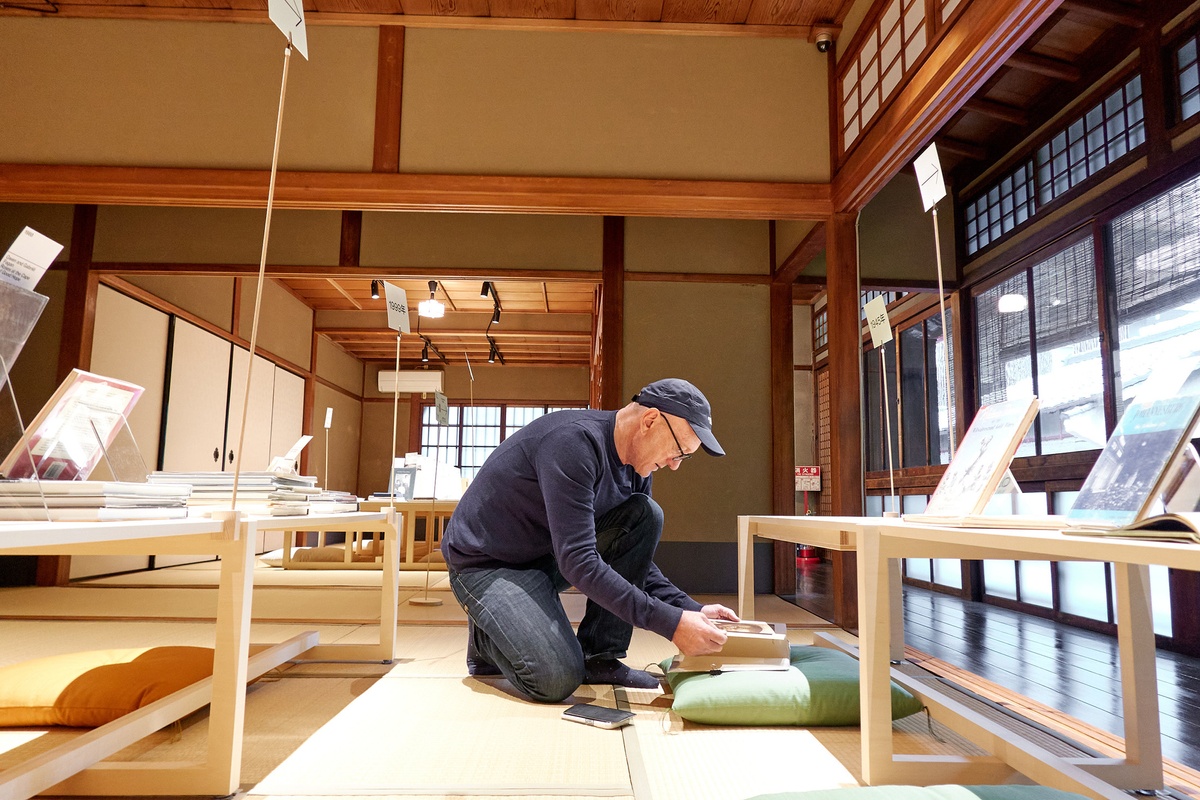
Process: Setting up the upcoming installation Photo book! Photo-book! Photobook! Kyotographie curated by Sean O'Toole, April 17–May 17, 2026. Image © A4 Arts Foundation.
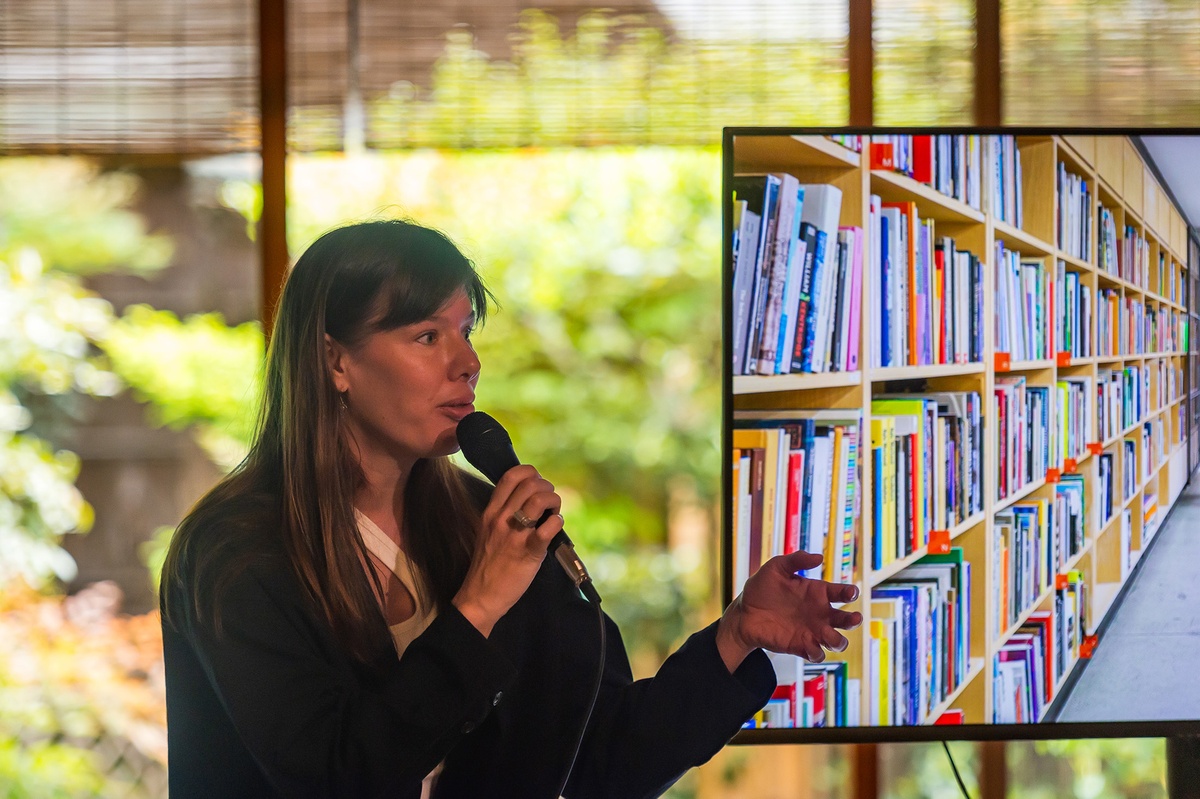
Event: Exhibition talk for Photo book! Photo-book! Photobook! Kyotographie curated by Sean O’Toole in collaboration with A4 Arts Foundation, Hachiku-an (Former Kawasaki Residence), April 18, 2026. Image © Kohei Take-KYOTOGRAPHIE 2026.
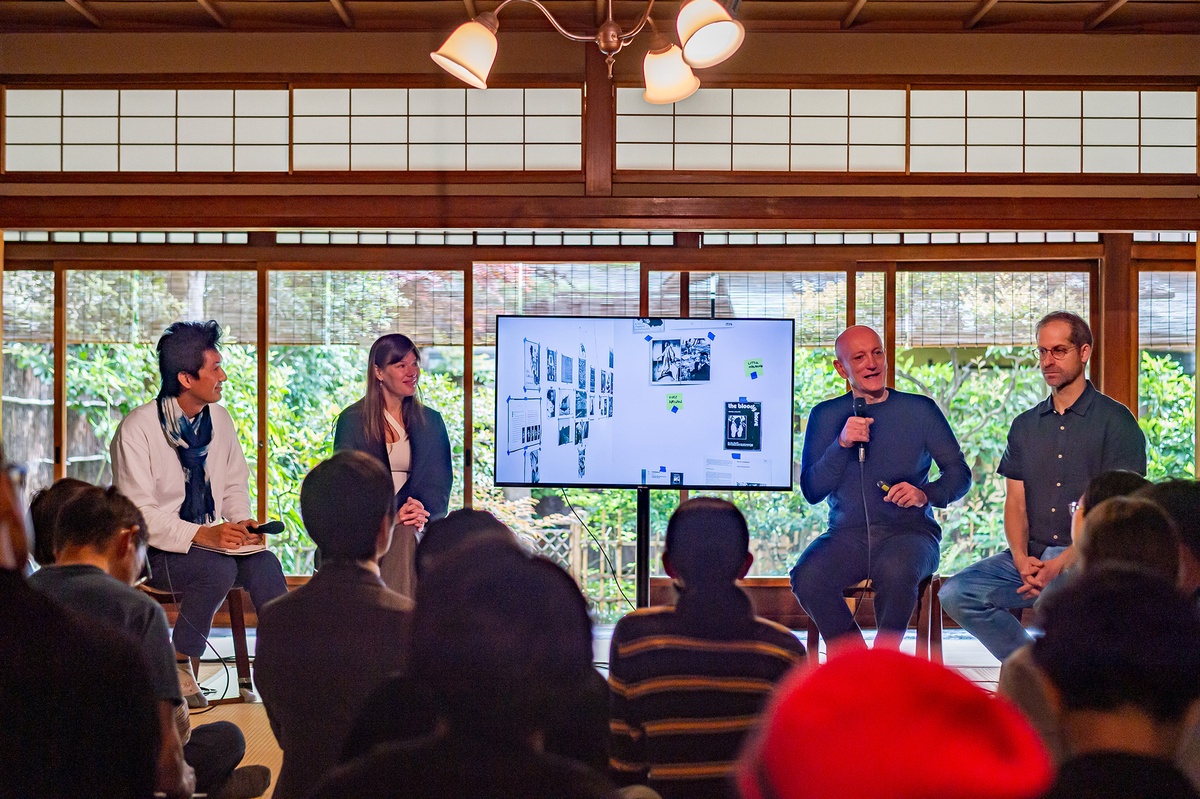
Event: Exhibition talk for Photo book! Photo-book! Photobook! Kyotographie curated by Sean O’Toole in collaboration with A4 Arts Foundation, Hachiku-an (Former Kawasaki Residence), April 18, 2026. Image © Kohei Take-KYOTOGRAPHIE 2026.
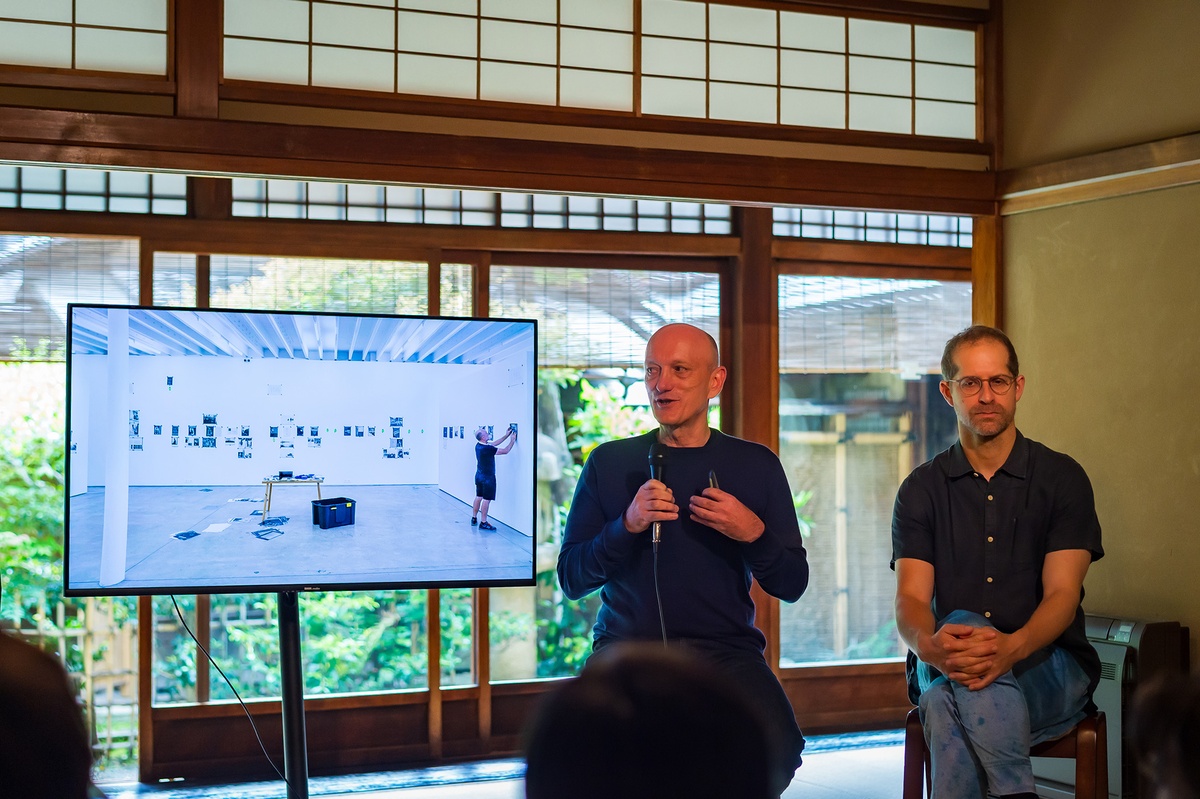
Event: Exhibition talk for Photo book! Photo-book! Photobook! Kyotographie curated by Sean O’Toole in collaboration with A4 Arts Foundation, Hachiku-an (Former Kawasaki Residence), April 18, 2026. Image © Kohei Take-KYOTOGRAPHIE 2026.