Lead researchers:
Amandine Vabre Chau
Lemeeze Davids
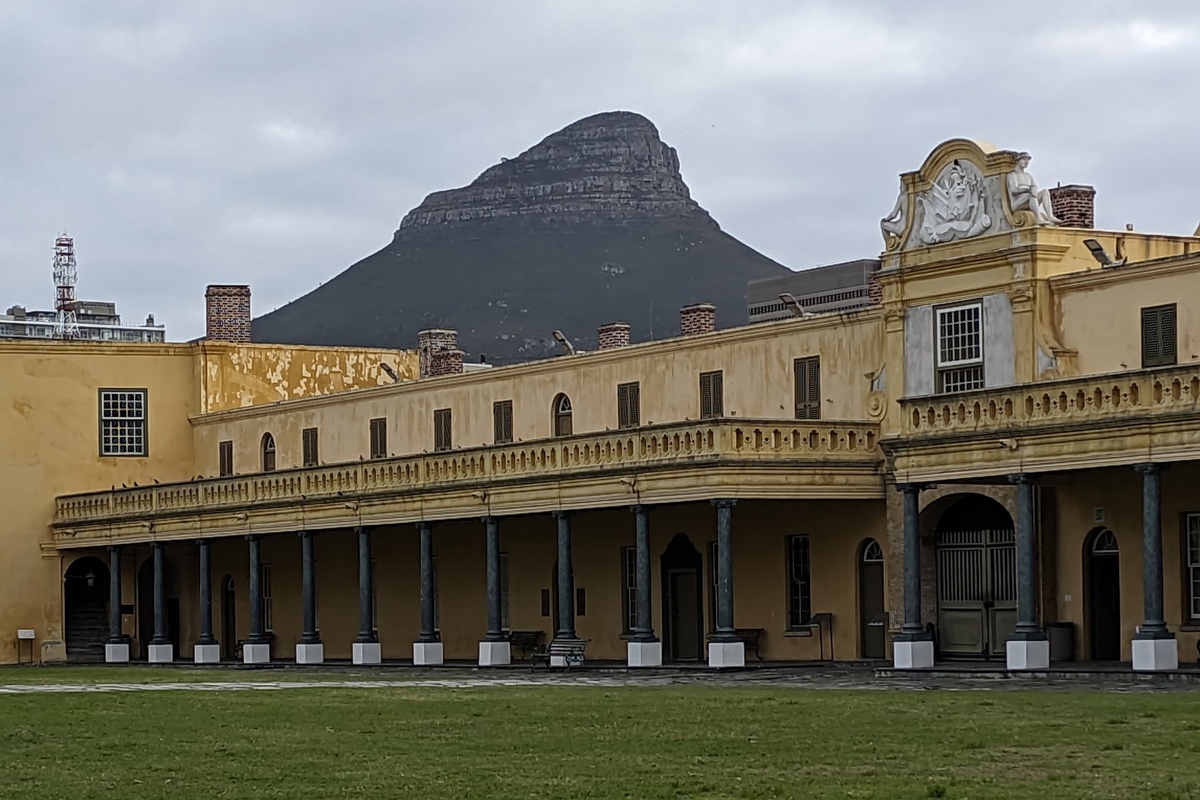
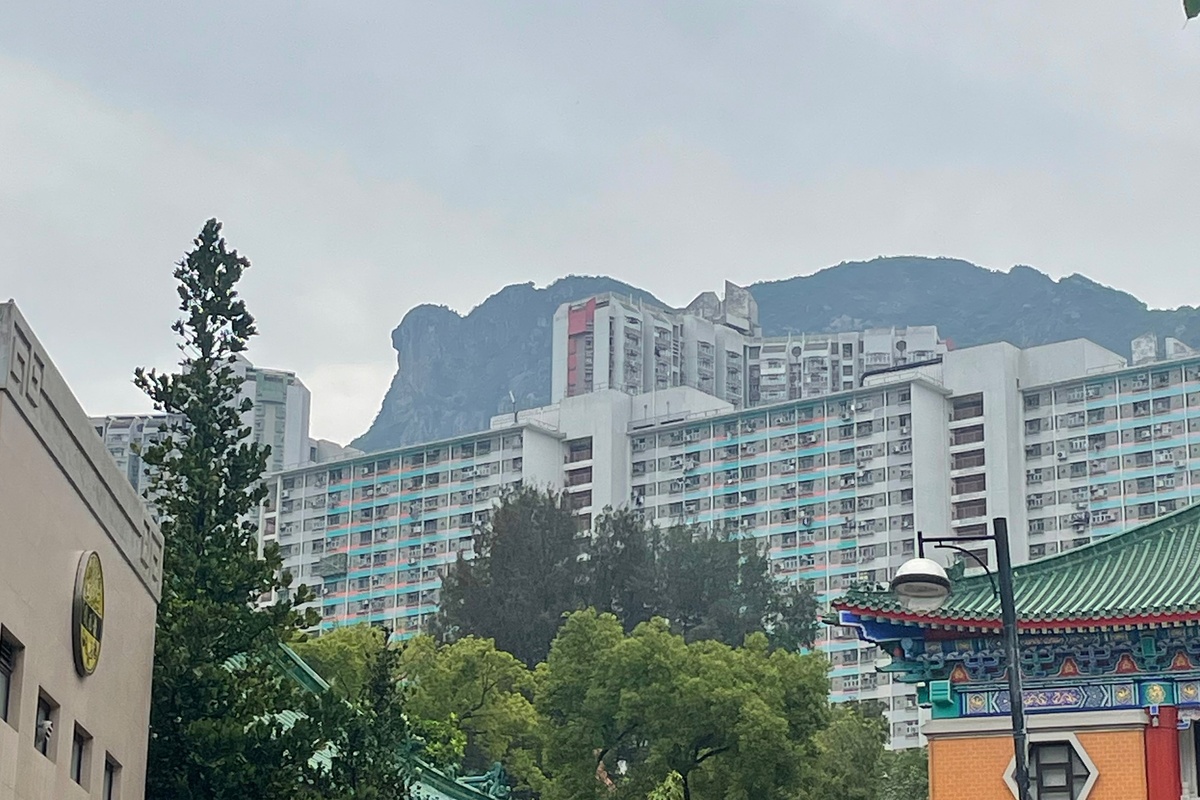
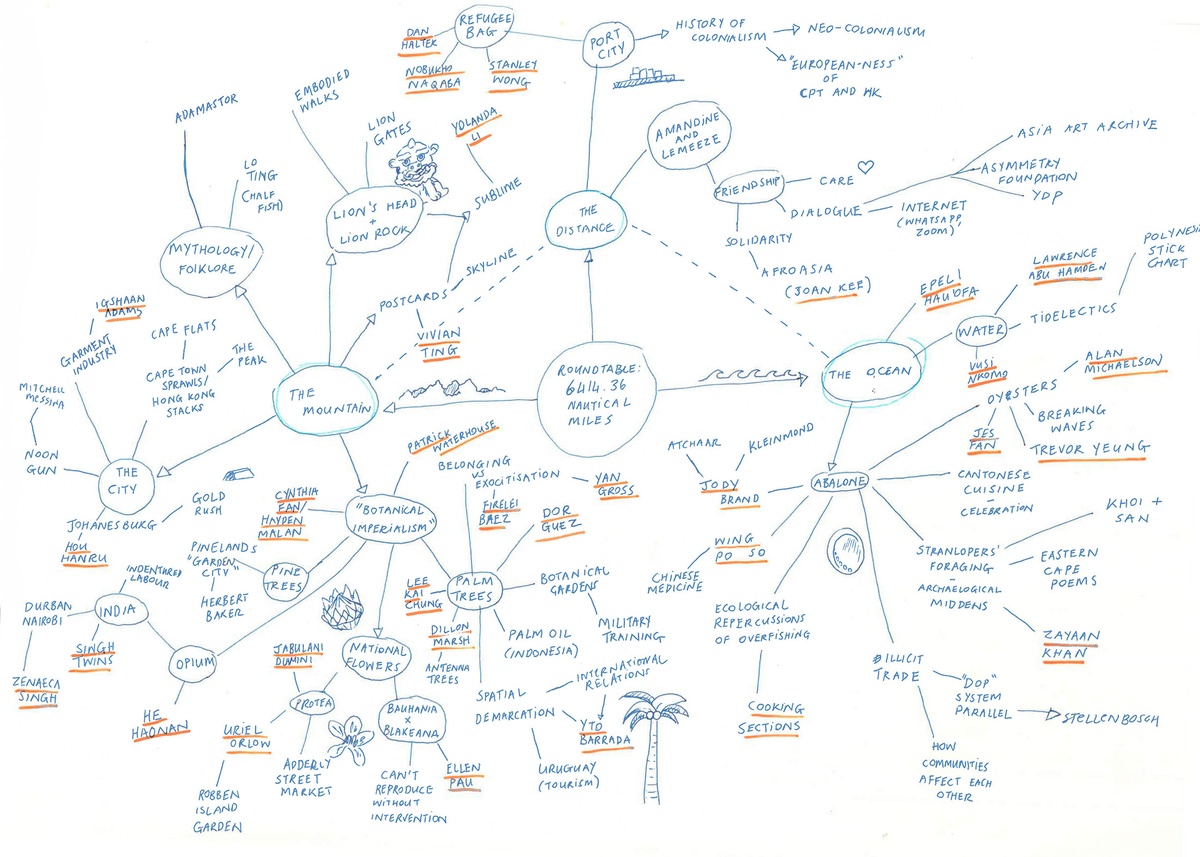
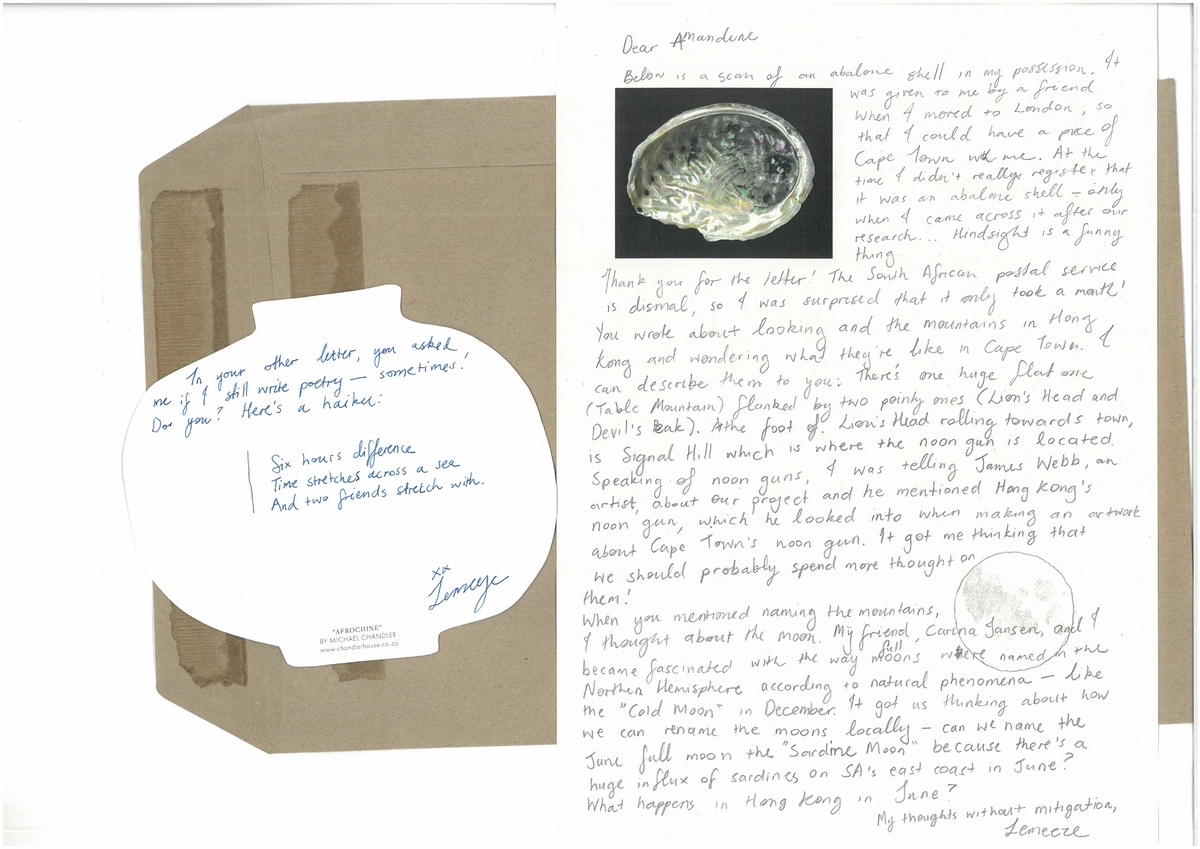
6414.36 nautical miles begins with a friendship between two curators across distance. First held in the form of calls between Cape Town and Hong Kong, the project unfolds as a Course of Enquiry shaped by both personal and socio-historical coordinates. As Lemeeze Davids (Cape Town) and Amandine Vabre Chau (Hong Kong) work together, they ask how the ecological, cultural and economic ripples of imperialism persist in these two cities. The urban and natural environment carries traces of the past while conditioning the present, and setting the terms for what is yet to come.
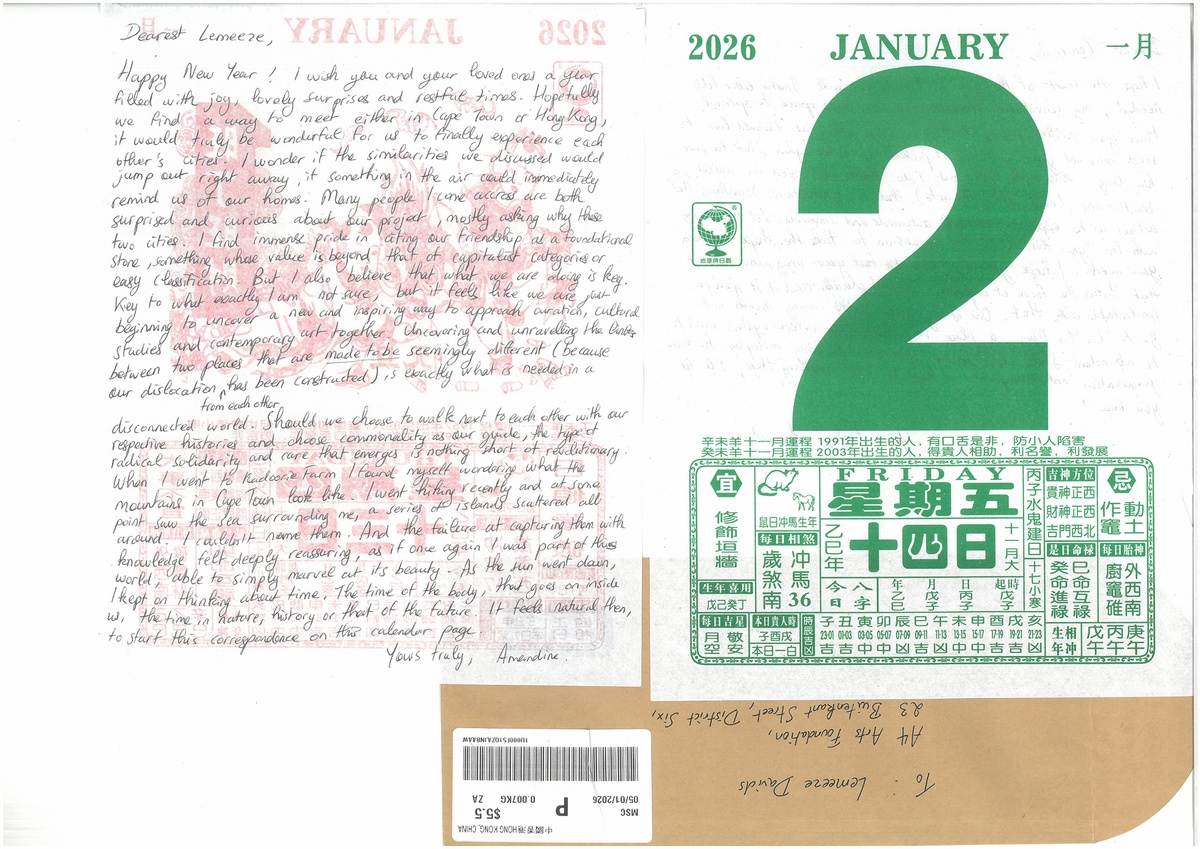
In a letter to Lemeeze, on the back of a tear-out calendar page, Amandine writes, “Many people I come across are both surprised and curious about our project, asking, ‘why these two cities?’ I find immense pride in citing our friendship as a foundational stone…” (January 2026). 6414.36 nautical miles also becomes a case study of how a curatorial process might happen across different time zones through digital correspondence.
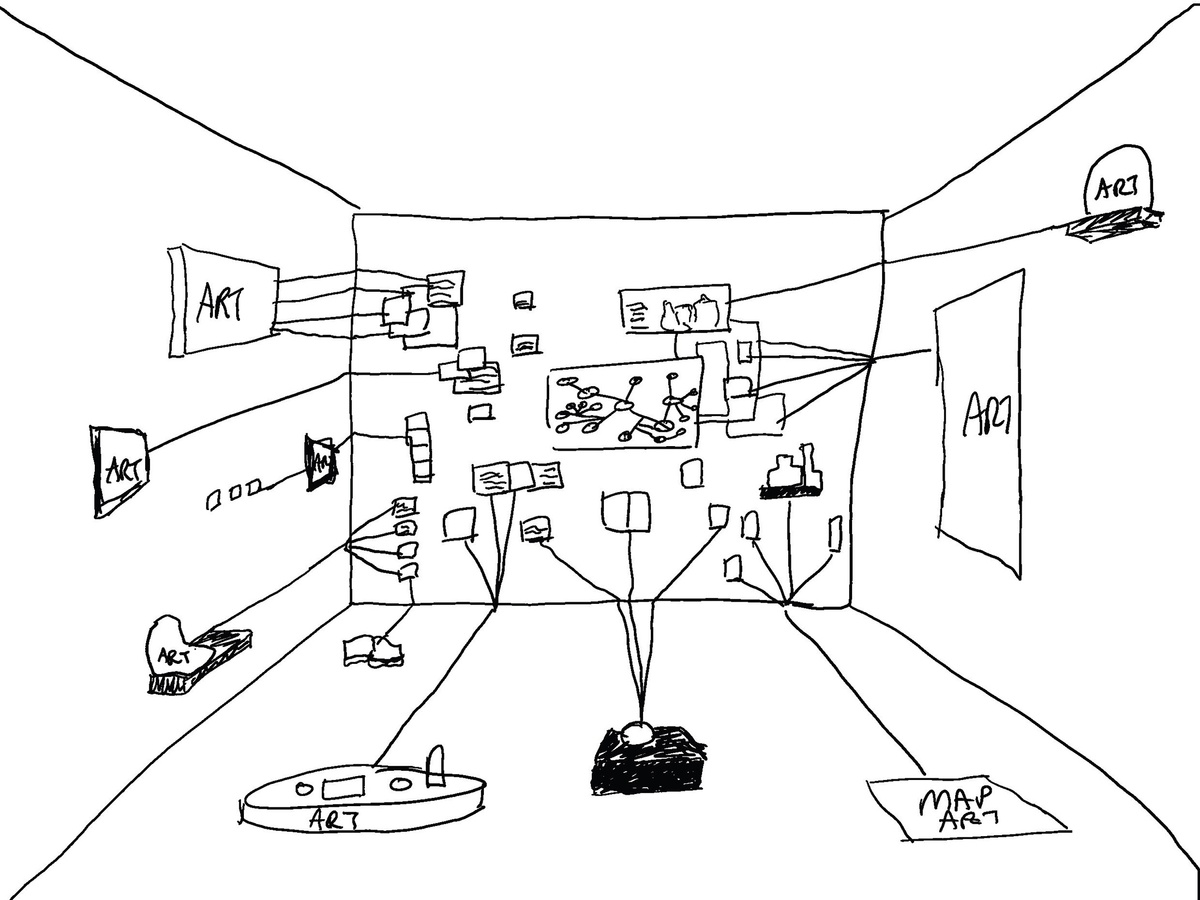
The research, detailed in the various modules on this page, takes on various forms such as essays, roundtable discussions, physical correspondence, field research, and regular conversations with practitioners. At the conclusion of the Course of Enquiry, a research installation was presented in A4’s Reading Room, which aimed to prototype a model of display for a large amount of research in an accessible form.
A4’s Course of Enquiry is a six-month, open-ended research residency for curators and writers. Seminar sessions take place fortnightly, either in person or online, during which time A4's team and invited practitioners act as critical friends to the resident. Throughout the COE, the resident is asked to consider and prototype ways of making their research visible to share parts of their process with the public. These eventual translations of the research 'solve for form', finding a manner to express the content that works for the idea or material being expressed.
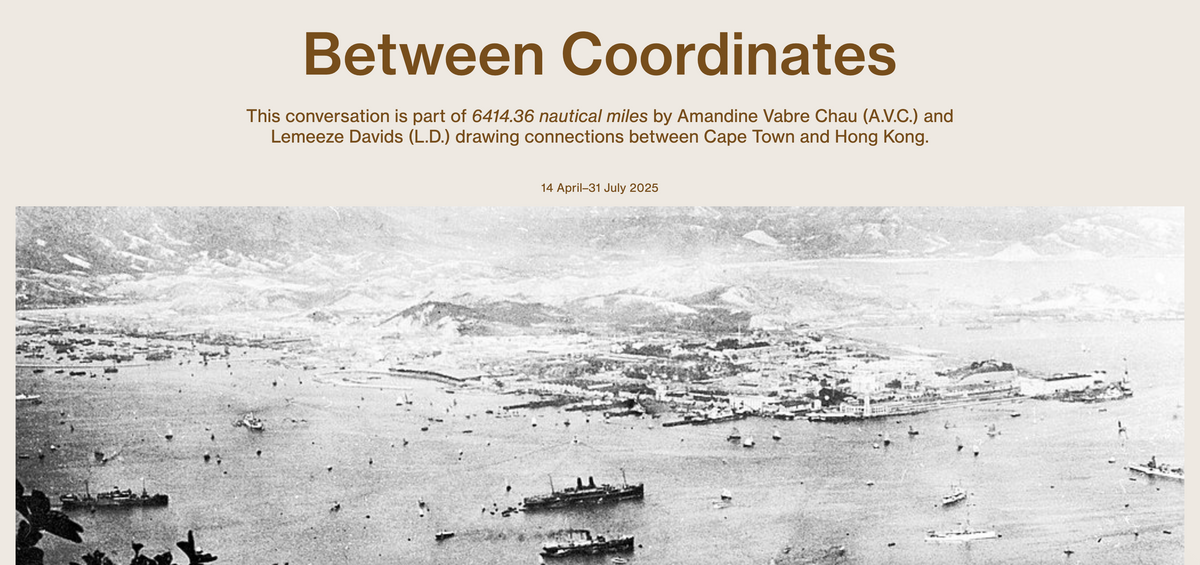
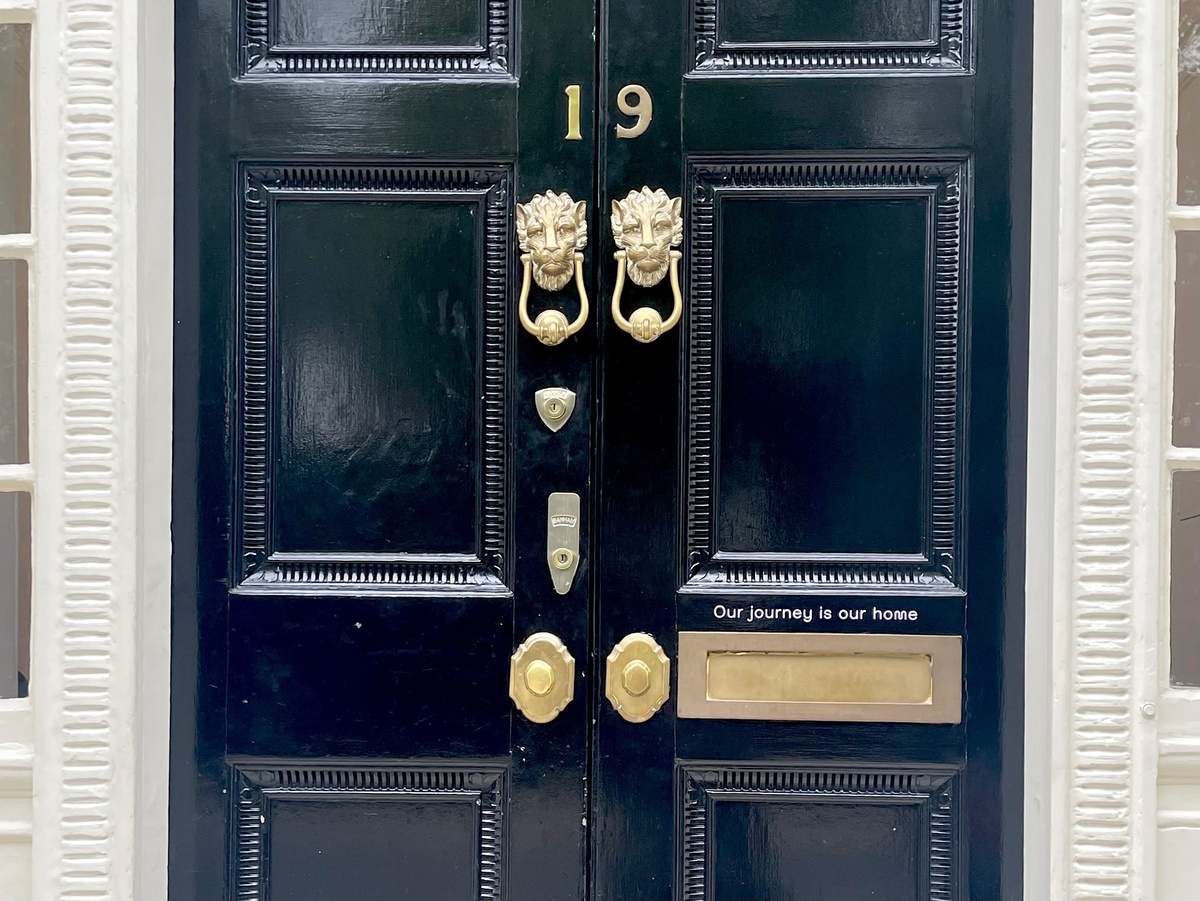
A walking research journey through London by two friends. – April 21, 2026
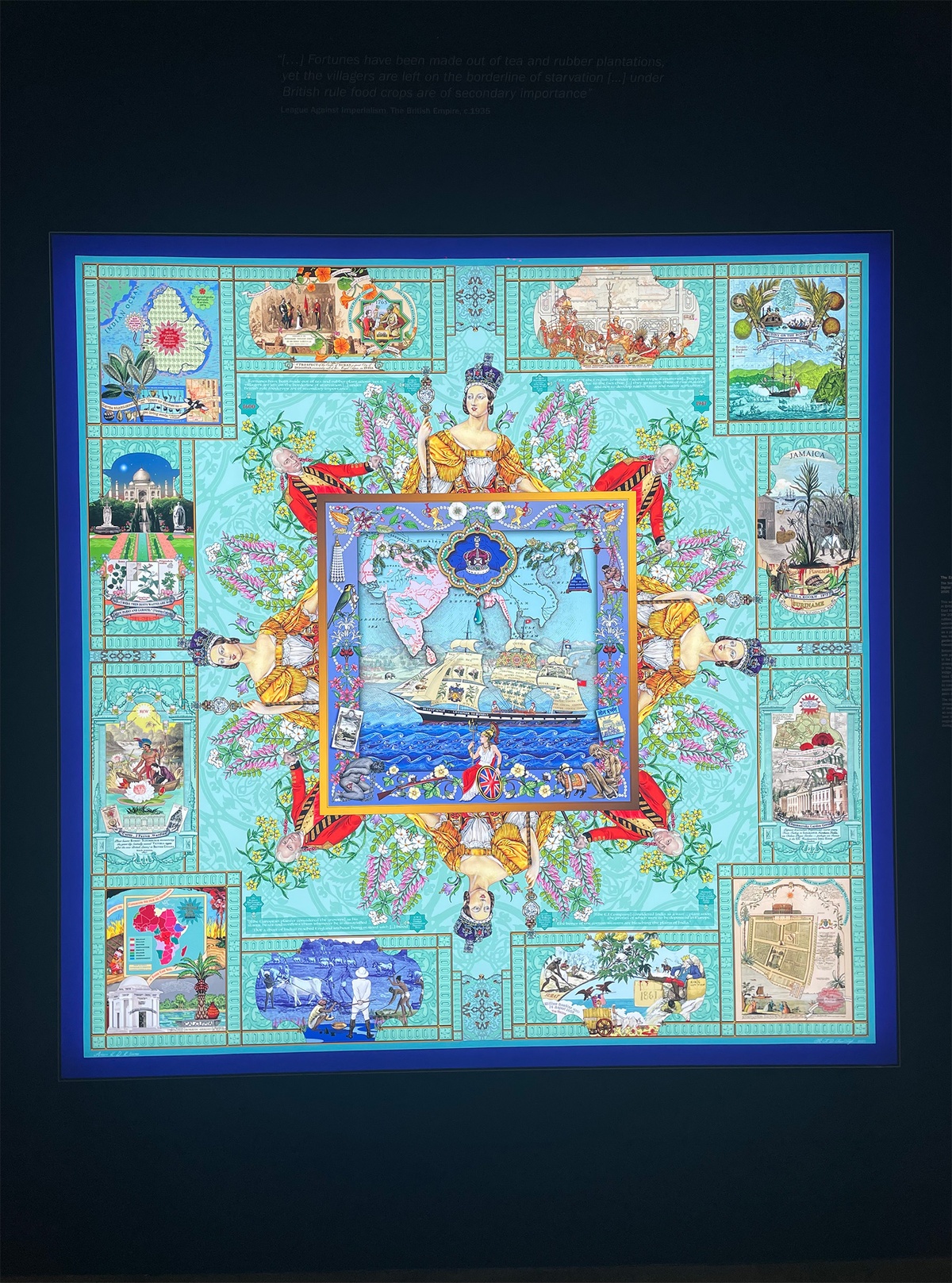
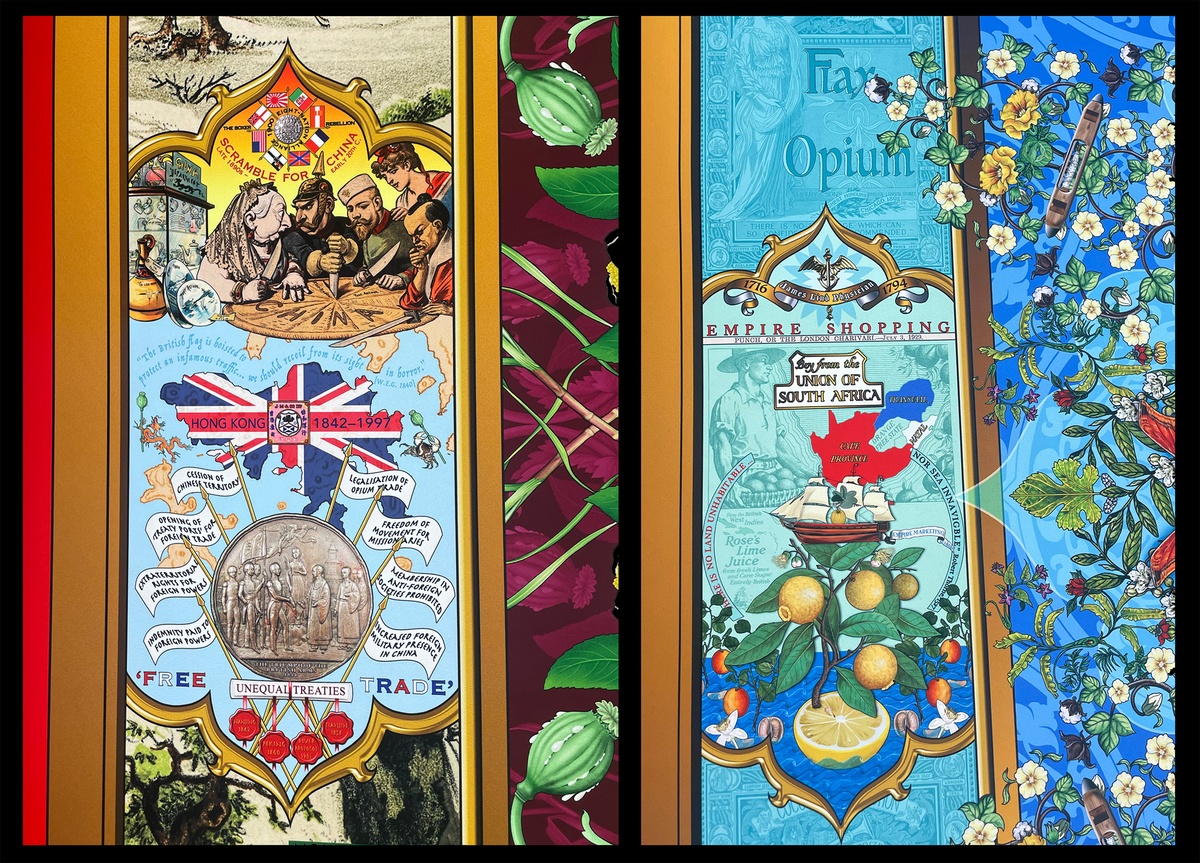
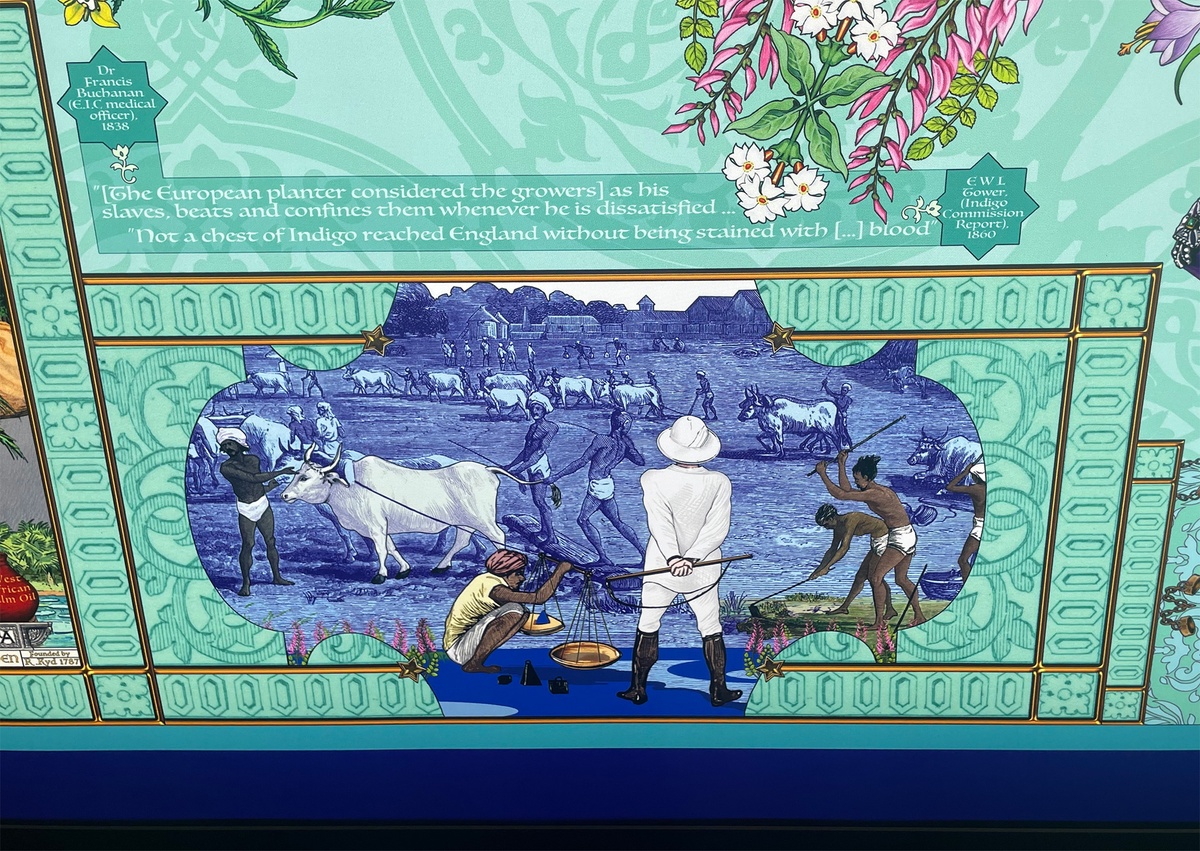
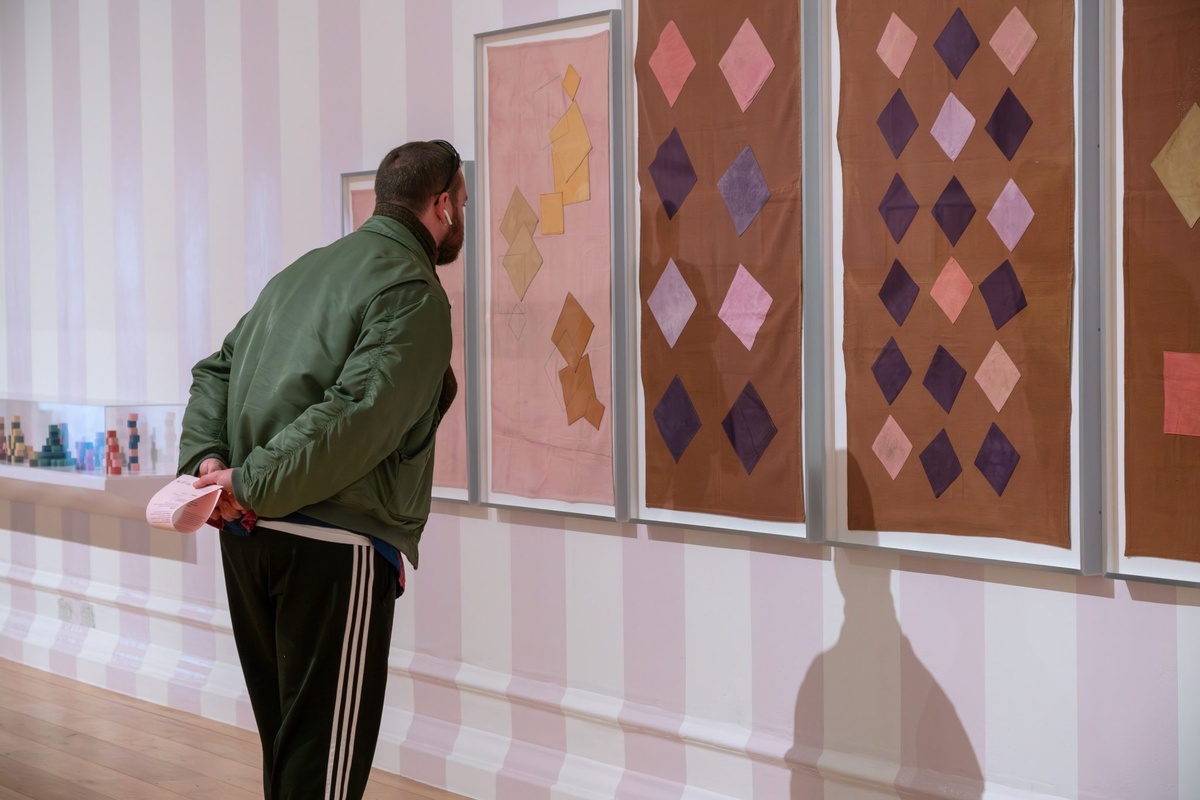
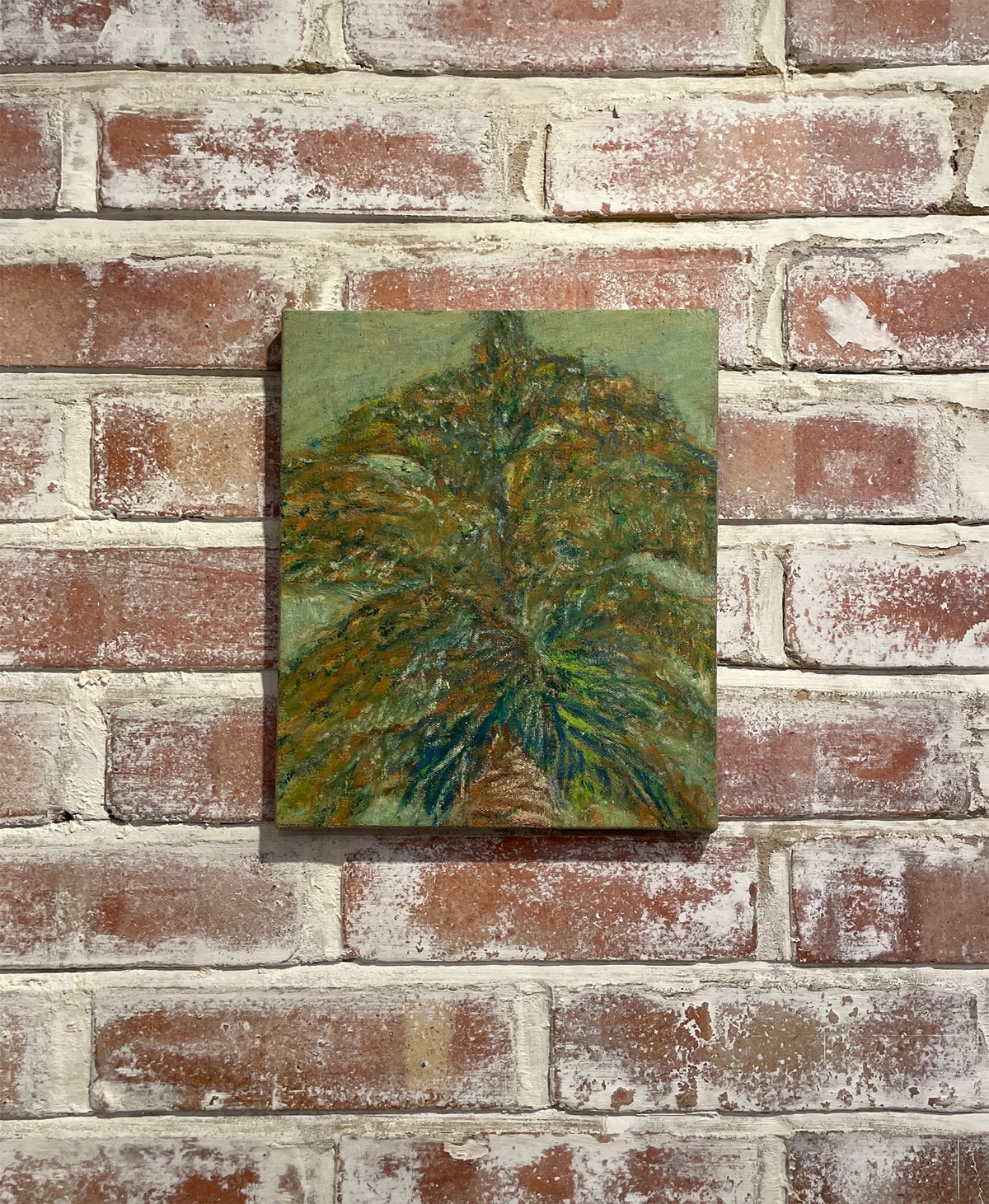
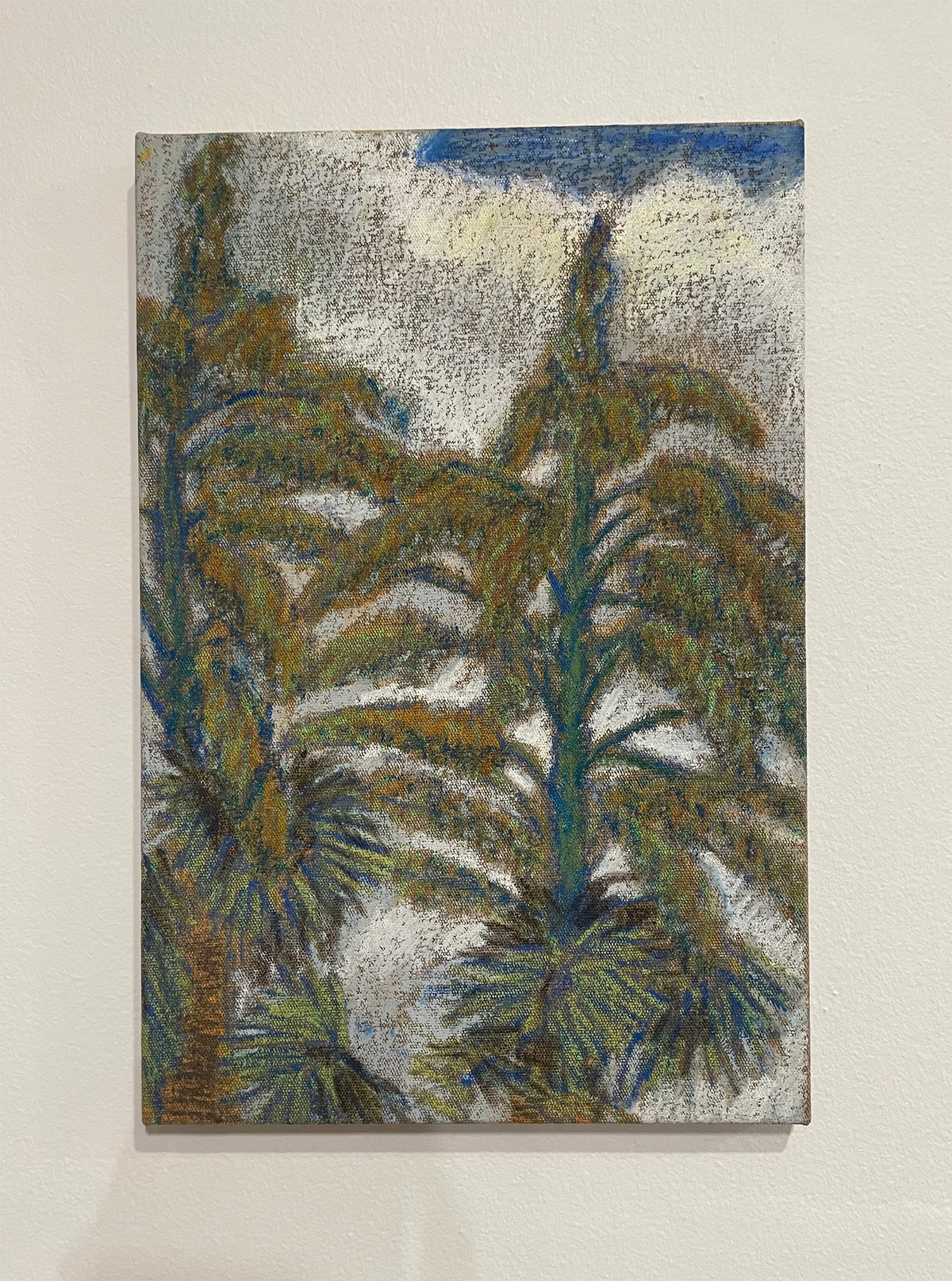
17 October 2025
Location:
Delfina Foundation, London
Tagline:
A roundtable asking after expressions of power on or through the natural world in Hong Kong and Cape Town.
Lee Kai Chung
Cynthia Fan
Josh Ginsburg
Kerryn Greenberg
Jiaying Kou
Yolanda Li
Tau Tavengwa
Sumayya Valley
Patrick Waterhouse
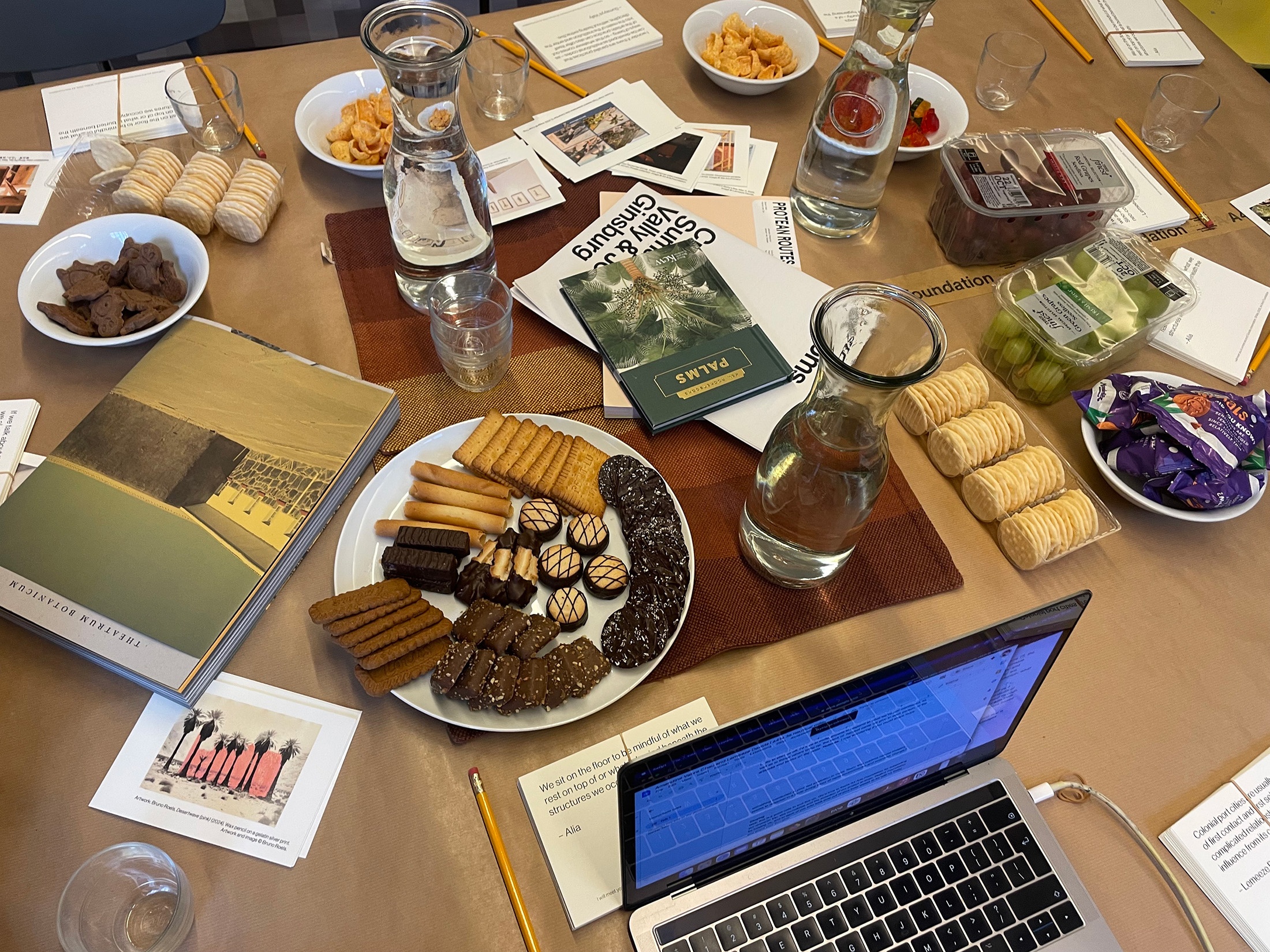
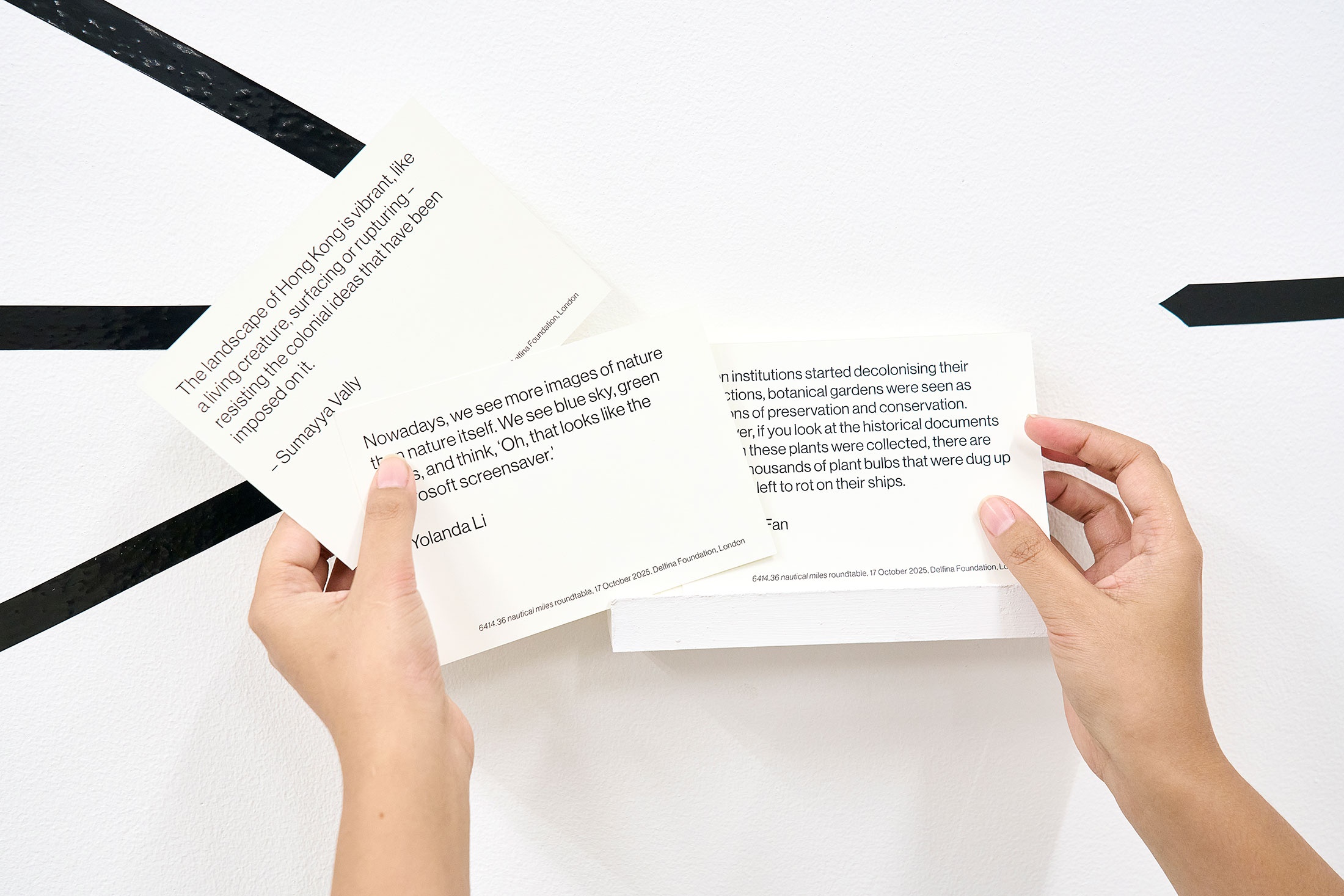
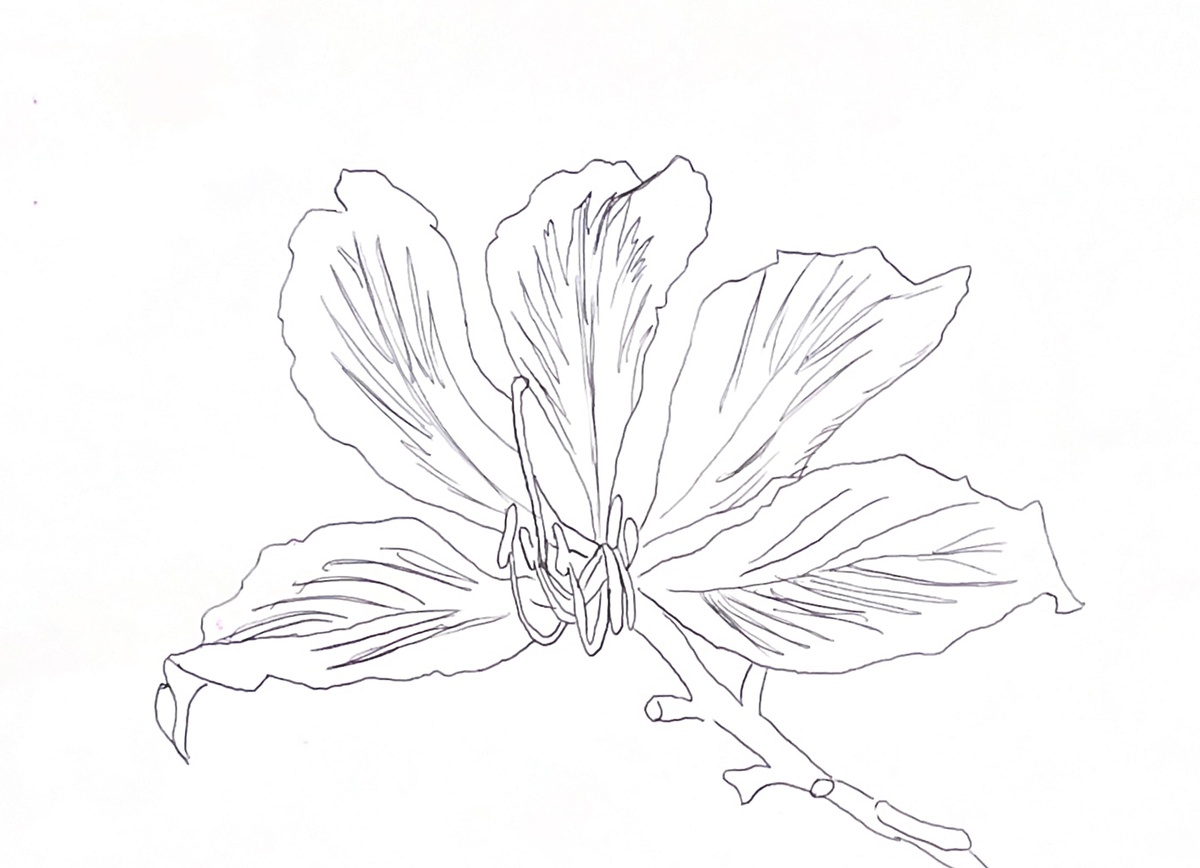
This roundtable discussion marks the mid-point of 6414.36 nautical miles, a Course of Enquiry bringing together a group of practitioners whose work intersects with the histories of Hong Kong and Cape Town as port cities. Hosted at Delfina Foundation in London during the week of Frieze, it uses the gravitational pull of the art fair to think through two coordinates of research: botanical imperialism (palm trees, pine trees, plant migrations) and marine entanglements (abalone smuggling, mollusks, ocean ecologies). Meeting in England invites a direct confrontation with the British imperial histories that continue to affect both Hong Kong and Cape Town.
The invited participants, based in or passing through London, were selected because their practices link to different facets of the enquiry: ecological research, urban planning, or curatorial strategies attuned to extraction, migration, and Afro Asian politics. Their contributions help open up larger conversations around spatial inequality, kinship, and how plants and marine organisms become charged carriers of memory.
Using these coordinates, alongside postcard-sized prints of artworks and harvest cards from A4’s database, the practitioners build a shared field of reference to bolster, challenge and grow the Course of Enquiry. The materials act as entry points into a dialogue about how urban and ecological histories shape contemporary life across cities marked, in different ways, by colonial rule.
20 April - 2 May 2026
Location:
Reading Room
Tagline:
A research installation, concluding a Course of Enquiry on Hong Kong and Cape Town as port cities.
Jes Fan – with special thanks to the Akeroyd Collection
Jody Brand
Nolan Oswald Dennis
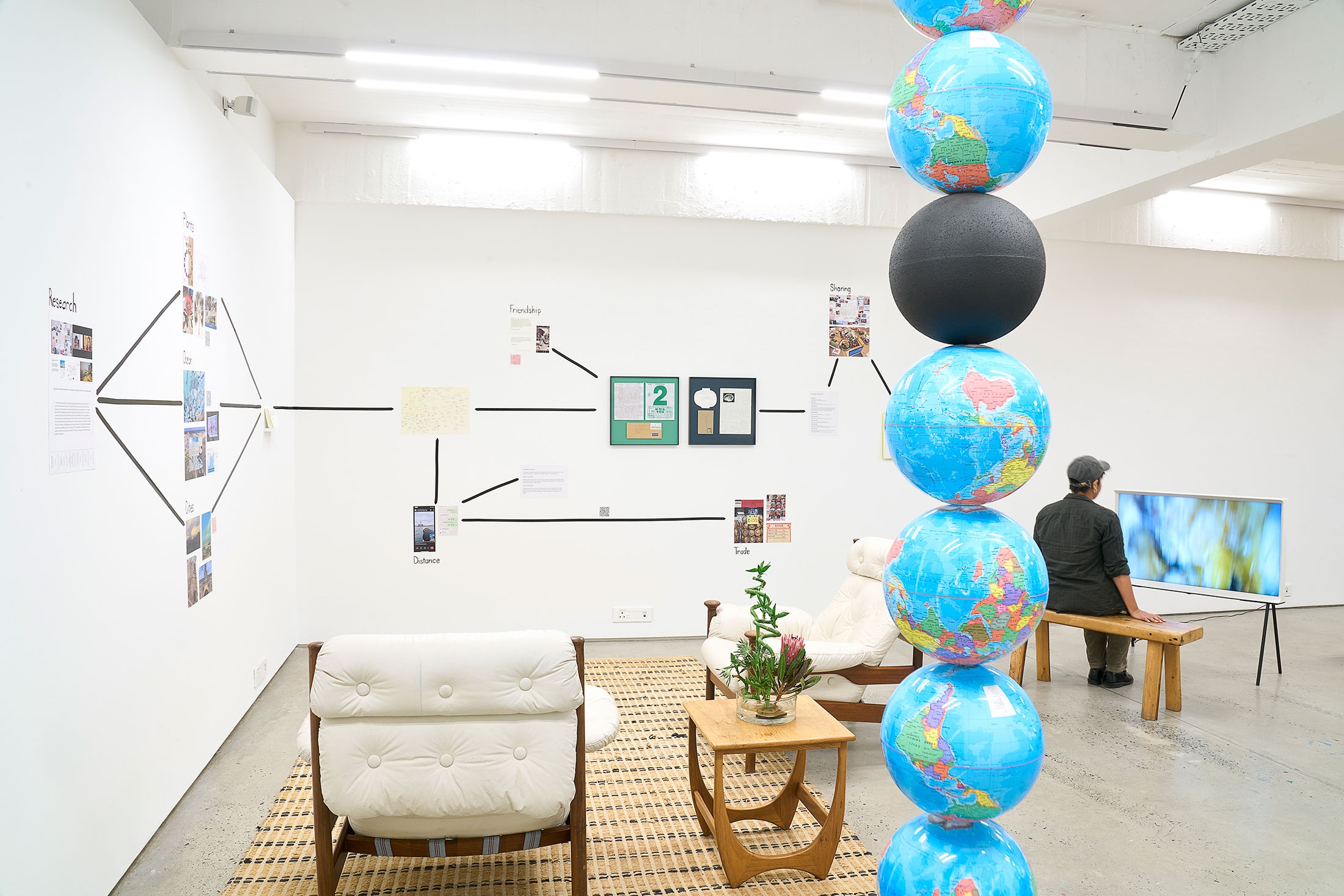
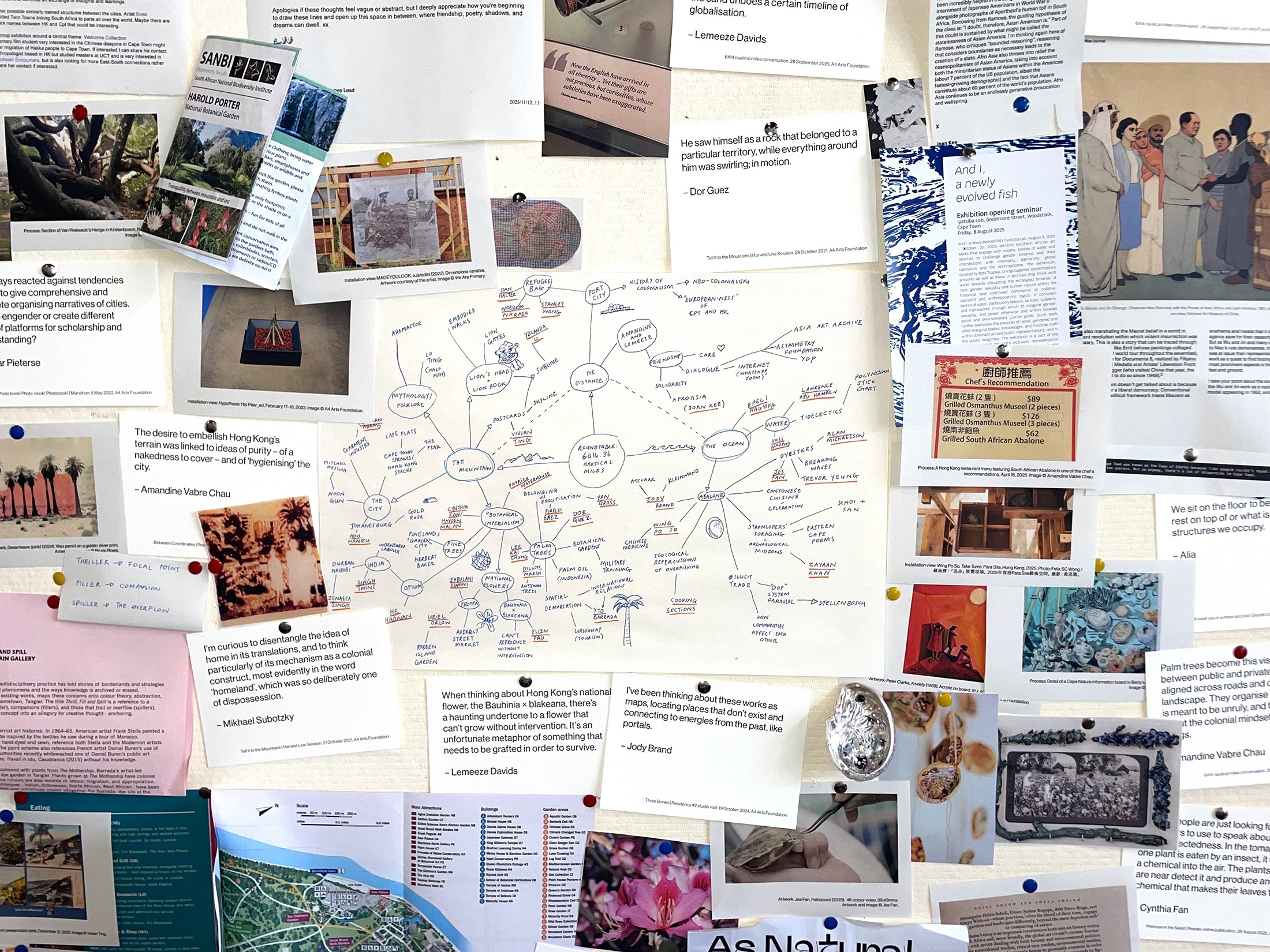
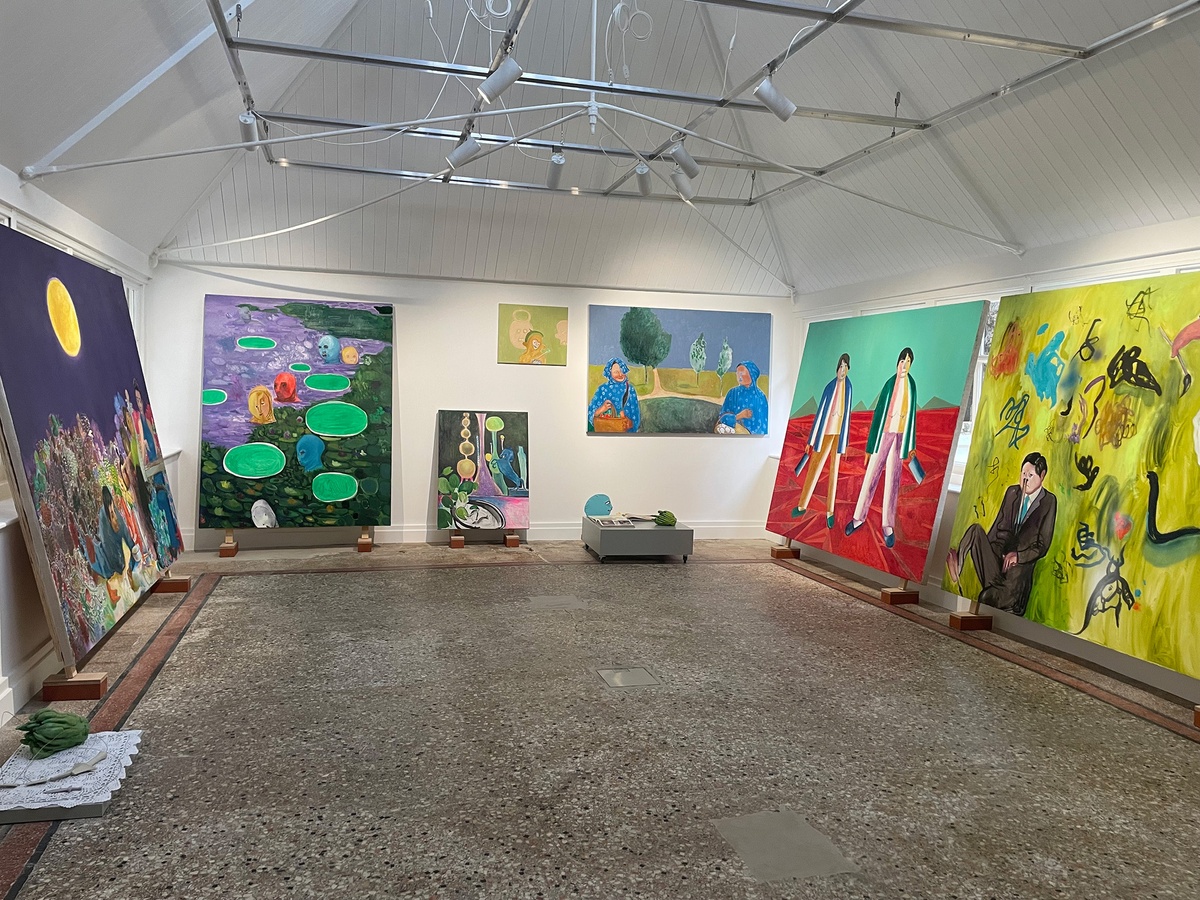
At the close of their COE, and with an array of research across multiple forms in hand, Davids and Vabre Chau wonder how best to render this research through an installation. Following discussions with invited practitioners on ‘how to make research visible’, they explore ways to communicate the critical connections between Hong Kong and Cape Town, wishing to find a form of presentation that can express and evoke emotion (rather than demonstrate a solely intellectual pursuit ) while seeking to avoid either an overwhelming presentation of data or its converse: oversimplification.
What follows is a research installation that prioritises images and interactive elements to detail the project lifecycle. Viewers scan QR codes to hear conversations between Davids and Vabre Chau expanding on nodes like 'Ocean' or 'Friendship'. The installation features browsable harvest cards from roundtables (and related projects), a clipboard of compiled practitioner methodologies, and dated meeting details from 6414.36 nautical miles.
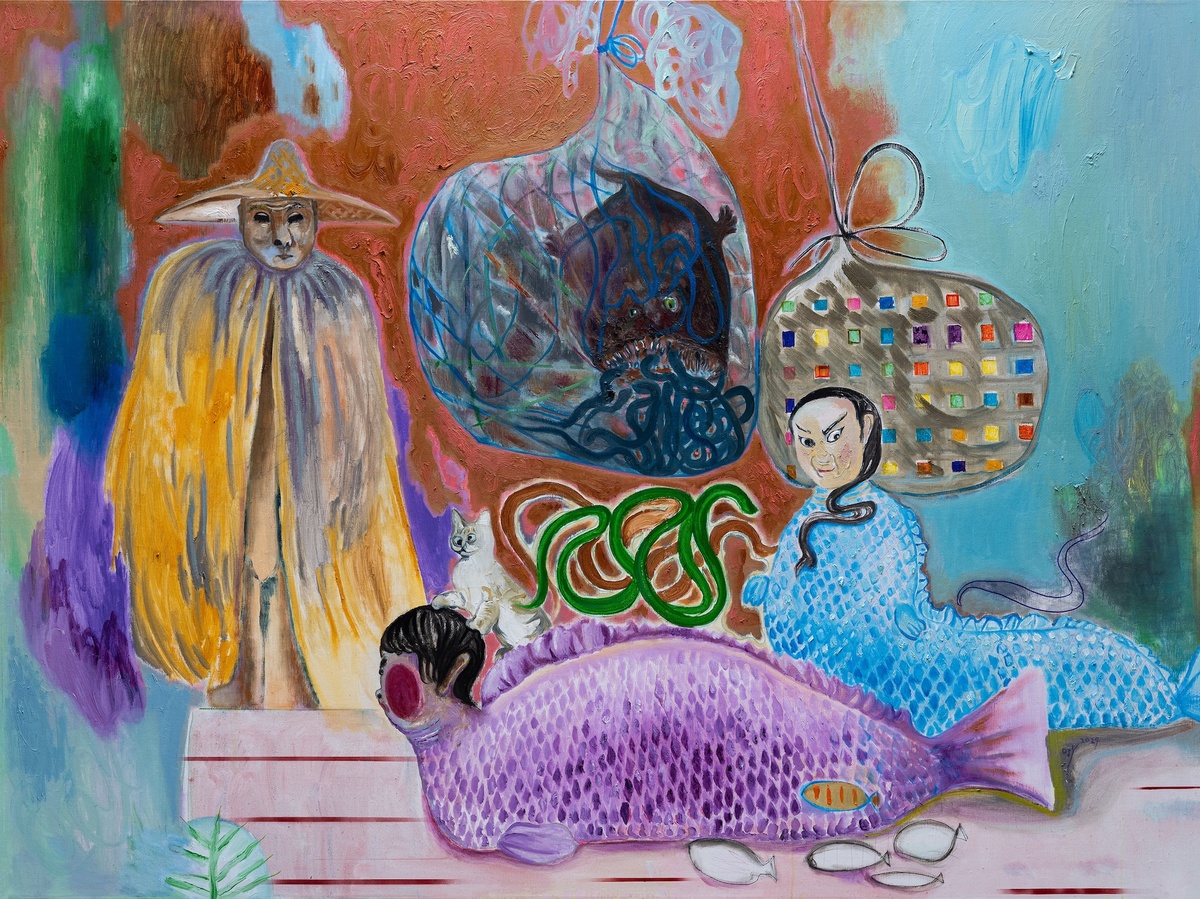
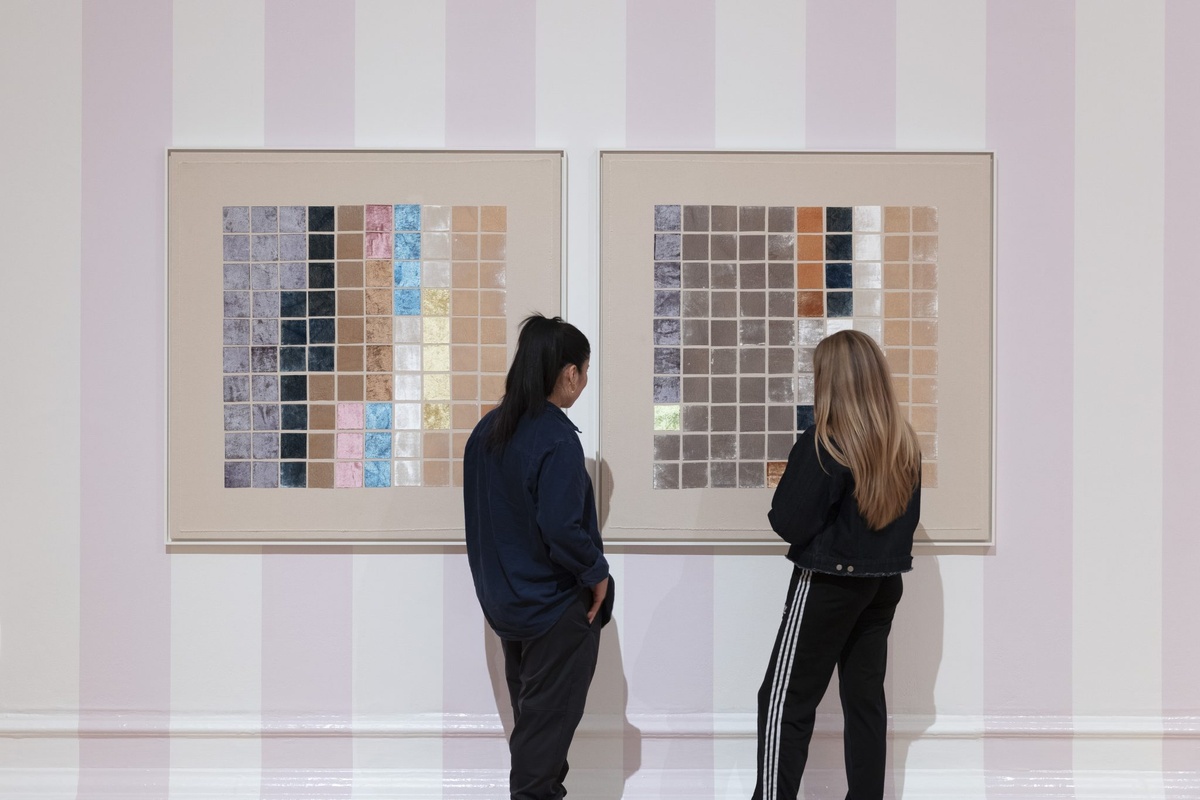
Artworks by Jody Brand, Jes Fan, and Nolan Oswald Dennis serve as three coordinates. Jody Brand’s sculptural work, 10 Hail Mary’s (2021), featuring abalone shells, links Brand's ancestral knowledge and faith to a resonance between Cantonese cuisine, Cape indigenous foraging, and contemporary trade. Dennis’s model for an endless column (2021) foregrounds an underlying concern of the researchers of turning inherited geographies on their head and insisting on other orientations of the world. Jes Fan's video work uses the oyster (a mollusc with a long history in Hong Kong) as a metaphor for colonial violence, documenting the process of pearl cultivation by embedding words within the oysters' mantles.
Brockway, L.H. (1979). Science and Colonial Expansion: The Role of the British Royal Botanic Gardens. New York: Academic Press.
Baber, Z. (2010). ‘Planting Empires, Producing Science: Botanical Gardens, Plants, and the Roots of Globalization’, Society, History, and the Global Human Condition. Maryland: Lexington Books, pp.586–637.
Ho, V. and Ho, T-W.N. (2025). ‘An Exhausted Colonial Botanist: Charles Ford and Hong Kong Botanical Gardens’, The Journal of Imperial and Commonwealth History, 53(1), pp.133–154.
Ho, V. and Ho, T-W.N. (2024). ‘Imperial Botanical Network and the Formation of the Hong Kong Botanical Gardens’, Hong Kong Studies, 4(1), pp.17–35.
Dabezies, J.M. (2020). ‘Visuality, palm trees and tourism in Uruguay’, Annals of Tourism Research, 81.
Peckham, R. (2015). ‘Hygienic Nature: Afforestation and the greening of colonial Hong Kong’, Modern Asian Studies, 49(4), pp.1177–1209.
Peckham, R. and Pomfret, D. (2013). Imperial Contagions: Medicine, Hygiene, and Cultures of Planning in Asia. Hong Kong: Hong Kong University Press.
Munnik, G. (2022). For the haunt: Chanelle Adams’ Ghost Tour of Camphor Avenue. Arthrob [online]. Available here.
Orlow, U. and Sheikh, S. (2018). Uriel Orlow: Theatrum Botanicum. Berlin: Sternberg Press.
Crawford Campbell, P. (2012). Chinese Coolie Emigration: The countries within the British Empire. New York: Routledge.
Chee-Beng, T. (2013). Routledge Handbook of the Chinese Diaspora. New York: Routledge.
Yap, M. and Leong Man, D. (1996). Colour, Confusion and Concessions: The History of the Chinese in South Africa. Hong Kong: Hong Kong University Press.
Yap, M. (ed.) (1982). The South African Chinese – their way of life. Johannesburg: The Transvaal Chinese Association.
Ho, P.Y. (2018). Making Hong Kong: A History of its Urban Development. Cheltenham and Massachusetts: Edward Elgar.
Perec, G. (1974). Espèces d’Espaces. Galilée: Paris.
Pieterse, E. et al. (eds.) (2019). The Integration Syndicate: Shifting Cape Town’s Socio-Spatial Debate. Cape Town: African Center for Cities.
Didur, J. and Mohabir, N. (eds.) (2025). (Post)Colonial Ports Place and (Non)Place in the ecotone. New York: Routledge.
Hau’Ofa, E. (2008). We are the Ocean: Selected Works. Honolulu: University of Hawaii Press.
Steinberg, P. and Peters, K. (2015). ‘Wet Ontologies, Fluid Spaces: Giving Depth to Volume through Oceanic Thinking’, Environment and Planning D: Society and Space, 33(2), pp.247–264.
Chinafrika. under construction (2017). Leipzig: Museum of Contemporary Art Leipzig, Galerie für Zeitgenössische Kunst Leipzig.
Enwezor, O. (ed.) (1997). Trade Routes: History and Geography 2nd Johannesburg Biennale. Johannesburg: Thorold’s Africana Books.
Kee, J. (2023). The Geometries of Afro Asia: Art beyond Solidarity. Oakland, California: University of California Press.
Lau, W. (2018). An assessment of the South African dried abalone Haliotis midae consumption and trade in Hong Kong. Cambridge: TRAFFIC international.
Ghosh, A. (2023). Smoke and Ashes: A Writer’s Journey through Opium’s Hidden Histories. New Delhi: Fourth Estate India.
SMRI, History of Sugar in South Africa. Available here (Accessed 3 February 2026).
Jeewa, K. and Frikech, S. (2022). Decolonising Nature: Sowing Seeds to Unearth the Routes of Water and People. Available here (Accessed 3 February 2026).
South African National Biodiversity Institute, Kirstenbosch NBG: Van Riebeeck’s Hedge. Available here (Accessed 3 February 2026).
World Ports, How much fish and seafood do people eat. Available here.